Decluttering, Psychology & High-Performance Living with Margo Staten
If you’ve ever opened your closet and immediately felt overwhelmed… or stood in your kitchen wondering how two people somehow own 40 coffee mugs… this episode is for you.
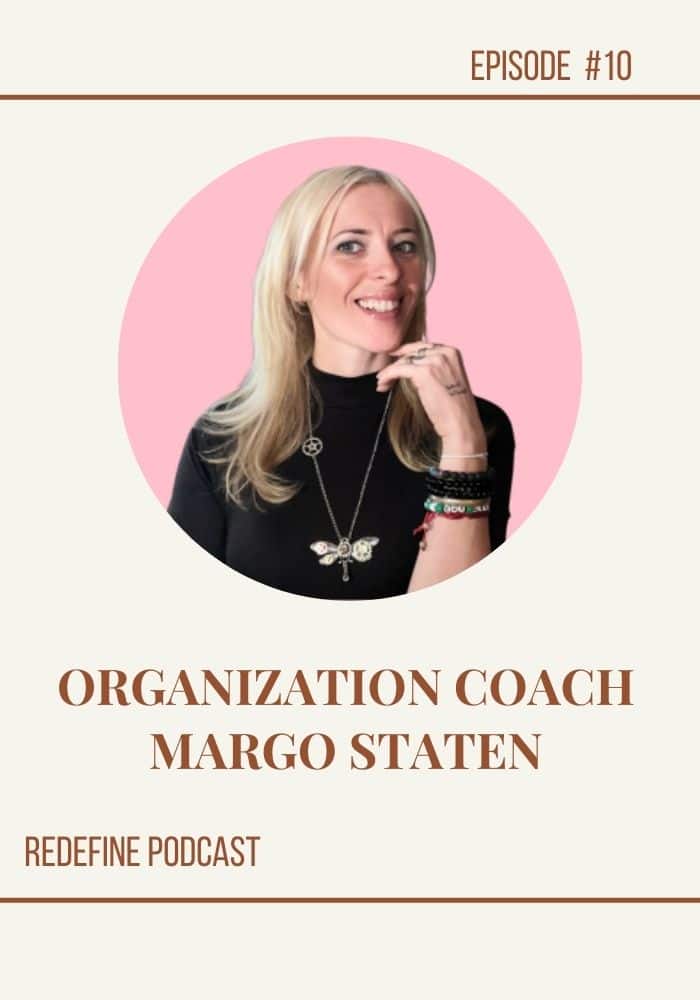
On this episode of Redefine Business, Brittni Schroeder sits down with psychology professor and decluttering expert Margo Staten to talk about something most entrepreneurs underestimate: the mental and emotional weight of clutter.
Margo isn’t just an organizing coach. She’s a psychology professor with a master’s degree in psychology and over 15 years of experience helping women reduce overwhelm, regulate their nervous systems, and design homes that support high-performance living. As the founder of Be Good to Yourself by Margo, she blends habit formation, psychology, and practical organization to help women create spaces that feel calm, intentional, and supportive.
What she shares in this conversation may completely shift how you think about clutter.
Clutter Isn’t a “Stuff” Problem — It’s a Psychological One
One of the biggest takeaways from this episode is simple but powerful: clutter is rarely about organization. It’s about meaning.
Margo explains that when women come to her asking for help organizing their homes, it’s usually not a storage or container issue. It’s a decluttering issue — and more specifically, a psychological one.
Our homes reflect our histories.
The environment we grew up in.
Our caregivers’ habits.
Financial experiences from childhood.
Seasons of lack or abundance.
Identity shifts like motherhood, career changes, or divorce.
Someone who grew up in a home filled with excess may unconsciously mirror that pattern in adulthood. On the flip side, someone who experienced financial scarcity may over-acquire items later in life as a way of compensating for childhood lack.
When we understand what our belongings represent — security, identity, status, memory, or fantasy — it becomes easier to release what no longer serves us.
Decluttering isn’t about throwing things away. It’s about understanding why we held onto them in the first place.
Clutter Is Subjective (And You Don’t Have to Be a Minimalist)
One of the biggest misconceptions Margo addresses is the idea that to be “clutter-free,” you have to become a minimalist.
You don’t.
Clutter is subjective.
Margo is an avid reader with hundreds of carefully curated and organized books. For someone else, that might feel excessive. But for her, those books bring joy and inspiration.
Some people have beautifully color-coded wardrobes but very little decor. Others keep sentimental items displayed because they spark happiness.
The goal isn’t to live in a sterile, furniture-less home. The goal is intentionality.
You can even be what Margo calls a “maximalist” and still be clutter-free — as long as your belongings are used, loved, and not financially destructive.
Your space should support your life, not suffocate it.
The Two “Eye-Twitch” Areas: Closets and Kitchens
When Brittni asks what areas clients struggle with most, Margo doesn’t hesitate: closets and kitchens.
In kitchens, the biggest culprit is the “just in case” mentality.
Just in case I host Thanksgiving.
Just in case I need this extra serving platter.
Just in case I have guests.
Meanwhile, many households rarely host and consistently use the same small rotation of items.
Decluttering the kitchen often requires challenging hypothetical future scenarios and being honest about actual habits.
But the closet is where the deeper work happens.
Closets often hold the “before kids” wardrobe, clothes from past relationships, size-two jeans waiting for “one day,” blazers for a corporate life that never happened, and dresses for events we don’t actually attend.
The wardrobe holds the past self, the fantasy self, and sometimes the grief of who we used to be.
For mothers especially, letting go of smaller-sized clothing can feel like letting go of a version of themselves. That’s not just practical — it’s emotional.
Margo encourages thoughtful curation. Keep what aligns with your current life. Release what belongs to a version of you that no longer exists.
Decluttering becomes an identity recalibration.
Teaching Kids to Declutter Early
Margo’s daughter began decluttering at just four years old.
Rather than framing it as “getting rid of things,” Margo teaches it as habit formation. One of her favorite times to practice this is around the holidays.
Before or after receiving new gifts, children can choose items to release — not to “make room,” but to practice intentional ownership.
These habits compound. Children raised with awareness around clutter grow into adults who understand space, systems, and consumption.
Organized Chaos vs. Functional Systems
There’s an important distinction between chaos and creative flow.
An artist’s studio may look chaotic to an outsider, but it’s often functional to the creator. What matters isn’t perfection — it’s whether your space supports your productivity and peace.
For entrepreneurs working from home, this becomes even more important.
Your home environment impacts focus, energy, stress levels, decision fatigue, and nervous system regulation.
Clutter isn’t neutral. It taxes your brain.
When your environment feels lighter, your business often does too.
Decluttering as Nervous System Regulation
Margo believes decluttering is one of the most underestimated tools for lowering stress.
Clutter creates visual noise. Visual noise keeps your brain on alert.
When you simplify your environment, you reduce decision fatigue, increase clarity, free up mental bandwidth, and create momentum.
For high-performing women and entrepreneurs, this isn’t about aesthetics. It’s about performance, calm, and capacity.
Working with Margo
Through Be Good to Yourself by Margo, Margo offers self-paced online courses, PDF workbooks and guides, decluttering workshops, a curated wardrobe course, and global one-on-one coaching through an application process.
She also hosts the podcast Let’s Talk About Clutter, where she dives deeper into the emotional and psychological side of decluttering.
Grab her FREE resource:
Ultimate Moms Decluttering Guide
https://view.flodesk.com/pages/625c7bdb5a98458d0c473048
Connect with Margo:
Instagram: https://www.instagram.com/begoodtoyourself_by_margo
YouTube: https://www.youtube.com/c/BeGoodtoYourselfbyMargo
Facebook: https://www.facebook.com/margo.staten
TikTok: https://www.tiktok.com/@begoodtoyourselfbymargo8?_t=8VUkqj8n07X&_r=1
Podcast: https://letstalkaboutclutter.buzzsprout.com/share
Join the Conversation
Let’s not stop the party here. Head on over to my Instagram or Facebook group, Redefine Your Business, and share your thoughts about today’s show. See you again, same time, same place next week!
Resources:
The Meeting Place Membership
Rock The Reels
1:1 Coaching
Free Client Welcome Guide
Additional Trainings and Resources
Connect with Brittni:
Follow me on the Gram – @brittni.schroeder
Join my Facebook Group
Visit my website
Subscribe to my Youtube