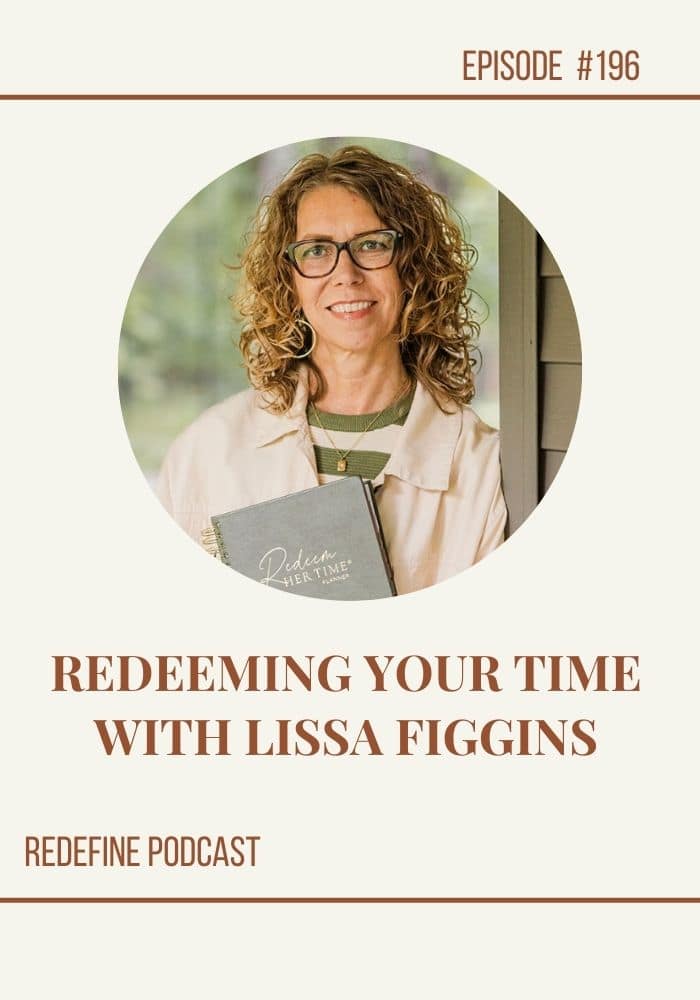
Redeeming Your Time With Lissa Figgins

If you are anything like me, you have likely uttered the phrase, “I just don’t have enough time,” at least once this week. Maybe even once this hour.


We treat time like this scarce commodity that is constantly slipping through our fingers. We buy the planners, we color-code the calendars, and we try to play “whack-a-mole” with our to-do lists. But what if I told you that time management is actually the problem, not the solution?


On this week’s episode of the Redefine Business Podcast, I sat down with the incredible Lissa Figgins. Lissa is a Time Scaling Strategist (I love that title!) who works with Christian women and business owners to help them unlock the results they want by changing their relationship with the clock.


As we look toward a new year, this conversation is absolute gold. We dig into why you need to stop “managing” time, how to get a better Return on Time Invested (ROTI), and the “Skittles vs. Oranges” analogy that will completely change how you pack your day.
Grab your favorite beverage, sit back, and let’s redefine how we view our 24 hours.


From “Time Management Ninja” to Scaling Strategist


Lissa didn’t start out as a guru with all the answers. In fact, she describes herself as the former “poster child” for toxic time management. She was the girl in school who wrote assignments in her planner after she did them just to get the dopamine hit of checking them off.


But as she became a wife, a mom of three, a teacher, and a leader in her community, the strategy of “hustling harder” stopped working. She was doing all the things, but she wasn’t present for any of them.


Lissa shared a powerful story on the podcast about a health scare that changed everything. She developed a sensation of a ball in her throat. After seeing specialists and fearing the worst, a doctor finally diagnosed her with Globus Hystericus. In plain English? She was so stressed and anxious from trying to control everything that her body was physically manifesting a lump in her throat.


The doctor told her she was “crazy” (in a medical sense!) with anxiety. That was her wake-up call. She realized her busyness wasn’t a “disordered calendar” problem; it was a “disordered heart” problem. She was chasing “enoughness” through doing, and it was costing her everything.


The Problem with “Managing” Time


Lissa dropped a truth bomb that resonated so hard: Time management implies we are just trying to contain the chaos.


Think about a manager at a fast-food restaurant during the lunch rush. They are running around, putting out fires, and just trying to keep the ship afloat. That is how most of us live our lives. We get our ducks in a row, and then life happens, the ducks scatter, and we spend the rest of the day chasing them.


Instead of management, Lissa teaches Time Stewardship.
We don’t own time. We didn’t create it, and we can’t bank it for tomorrow. We are given a gift of 24 hours every single day. A steward doesn’t just hide the money under the mattress (or waste the time scrolling social media); a steward invests it to get a return.


3 Shifts to Multiply Your Time in 2026


If you are ready to stop feeling behind and start feeling abundant with your time, Lissa outlined three specific mindset shifts you need to make.


Shift #1: Change Your Belief

You have to stop saying, “I don’t have time.” Lissa pointed out that we often say we don’t have time for our health, our Bible study, or our business growth, but we can easily tell someone about the latest Netflix series we binged or the hour we lost to Instagram.


We all have the same amount of time. It is the great equalizer. When you catch yourself saying “I don’t have time,” pause and remind yourself: I have time. It shifts you from scarcity to abundance.


Shift #2: Move from Management to Stewardship


As we mentioned above, stop trying to control every second and start trying to multiply your results. Lissa calls this ROTI: Return on Time Invested.


Just like money, you can waste time, spend time, or invest time.


Wasting it: mindless scrolling.
Spending it: doing necessary tasks that don’t move the needle (like buying a coffee—it’s gone once you drink it).
Investing it: doing things that expand your life, business, or relationships.


Unlike money, however, you can’t earn more time. Once today is gone, it’s gone. So, are you stewarding it well?


Shift #3: Change the Question


What is the number one question we ask ourselves every day? “What time is it?”


As soon as we ask that, our shoulders tense up. We look at the clock, realize we are “late,” and start rushing. Lissa suggests a tiny tweak that changes everything. Instead of asking “What time is it?”, ask: “What is it time for?”
This question grounds you in the present moment. It stops the multitasking (which, by the way, Lissa notes makes us make 40% more mistakes and takes 50% longer). When you know what it is time for, you can be fully present, whether that is writing an email, playing with your kids, or sleeping.


Capacity by Design: Skittles vs. Oranges


I love a good visual, and Lissa shared one that I am definitely going to use. It’s called Capacity by Design.


Imagine you have a jar.


The Skittles: These are the random notifications, the “got a minute?” interruptions, the scroll holes, and the busy work.

The Oranges: These are your faith, your family, your health, and your core business projects.


Most of us fill our jars with Skittles (the small stuff) all day long. Then, when we try to shove an Orange in (like a date night or a big project), there is no room. The jar is full of sugar-coated distractions.


But, if you put the Oranges in the jar first, and then pour the Skittles in, the Skittles will fall into the cracks and spaces around the Oranges.

Everything fits.


You have to identify your Oranges and anchor them into your day before you let the Skittles take over.


Establishing Time Zones


To make this practical, Lissa suggests viewing your day in “Time Zones.”


Refill Zones: These are usually morning and evening. You cannot pour from an empty cup. You need to refill your body, mind, and spirit. For Lissa, this looks like her morning pour-over coffee and Bible time.


Pour Out Zones: This is the time between the refill zones where you pour into your work, your family, and your household.


The mistake we make is trying to “pour out” (work) during a “refill” zone (late at night in bed). Keep your zones sacred, and you will find you actually get more done.


Final Thoughts


Time isn’t the enemy. It is the opportunity. Whether you are looking back at the past year with regret or looking forward to 2026 with anxiety, remember that you have enough time for what you are called to do.


Stop chasing the time you think you don’t have, and start stewarding the time right in front of you.
If you loved these nuggets, Lissa has a free private podcast series that breaks this down even further. Check out the links below!


Connect with Lissa Figgins


Freebie:
Scaling Secrets of the Top 1% (Private Podcast): Lissa breaks down how to multiply your hours in this 10-episode audio series.


Other Links:


Join the Community:


Join Lissa’s free Facebook community for business owners to network and grow.


Podcast: Check out the Redeem Her Time Podcast wherever you listen!

Join the Conversation

Let’s not stop the party here. Head on over to my Instagram or Facebook group, Redefine Your Business, and share your thoughts about today’s show. See you again, same time, same place next week!

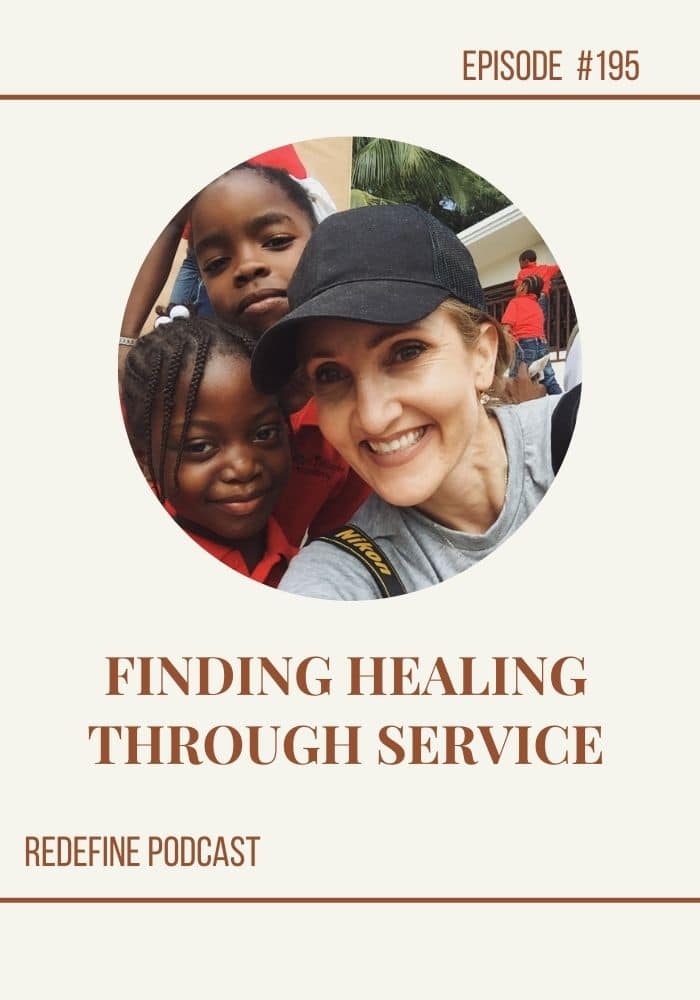
Finding Healing Through Service

Finding Healing Through Service

I’ve always believed in the power of service. It’s not glamorous, it’s not loud, but it has a way of grounding you, humbling you, and reminding you that even on your worst days, someone out there has it harder than you. Maybe it’s self-serving, but helping others has always made me feel connected to people, to purpose, and to something bigger than myself.


That love of serving started long before life handed me some of its hardest moments. When my kids were really little, I volunteered with Meals on Wheels for six years. I’d strap them into the stroller, load meals into the basket underneath, and walk door-to-door delivering food to elderly individuals. Sometimes I felt like a circus act balancing babies, bags, and hot meals, but the experience became a quiet teacher. Every visit taught the same lesson: life can always be harder, so choose compassion where you can.


Over the years, those experiences let me into countless nonprofit projects. One of the most meaningful was serving on the board of Haitian Roots, an organization focused on providing education for kids in Haiti. I traveled to Haiti every year, my camera in hand, heart wide open, and helped raise funds for children to go to school. Those trips shifted something in me. When you see a child’s entire future hinge on whether they can attend school, you don’t come home the same. You come home more grateful, more aware, and more determined to keep showing up for others.


But nothing prepared me for 2017.


That year, my 14-year-old son, Gage, passed away. There are no tidy words for that kind of loss. There’s no way to package it neatly or make it feel any less devastating. But what happened in the days after his passing were equally sad and beautiful.


We started getting knocks at our door. Then more knocks. One by one, his friends showed up. They were lost, confused, grieving, searching for comfort in the only place that felt connected to him. I watched these kids try to make sense of emotions too big for their age. And something inside me knew immediately: We have to help them. We have to give them something to hold onto.


One of my favorite Tony Robbins quotes says, “We only suffer when we think of ourselves.” Those words took root in my heart, especially during those dark early days. If these kids were overwhelmed with pain, the best thing we could do was teach them how to channel it into purpose rather than letting it consume them.


That seed of an idea became the Gage Schroeder Compassion Foundation.


Over the next year, with a lot of tears, a lot of brainstorming, and a whole lot of heart, we created a compassion-based curriculum designed specifically for teens and elementary aged kids. The curriculum includes lessons, quotes, and hands-on activities that build character, encourage service, and give young people an outlet to connect, contribute, and heal. It became the blueprint for starting Compassion Clubs in schools. It was meant to be a safe place for kids to serve, grow, and support one another.


Over the last eight years, we’ve helped start Compassion Clubs across the United States and have awarded nearly $80,000 in scholarships. Every club, every project, every scholarship carries Gage’s legacy forward. And every young person who participates becomes part of a ripple effect he never got to see but absolutely helped create.


Then, a couple of years ago, life shifted again. I went through a divorce and moved back to Utah, where I grew up. As much as I love Utah, it took a minute for me to find my footing again. Starting over isn’t glamorous, no matter how many inspirational quotes you pin on your wall. I wanted to start clubs in my new community like I always had, but I was rebuilding, and everything felt a little heavier than before.


And then one of my daughter’s friends decided he was done waiting on me.


He kept nudging, gently at first, then with the persistence of a teenager who had clearly made up his mind, that it was time to start a Compassion Club at the high school. Eventually, I said yes.


Since then, we’ve completed several service projects: homeless kits, first-aid kits for a women’s shelter, gratitude journals, and more. With every activity, I’m reminded just how much I love serving alongside kids. Teenagers get a bad reputation sometimes, but when they serve? They are powerful. They are thoughtful. They are full of heart. They carry a kind of raw honesty that adults often lose along the way.


What they probably don’t realize is how much they help me. Being around them reminds me of Gage. It reminds me of what mattered to him and what continues to matter to me: compassion, contribution, and connection. Serving with these kids doesn’t just strengthen them … it helps me heal.


This time of year naturally brings gratitude to the forefront. Everywhere you look, you’re reminded to be thankful, to give back, to slow down, to help others. It’s beautiful, but I often wish we carried this energy with us all year long. The world changes when compassion isn’t seasonal.


As we close out the year and step into a new one, my hope is simple: don’t get so swept up in the hustle of business and life that you forget the power of small acts of service. Look for opportunities, big or small, to lighten someone’s load. Smile at the person who looks overwhelmed. Donate if you can. Volunteer when possible. Teach your kids by example. And most importantly, let your personal values spill over into your work, your business, and your everyday routines.


The Gage Schroeder Compassion Foundation was born out of heartbreak, but it has grown into something beautiful, something healing, something hopeful, something that continues to change lives one act of service at a time.


And if there’s one thing I know for sure, it’s this: compassion doesn’t cure everything, but it makes everything more bearable.


Here’s to carrying it with us, not just during the holidays, but every single day.

Join the Conversation

Let’s not stop the party here. Head on over to my Instagram or Facebook group, Redefine Your Business, and share your thoughts about today’s show. See you again, same time, same place next week!

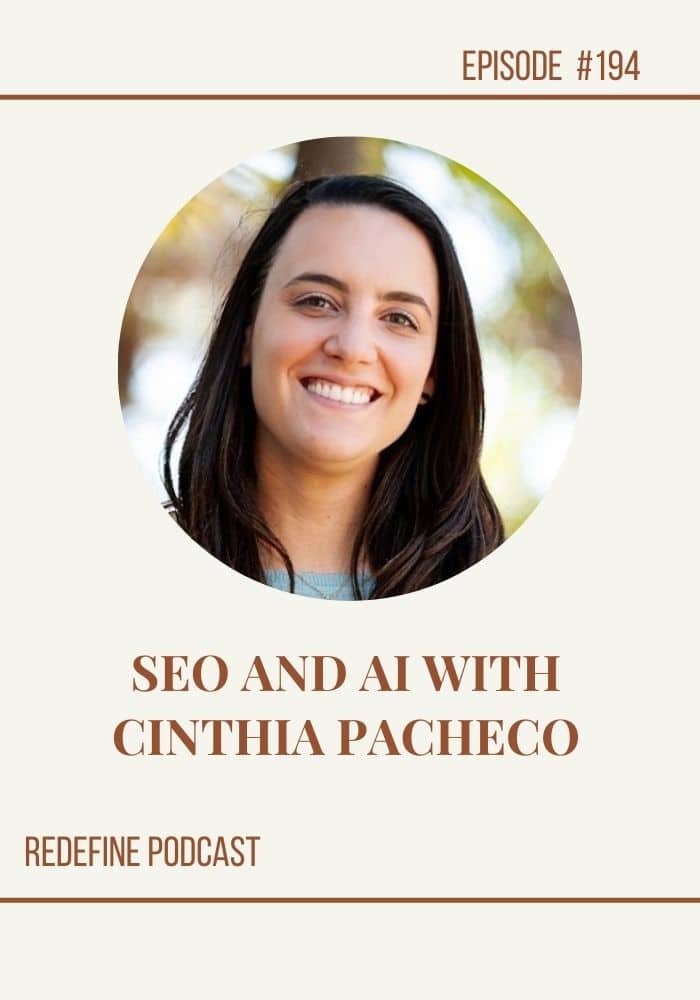
SEO and AI with Cinthia Pacheco

When you’re building an online business, it can feel like the rules keep changing. One minute everyone is talking about Instagram growth, the next minute it’s TikTok, and now suddenly the conversation has shifted to AI tools like ChatGPT, Gemini, and Perplexity. If you’ve felt a little overwhelmed keeping up — you’re in good company.


In this week’s episode, Brittni sits down with SEO expert and founder of Digital Bloom IQ, Cinthia Pacheco, to demystify all things SEO, AI search, keyword strategy, and content creation — and to help you understand how to actually make SEO work for you without burning yourself out.


As Brittni shares in the episode, many business owners are saying loud and clear: “I don’t want to be on social media all the time.” They’re tired, overwhelmed, and craving a more sustainable way to drive traffic and reach people. And that’s exactly why SEO — though never gone — is having a major resurgence.


Why SEO Is More Relevant Than Ever

Cinthia explains that SEO (Search Engine Optimization) has always been about meeting people at the exact moment they’re searching for what you offer. That timing is meaningful: while social media requires you to push content and hope the algorithm shows it, SEO brings people in when they’re actively looking for solutions.


Whether someone is searching for:

  • “How do I grow my business?”
  • “Best courses for new entrepreneurs”
  • “How to build funnels”
  • “Best tools for online coaches”

…SEO helps position your website as the answer.


But SEO no longer exists in a bubble. Today, tools like ChatGPT and Gemini are becoming search engines of their own. Cinthia explains that these platforms are learning from website content the same way Google does — which is why strong content matters more than ever.


Blogging Isn’t Dead — It’s Just Evolved

One myth Cinthia was eager to bust? That blogging is dead.


Blogging isn’t about being a “blogger” anymore — it’s about publishing high-quality, helpful, searchable content on your website in any format you want:


  • Tutorials
  • Case studies
  • Resource pages
  • Guides
  • FAQ pages
  • Articles
  • Notes
  • Journals

Call it whatever you’d like — what matters is that your site contains content that answers people’s questions. Cinthia encourages business owners to think of their website as a resource hub for both warm leads and brand-new visitors who are still figuring out what solutions they need.


Brittni emphasizes this too: she encourages new business owners to commit to creating at least 50 pieces of high-quality, optimized content. SEO is a long game. But unlike social media, which disappears in 24 hours, SEO content continues to work for you for years.


Keywords, AI, and the Shift Toward Topic Clusters

The heart of SEO has always involved keyword research — but keyword strategy is evolving rapidly.


Cinthia shared that in an AI-heavy world, search tools no longer rely solely on short, mechanical keyword phrases like “business coaching” or “marketing tips.” AI tools are interpreting longer, more conversational user queries and pulling from websites that offer deep, thematic content rather than isolated keywords.


This is where topic clusters come in.


A topic cluster is a group of related articles that all support one major topic. For example, if Brittni is targeting “business growth,” her cluster might include posts like:

  • How to grow your business without burnout
  • How to choose the right funnels for your business
  • What to automate first when scaling
  • Best tools for solopreneurs
  • How to build an email nurture sequence

AI tools love topic clusters because they show depth, authority, and clarity. Cinthia explains that AI is more likely to pull answers from websites that show true expertise — not surface-level content or repeated keyword stuffing.


SEO + AI: How They Work Together

Even though AI search feels new, the foundation of SEO still matters — it just has an additional layer now.


Traditional SEO still includes:


  • Fast-loading pages
  • Clean site structure
  • No broken links
  • Quality outbound and inbound links
  • Page titles and headers optimized for clarity
  • Helpful, original content

The AI layer adds elements like:


  • Schema markup (helps AI tools interpret your site)
  • Topical depth
  • Unique case studies, experiences, and stories
  • Authority building on other platforms
  • Content repurposed into formats AI prefers

This is why AI hasn’t replaced SEO — it has expanded it.


Cinthia reminds listeners that if everyone is using AI to generate content, the bar for quality and uniqueness has risen. Adding your unique stories, client wins, personal experiences, and your own frameworks gives Google and AI tools something no one else can offer.


Authority Building: Beyond Traditional Backlinks

Backlinks used to be the gold standard of SEO — and they still matter. But authority today is built in more ways than one.


Cinthia points out that platforms with high authority — like LinkedIn, YouTube, Reddit, and even podcast directories — help strengthen your credibility. This doesn’t mean copying and pasting your full blog posts onto LinkedIn (which creates duplicate content), but rather:


  • Writing original articles for those platforms
  • Repurposing content into shorter posts
  • Answering questions on Reddit
  • Appearing on other podcasts
  • Using YouTube as a search engine

These platforms reinforce your authority in ways AI and Google recognize.


The Biggest SEO Tip? Ask Your Audience.

When it comes to keyword research, Cinthia offered a surprisingly simple tip:


Just ask your audience what they search for.


Send a survey.
Ask on Instagram Stories.
Include a question in your onboarding form.
Or ask clients during calls.


You’ll be shocked at how simple people’s actual search phrases are — and how different they often are from what business owners assume.


Brittni adds that asking your audience regularly is also a great way to develop future content, courses, and offers. Sometimes the most basic questions your audience asks are the exact topics your SEO strategy needs.


Creating Content That Works for People and Search Engines

Cinthia encourages business owners to stop reinventing the wheel. Use what you already have:


  • Turn a video into a blog.
  • Turn a podcast episode into five articles.
  • Turn social media questions into tutorials.
  • Turn email replies into content pillars.
  • Transcribe a Reel and expand it into a blog.

AI can help refine your ideas — not replace your voice.


SEO becomes much more manageable when it feels like repurposing instead of starting from scratch every time.


How to Connect with Cinthia

Cinthia Pacheco is the founder of Digital Bloom IQ, a digital marketing agency specializing in SEO, paid ads, and AI-informed marketing strategy. She also offers educational programs for entrepreneurs who want to learn SEO or understand AI search.


Freebie:
https://courses.digitalbloomiq.com/module-0


You can find Cinthia at:
Website: digitalbloomiq.com
Instagram: @digitalbloomiq
Email: Cinthia@digitalbloomiq.com


Final Thoughts

If social media feels overwhelming, exhausting, or unpredictable — SEO might be the sustainable solution your business needs. SEO allows you to build long-term visibility, attract ready-to-buy clients, and share your expertise in ways that continue working for you long after you hit “publish.”


Cinthia’s biggest message?
SEO is not dead.
Blogging is not dead.
Long-form content is not dead.
Bad content is what’s dead.


If you create thoughtful, unique, useful content — and you stay consistent — your website becomes an asset that grows in value year after year. And in the world of business, that’s one of the smartest investments you can make.

Join the Conversation

Let’s not stop the party here. Head on over to my Instagram or Facebook group, Redefine Your Business, and share your thoughts about today’s show. See you again, same time, same place next week!

The $1,000 Sink That Taught Me a Lesson About Business

The $1,000 Sink That Taught Me a Lesson About Business

There’s something about home repairs that has a special way of humbling you. You start out optimistic—“How hard can it be?”—and within minutes you’re ankle-deep in stinky water. 


That was me a few months ago. 


When I moved into my house a couple years ago, my daughter accidently dropped glass soap dispenser on the pedestal sink in my half bathroom. It cracked the sink. They just don’t make them like they used to. Over the next year every time I used that bathroom and I was reminded that I needed to fix the sink. I priced new sinks and was pleasantly surprised a pedestal sink was around $100-200. After about a year passed I decided to call a plumber. After a quick inspection, he hit me with the quote: over $1,000 to fix it.


One. Thousand. Dollars.


Now, listen, I believe in paying professionals what they’re worth. But something inside me said, “Hold up… this can’t be that complicated.” I mean, I teach business systems for a living. Surely I can handle a plumbing system, right?


So instead of crying over my leaky sink (okay, maybe just a little), I decided to shift my mindset.


Step 1: I Talked Myself Into Believing I Could Do It

When that quote came in, my first instinct was panic. “I can’t do this. I don’t know anything about plumbing.” But then I caught myself.


That voice—the one that tells us we can’t—is sneaky. It’s the same voice that shows up in business when we think, “I can’t build a funnel,” or “I’ll never figure out automation,” or “I’m not techy enough for that.”


But I’ve spent years coaching entrepreneurs on mindset. I know how powerful it is to shift from fear to confidence.


So, I reminded myself: I’m smart. I’m resourceful. I can learn.


Just because I’ve never fixed a sink doesn’t mean I can’t learn how. And just because something looks complicated doesn’t mean it’s impossible.


Once I decided to believe that I could do it, everything changed. My energy shifted from “Oh no” to “Let’s go.”


Step 2: I Got Curious Instead of Scared

I started watching YouTube videos. I learned the difference between a P-trap and a tailpiece (and honestly, I feel like that deserves a merit badge).


At one point, I even found myself narrating like a YouTuber, “Okay guys, so this little thing right here is what’s causing the leak…”


Was it intimidating? Absolutely. Did I know what I was doing at first? Not even close.


But here’s the thing: curiosity destroys fear. When you switch from “I can’t” to “I wonder how,” you open the door for creativity and learning.


And that’s true in business too.


When something feels hard, like setting up a CRM or writing your first email sequence, curiosity can turn a mountain into a molehill. Instead of “I can’t,” try asking, “What if I could?”


Step 3: I Reached Out for Help

Here’s where the magic really happened.


I realized that while I could figure this out alone, I didn’t have to. I remembered that I had a friend who’d done a lot of home renovation projects. I called her and said, “Okay, don’t laugh, but I think I can fix my sink. Can you help me?”


She laughed (of course), but then she offered to come over. She showed up with a some random tools, and a calm confidence that said, “We’ve got this, it will be fun.”


Together, we took walked the aisles of Home Depot acting like we were professionals, we took apart the pipes, cleaned them out, replaced a few pieces, and tightened everything back up.


And just like that—my sink was fixed. No crack. No leaks. No $1,000 bill.


Step 4: The Lesson (It Was Never About the Sink)

Sure, I fixed a sink. But what really got repaired that day was my belief in what’s possible when you mix mindset with resourcefulness.


The truth is, the same principles apply to entrepreneurship.


How many times have we looked at something in our business and thought, “I can’t do that”?


Maybe it’s launching a course.
Or learning a new tech platform.
Or figuring out how to automate your client onboarding.


But just like that sink, every “impossible” problem has a solution—you just have to believe you’re capable of finding it.


Step 5: You Don’t Have to Know Everything—You Just Have to Know Who (or What) to Ask

One of the biggest mindset traps in business is thinking you have to do everything on your own.


You don’t.


When I called my friend, it didn’t make me less capable, it made me smarter. She had experience I didn’t, and by leaning on her, I saved myself time, frustration, and probably another trip to the hardware store.


In business, this looks like reaching out to a coach, joining a community, or asking someone who’s already done what you’re trying to do.


You don’t need to reinvent the wheel, you just need to be willing to ask who built it.


Step 6: Confidence Comes From Doing

When I turned on that faucet and saw the water flow perfectly, I swear I felt like I had just won an episode of Fixer Upper. I became a self-proclaimed plumber. I mean I bragged to everyone I knew that I installed my sink. 


That moment built confidence. And confidence isn’t something you’re born with, it’s something you build by taking action.


In business, we often wait to feel confident before we act. But it doesn’t work that way. Confidence doesn’t show up at the beginning, it’s the result of doing.


So whether it’s fixing a sink, starting a business, or building your first funnel, the more you do, the more confident you become.


Step 7: What This Means for You

If there’s something in your business (or life) that feels too big or too expensive or too complicated, pause and ask yourself:

  • What if I could do it?
  • Who could I ask for help?
  • What resources could I find to guide me?

You don’t have to have all the answers. You just need the belief that you can find them.


I fixed a sink because I refused to believe I couldn’t. And in that messy, wet, hilarious process, I was reminded that the same mindset that unclogs a drain can also unclog your business growth.


Step 8: The Takeaway

Sometimes the lesson shows up disguised as a broken sink.


Sometimes it’s a failed launch, a tech issue, or a sales page that just won’t convert.


But every challenge is really an invitation—to grow, to learn, and to believe a little deeper in yourself.


Because the truth is:
💧 You can fix the leak.
💻 You can build the funnel.
🚀 You can create the business (and life) you want.


You just have to decide you’re capable, and take the first step.


The next time something breaks, whether it’s a sink or a strategy, remember this:


You are smart enough to figure it out.
You are resourceful enough to find help.
And you are capable of doing anything you set your mind to.


After all, if I can fix a sink… imagine what you can do.

Join the Conversation

Let’s not stop the party here. Head on over to my Instagram or Facebook group, Redefine Your Business, and share your thoughts about today’s show. See you again, same time, same place next week!

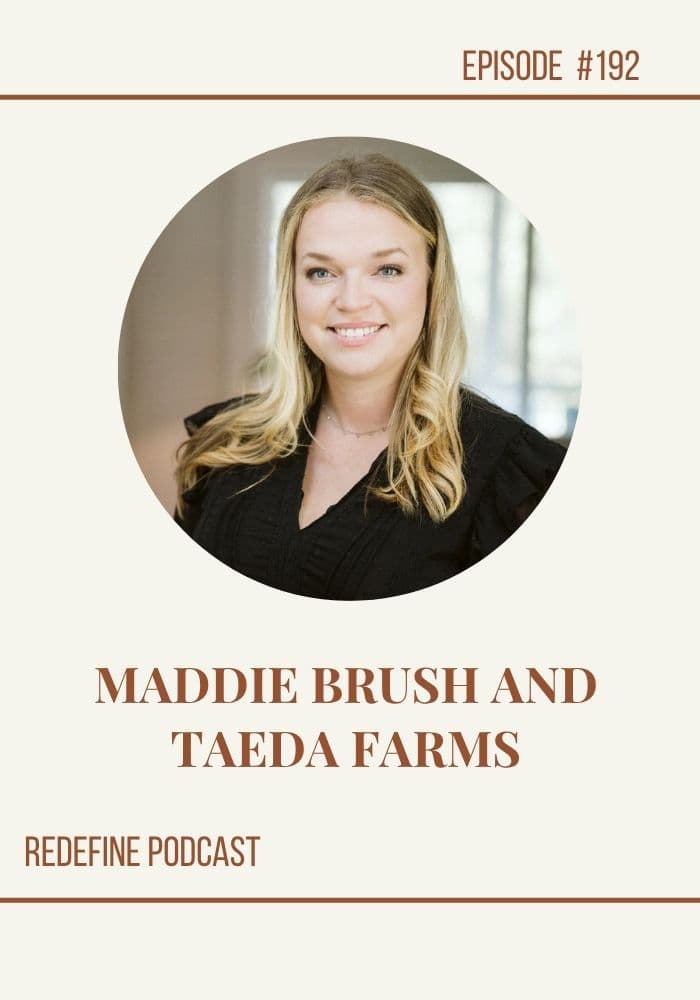
Maddie Brush and Taeda Farms

Building Dreams from the Ground Up: How Maddie Brush and Her Family Are Creating Taeda Farms

Starting something from scratch always takes courage, patience, and a whole lot of heart—and that’s exactly what today’s guest, Maddie Brush, brings to the table. On this episode of Redefine Business, host Brittni Schroeder sits down with Maddie to talk about the story behind Taeda Farms, a new flower farm and brand she’s building in North Carolina alongside her husband, Caleb, and her mom, Janelle Brown—known from the TLC show Sister Wives.


It’s a story of growth (both literally and figuratively). From navigating unexpected red tape and delays to discovering creative ways to keep their dream alive, Maddie’s journey is a beautiful example of perseverance, learning, and staying true to your vision.


The Story Behind Taeda Farms

The dream of Taeda Farms began a few years ago when Maddie and her family decided to create a space where people could connect with nature, slow down, and enjoy simple beauty. The idea was simple: a flower farm where guests could visit, walk through the blooms, take photos, and experience a little piece of peace.


But, as Maddie quickly learned, building a farm is a long game. What she thought would be a straightforward process—clearing some trees, planting flowers, and welcoming guests—turned into a lesson in environmental regulations, soil management, and patience.


“You can’t just buy a piece of land and start planting,” Maddie explains. Because the property is in a coastal county, the family had to work through multiple layers of permits and environmental checks. Officials examined the land to ensure it wasn’t part of protected wetlands or waterways. At one point, the U.S. Army Corps of Engineers even came out to inspect the property for what’s called a “blue line ditch,” a federally recognized natural waterway that can’t be disturbed.


While the process was long and complicated, Maddie took it in stride. Her curiosity and determination helped her navigate everything from zoning requirements to soil erosion rules. As Brittni points out, Maddie has a knack for learning about just about everything—whether it’s gardening, oils, or now, environmental engineering!


Why “Taeda”?

If you’ve ever wondered where the name Taeda Farms comes from, it’s rooted (pun intended) in nature. The word “Taeda” comes from Pinus taeda, the Latin name for a type of pine tree that grows tall with long, elegant needles. It’s also Latin for “torch” or “wedding torch,” which Maddie felt perfectly symbolized their mission to create light, warmth, and community through their farm.


Of course, the name has caused a little confusion. Some fans pronounce it “Tada,” which Maddie laughs about. “It’s Taeda, not Tada,” she says. “But honestly, we should probably use that in our marketing!”


Turning Delays into Opportunity

When the permitting process slowed down their plans, Maddie and her family didn’t just sit back and wait. Instead, they got creative.


To keep the brand alive and the community engaged, they launched a Taeda Farms merchandise line, starting with T-shirts, aprons, and small bundles that helped raise funds for the next phase of development. What started as a temporary solution quickly became a way to build brand awareness and connect with their incredibly supportive audience.


“We have such a loyal following,” Maddie says. “People kept asking how they could help, and we wanted to offer them something meaningful.”


This early pivot allowed them to generate income while continuing to clear land, handle environmental requirements, and fund the infrastructure needed for future visitors.


What’s Next for Taeda Farms

Fast forward to today, and progress is happening… finally! The team has begun clearing the land for flower beds and parking areas, and they’re taking careful steps to preserve the soil and prevent erosion. The first phase will feature a “You-Pick” flower experience, inviting visitors to stroll through the fields, take photos, and enjoy the natural beauty of the property.


Eventually, Maddie and her family plan to expand Taeda Farms into something truly special:

  • A flower subscription program, shipping seasonal blooms nationwide
  • Cabins and a coffee shop, offering guests a peaceful rural escape
  • A large lodge, perfect for retreats, weddings, and special events


If all goes according to plan, Taeda Farms is expected to open to the public in spring 2026 just in time for the first major blooms.


The Slow Living Philosophy

In addition to her work on Taeda Farms, Maddie is also building her own personal brand centered on slow living and homesteading.


She shares recipes, garden updates, and tips for embracing a more intentional pace of life, something that feels especially meaningful in today’s fast-moving world. “I like going slow,” she says. “Our world is so fast-paced, and I love helping people find ways to enjoy their homes, their families, and the everyday moments.”


Her Instagram is full of cozy glimpses of family life, cooking from scratch, and behind-the-scenes farm updates. It’s a refreshing reminder that success doesn’t have to come from rushing—it can come from nurturing, growing, and savoring the process.


Balancing Business and Motherhood

Maddie’s plate is full! She’s a mom of three young kids, a business owner, and now a farm founder. She laughs about the chaos of motherhood, especially since she and Brittni both have energetic kids. “I don’t think either of us got mellow children,” she jokes.


Still, even in the midst of diapers, dirt, and deadlines, Maddie finds joy in the small things. Her simple pleasure? “Hot coffee in the morning before everyone else wakes up.” It’s those quiet moments of calm that fuel her creativity and determination to keep building something beautiful.


Follow and Support Taeda Farms

The best way to follow along with Maddie’s journey is through the Taeda Farms website and Instagram, where she shares progress updates, recipes, and sneak peeks of what’s blooming next.


🌿 Follow Maddie & Taeda Farms:


Whether you’re a flower lover, a slow-living enthusiast, or just someone cheering on a family chasing their dream, Taeda Farms is a story worth following.

Join the Conversation

Let’s not stop the party here. Head on over to my Instagram or Facebook group, Redefine Your Business, and share your thoughts about today’s show. See you again, same time, same place next week!

How to Prepare for the Holidays as a Small Business Owner

How to Prepare for the Holidays as a Small Business Owner 

Ah, the holiday season, that magical time when sales spike, inboxes overflow, and every entrepreneur swears this is the year they’ll plan ahead. Spoiler alert: it’s not too late to make that true.


As a small business owner, the holidays can feel like a double-edged sword. On one side, it’s the best time of year for connection, creativity, and sales growth. On the other, it can be total chaos if you’re not prepared. But with a little prepping, the right systems, and some serious strategy, you can cruise through December like a pro.


Let’s talk about how to prepare for the holidays without the burnout,.  and maybe even enjoy the holiday season while you’re at it.


Review Last Year’s Data — Your Future Self Will Thank You

Before you make a single plan, look back at what happened last year. Pull your reports:


  • What products or services sold best?
  • When did your sales spike?
  • What campaigns performed well (or flopped)?
  • Did you run out of inventory or time?

Data tells a story and that story will guide your next move. If you know what worked, you can double down. If something flopped, tweak it or toss it.


If you didn’t track much last year, that’s okay. This is your sign to start. Your goal is to make next year’s prep even smoother.


Set Clear Goals for the Season

Don’t just say “I want more sales.” Be specific.


Ask yourself:

  • How much revenue do I want to generate this holiday season?
  • What percentage of that will come from existing customers versus new ones?
  • How can I improve customer experience to encourage repeat business in the new year?

Once you set goals, break them down into small, actionable steps. For example, if your goal is to increase sales by 25%, identify how you’ll get there,  through new offers, email campaigns, bundles, or a special promotion calendar.


You can’t hit a target you can’t see. So define what success looks like now, not when you’re knee-deep in wrapping paper.


Get Your Systems in Order (Automation is Your Holiday BFF)

This is where the magic happens. Whether you’re a product-based business or a service provider, you need systems that support your sanity.


Here’s what to review:

  • Email Automations: Set up holiday campaigns, abandoned cart reminders, and thank-you sequences ahead of time.
  • Social Media Scheduling: Batch and schedule your content now. You do not want to be posting from your phone at a family dinner.
  • Client Onboarding & Invoicing: If you offer services, automate contracts, invoices, and follow-up emails.
  • Inventory Tracking: Make sure you can fulfill orders smoothly and track stock levels automatically.

If your systems are a mess, this is the time to streamline. Your future self (and your stress levels) will be eternally grateful.


Create Your Holiday Offers

Your audience is already in a buying mindset,  make it easy for them to say “yes.”


Consider these holiday offer ideas:

  • Gift Bundles: Combine your best-selling products or services into irresistible packages.
  • Limited Edition Items: Nothing sparks urgency like a “holiday exclusive.”
  • Early Bird Deals: Reward your most loyal customers with early access or special bonuses.
  • Service Gift Certificates: Great for coaches, consultants, and creatives.
  • 12 Days of Deals: A fun and engaging way to keep your audience checking back daily.

Don’t discount too heavily out of panic. Your offers should add value, not devalue your brand. Focus on perceived value, experience, and convenience.


Plan Your Marketing Calendar

You can’t wing holiday marketing  at least, not without losing a little hair.


Sit down and map it out:

  • What promotions are you running, and when?
  • What content supports each promotion? (Emails, reels, blog posts, ads, etc.)
  • What’s your Black Friday, Small Business Saturday, or Cyber Monday plan?

Pro tip: Design all your graphics, write your captions, and schedule your campaigns early. If you can, use tools like Canva, Later, or Meta Business Suite to pre-load everything.


By the time December hits, you should be sipping peppermint mochas while your campaigns run on autopilot.


Prep Your Email List for the Rush

Your email list is your most powerful holiday tool,  but only if you nurture it before the big promos drop.


Start with a warm-up sequence:

  • Send a “holiday sneak peek” or “exclusive preview” email.
  • Offer early access to your most loyal subscribers.
  • Reintroduce your brand’s story and remind them why they love you.

Then, segment your audience. Send different messages to new leads, loyal customers, and inactive subscribers. Tailored messaging converts better (and feels more personal).


Stock Up, Staff Up, and Set Boundaries

The holidays are not the time to run out of inventory, energy, or patience.


If you sell products, double-check your inventory and order early. If you provide services, plan your availability and communicate your holiday schedule to clients in advance.


And for the love of gingerbread, set boundaries.
You don’t need to answer DMs at midnight. You don’t need to work every weekend.


Schedule downtime,  and stick to it. A burnt-out business owner isn’t a festive one.


Prioritize Customer Experience

During the holidays, people remember how you made them feel.


A few small touches can go a long way:

  • Add personalized thank-you notes or small freebies to orders.
  • Offer fast, friendly customer service.
  • Make sure your website is mobile-friendly and loads quickly.
  • Communicate shipping deadlines clearly.

Happy customers turn into repeat customers — and word-of-mouth referrals are the gift that keeps on giving.


Don’t Forget About January

Most business owners focus so much on December that they forget about what happens after the holiday rush.


Plan your post-holiday strategy now:

  • Launch a “New Year, New You” offer or refresh campaign.
  • Send a “thank you” email to holiday buyers and invite them to stay connected.
  • Schedule a business audit or reflection week to review what worked and what didn’t.

Momentum is a beautiful thing. Keep it rolling into the new year.


Remember Why You Started

It’s easy to get caught up in the hustle and forget the heart behind your business.


The holidays are a chance to reconnect — with your customers, your purpose, and your passion. Whether you’re baking, coaching, designing, or shipping, every sale represents a real person choosing you.


That’s something worth celebrating.


So light a candle, take a deep breath, and remind yourself: you’ve built something amazing. With the right preparation, systems, and mindset, this holiday season can be your most joyful (and profitable) one yet.


Preparing for the holidays as a small business owner isn’t about doing everything. It’s about doing the right things — intentionally, efficiently, and with a dash of festive flair.


This is your season to shine, sell, and still have time to enjoy the twinkle lights. You’ve got this. 

Join the Conversation

Let’s not stop the party here. Head on over to my Instagram or Facebook group, Redefine Your Business, and share your thoughts about today’s show. See you again, same time, same place next week!

Body Awareness Coach Sarah Godfrey

When you think about confidence, you might picture someone walking boldly into a room, commanding attention without saying a word. But what if that kind of confidence isn’t something you’re born with — what if it’s something you can embody?


That’s the exact message that movement expert and coach Sarah Godfrey shares in this week’s episode of The Redefine Business Podcast with Brittni Schroeder. Sarah helps coaches and entrepreneurs use transformational body language skills to step into their full leadership potential both on stage and online.


But as she says, what she really loves is how these skills change how her clients see themselves.


From Dance to Business Coaching: Sarah’s Journey

Sarah’s story begins years ago at Brigham Young University, where she studied dance. During that time, she had a life-changing realization: her movement reflected how she felt inside. When she was going through one of the darkest times in her life, her professors kept giving her the same corrections — “Take up more space. Lift your eyes. Use your long legs.”


Those small notes sparked a huge awareness: how she felt internally was showing up in her body language.


Instead of simply adjusting her technique, Sarah decided to change her relationship with herself. “Maybe if I change how I move,” she thought, “it will change how I feel about me.” It did, and it set her on a path that would shape the rest of her career.


She went on to work in the mental health field, helping people heal from trauma and reconnect with their bodies. But over time, she felt a pull to do more — to help people who were ready to grow, not just recover.


That’s when her business coach encouraged her to pivot. “You should work with entrepreneurs,” the coach suggested. “They’re action-takers. They’re ready for more.”


That advice changed everything.


Today, Sarah helps coaches and leaders build presence, regulate their nervous systems, and embody confidence so they can lead with clarity and connection.


The Power of Presence in Business

In the conversation, Brittni and Sarah talk about a truth that every business owner needs to hear: your nonverbal communication speaks louder than your words ever could.


As Sarah explains, “Nonverbal communication is wild — it’s so much louder than anything you’re saying.”


Whether you’re leading a coaching call, hosting an event, or creating social media content, your presence is constantly telling your audience something about you. Are you confident and grounded — or unsure and guarded?


The good news: you have control over that message.


When you learn to align your inner state with your outer expression, people naturally trust you more. “People will accept what you project,” Sarah says, referencing the book The Charisma Myth by Olivia Fox Cabane. When you embody confidence, certainty, and warmth, you don’t have to convince anyone that you’re capable — they’ll feel it.


And that’s exactly what builds trust and connection — two things every entrepreneur needs to succeed.


How Body Language Affects How You Feel

Many of us think of body language as something that affects how others perceive us. But Sarah reminds us that it also affects how we perceive ourselves.


“Our brains are wired to read body language,” she says. “But your body is reading your own cues, too.”


When you carry yourself with confidence — when you stand tall, make eye contact, or take up space — you’re sending a message to yourself: This is who I am. This is what I’m capable of.


It’s not about faking confidence; it’s about embodying the version of you that already believes in herself.


Brittni connected deeply with this idea, sharing her own fascination with confidence. “I’ve always loved fashion,” she said, “and I realized at a young age that how you carry yourself changes how people respond to you.”


People are drawn to confidence, especially in business. Whether you’re speaking on stage or showing up on Instagram, when you move and speak with assurance, people assume you know what you’re doing.


Nervous System Imprinting: A New Way to Build Confidence

Sarah introduces a powerful concept she calls nervous system imprinting, which is about training your body to feel safe and comfortable while expanding into new levels of visibility, income, and leadership.


So often, entrepreneurs sabotage themselves when they hit a new level of success because their bodies aren’t used to holding it. Nervous system imprinting helps you build the capacity to handle more — more clients, more opportunities, more abundance — without fear or burnout.


When you’re grounded internally, you naturally project calm authority externally. That combination of presence and poise not only helps you lead better — it helps you attract the right clients and opportunities.


How to Build Confidence in Your Daily Life

Sarah’s advice for anyone wanting to feel more confident and magnetic? Start with your roots.


Instead of focusing on surface-level fixes — like how to move your hands or what to do with your posture — she encourages people to look deeper:


Ask yourself: When do I feel the most powerful, the most alive, the most capable? Build on that.


Then, she suggests using visualization to tap into that feeling before you go live, walk into a meeting, or take the stage.


“If I already felt confident,” she says, “how would I show up right now? What would I be doing with my body? What kind of look would I have in my eyes?”


Confidence starts from within, but once you connect with it, your body becomes the vehicle that communicates it to the world.


Why Confidence Builds Trust

Brittni and Sarah also discussed one of the biggest lessons in business: people don’t just buy your product or service — they buy you.


To build that “know, like, and trust” factor, you first have to trust yourself.


That’s why embodiment work is so powerful:  It teaches you how to show up with the confidence and self-trust that inspires others to follow your lead.


Connect with Sarah Godfrey

If you want to learn how to feel more confident on stage, online, or in your everyday business, Sarah is the coach to follow.


You can find her on Instagram at @iamsarahgodfrey, where she shares resources, insights, and challenges designed to help you step into your power as a coach and leader.


She also regularly hosts her Coach with Confidence Challenge, a powerful starting point for anyone ready to strengthen their presence and embody true leadership.

Join the Conversation

Let’s not stop the party here. Head on over to my Instagram or Facebook group, Redefine Your Business, and share your thoughts about today’s show. See you again, same time, same place next week!

Red and Green Flags to Watch for When Hiring Contractors

5 Things to Look for (and 5 Red Flags to Avoid) When Hiring a Contractor for Your Small Business

Running a small business often feels like juggling flaming swords while riding a unicycle. You’ve got customers to serve, sales to make, and about twelve tabs open in your brain at all times. That’s why hiring contractors or experts who can take things off your plate like running Facebook ads, managing social media, or optimizing SEO can feel like the best gift since Amazon Prime.


But here’s the catch: not all contractors are created equal. The right one can grow your business. The wrong one can drain your time, budget, and sanity. Let’s break down 5 green flags (the good stuff!) and 5 red flags (the “run away” signals) to look for when hiring contractors for your small business.


5 Things to Look for in a Contractor


1. Clear Communication

A good contractor doesn’t just “do the work” but they explain what they’re doing and why. Whether it’s reporting on ad spend, showing engagement stats, or laying out an SEO strategy, they should keep you in the loop without drowning you in jargon. You don’t need a crash course in Google’s algorithm updates, you need clear, consistent updates in plain English.


2. Proven Results (with Examples)

You wouldn’t hire a personal trainer who has never lifted weights, right? Same goes here. A reliable contractor should have a portfolio, testimonials, or case studies that showcase their work. For instance, a Facebook ads specialist might show you a campaign that generated leads at a low cost, or a social media manager might share growth analytics from past clients. Results don’t have to be flashy, but they should be real.


3. Alignment with Your Goals

A contractor should care about your business goals, not just their own process. If your goal is brand awareness, but they only talk about conversion campaigns, you might be on different pages. Ask them how they would tailor their work to your specific objectives, whether that’s growing an email list, boosting local visibility, or driving online sales.


4. Transparency in Pricing and Process

There should be no “mystery fees” or vague timelines. A trustworthy contractor will explain what’s included in their pricing, how often they invoice, and what deliverables you can expect. Clarity upfront helps avoid headaches later. If they’re running ads for you, they should also be clear about how much of your money goes into ad spend vs. their fee.


5. Adaptability and Continued Learning

Digital marketing changes faster than TikTok trends. You want a contractor who is adaptable and stays updated on what works now—not just what worked five years ago. Someone who can say, “The algorithm changed, here’s what we’re doing differently” is worth their weight in gold.


5 Red Flags to Watch Out For


1. They Guarantee Specific Results

If a contractor promises, “I’ll get you 10,000 followers in a month” or “I guarantee you’ll rank #1 on Google,” throw that red flag like it’s the Olympics. No one can guarantee results in areas that depend on algorithms, audiences, and competition. Real pros set realistic expectations and talk about strategy, not magic numbers.


2. They Can’t Explain What They’re Doing

If their explanations feel like decoding the Da Vinci Code, or worse—they dodge your questions—that’s a problem. You don’t have to understand every technical detail, but you deserve to know the basics of where your money and time are going.


3. They Talk More About Themselves Than Your Business

Beware of contractors who only brag about their own brilliance but don’t ask about your goals, target audience, or challenges. If they aren’t interested in understanding your business, how can they create a strategy that fits?


4. No References or Reviews

If a contractor can’t provide any references, testimonials, or proof of past work, pause before signing anything. While everyone starts somewhere, even newer contractors should have something to show—whether it’s results from volunteer projects, training certifications, or mock portfolios.


5. They Push for Long Contracts Without Trust Built

If someone pressures you to sign a 12-month contract before they’ve proven themselves, beware. Long contracts can be appropriate, but only after you’ve worked together and built trust. A good contractor often offers shorter terms or trial periods first.


How to Protect Yourself (and Your Wallet)

When hiring a contractor, think of it as dating—you wouldn’t marry someone after the first coffee date, right? Same idea here:

  • Start with a smaller project. Test their communication, quality, and reliability.

  • Ask the right questions. “What metrics do you track?” “How do you measure success?” “How do you report back to clients?”

  • Trust your gut. If something feels off—whether it’s their attitude, lack of clarity, or too-good-to-be-true promises—it probably is.

The right contractor can be a game-changer for your small business—freeing up your time so you can focus on what you do best. Look for clear communication, proven results, and a genuine interest in your goals. Steer clear of big promises, shady processes, and pressure tactics.


Remember: you’re not just hiring someone to “do a job.” You’re bringing in a partner to help grow your business. Choose wisely, and your investment will pay off in more visibility, more customers, and a whole lot less stress.

Join the Conversation

Let’s not stop the party here. Head on over to my Instagram or Facebook group, Redefine Your Business, and share your thoughts about today’s show. See you again, same time, same place next week!

Travel Content Creator – Zee Travel

From Engineer to Travel Creator: How Zineb Baaout Built a Full-Time Career Sharing Her Adventures

When you scroll through Instagram and see stunning mountain views, crystal lakes, and cinematic drone shots, it’s easy to assume that travel creators spend all their time on vacation. But for Zineb Baaout, better known as @zee.travel, the journey to becoming a full-time content creator was anything but simple.


Originally from Morocco and now based in Utah, Zineb turned her love for exploration into a thriving business. She partners with tourism boards, outdoor brands, and hotels to produce engaging travel content for her growing community of more than 150,000 followers across platforms.


In this episode of the Redefine Business Podcast, host Brittni Schroeder sits down with Zineb to talk about how she transitioned from an engineering career to full-time travel content creation, the tools that help her stay consistent, and what she’s learned about building a brand online.


How It All Started

Zineb’s story begins in Morocco, where she was born and raised. In 2019, she moved to the United States to pursue her master’s degree in engineering at Mississippi State University. After graduating, she began working in the engineering field in Mississippi—a stable and well-paying job that checked all the traditional boxes of success. Yet, even with financial security, Zineb felt a sense of dissatisfaction.


She recalls feeling like she didn’t have enough time to enjoy the life her career afforded her. With just ten vacation days a year, she realized that the lifestyle she wanted—one filled with travel, freedom, and creativity—wasn’t possible in her current path.


During this time, she began sharing travel photos on Instagram simply as a creative outlet. It started as a hobby, a way to document her experiences and connect with others who loved exploring. But what began as a casual pastime soon turned into something much bigger.


A visit to Salt Lake City and Park City changed everything. Zineb was captivated by Utah’s mountains, national parks, and the endless opportunities for adventure. The landscape and lifestyle resonated deeply with her, and soon after, she made the move to Utah.


That’s when things started to shift. “When I moved to Utah, that’s when I started taking content seriously,” she explains. She began posting regularly, creating weekend itineraries, exploring new trails, and sharing travel tips. Her content resonated with others who also worked full-time but dreamed of adventure, showing them that travel didn’t have to mean quitting your job—it just required creativity and planning.


Tools of the Trade

At first glance, Zineb’s content looks like it could be produced by a professional media team. The shots are cinematic, the editing is seamless, and the storytelling feels effortless. But behind the scenes, her setup is refreshingly simple.


“I mostly just use my iPhone,” she shares. “I bought a 360 camera recently for things like ziplining, but otherwise I don’t carry a lot. I like to travel light, especially when hiking.”


Her approach proves an important point for aspiring creators: it’s not about having the most expensive gear, it’s about having a clear vision and consistent practice. Zineb’s content works because it’s authentic, visually compelling, and tells a story that inspires people to get outside and explore.


That focus on simplicity also helps her maintain her creative energy. Traveling light allows her to stay present in the moment, which comes through in her content. She isn’t weighed down by heavy equipment or complicated production logistics—she’s focused on capturing experiences that feel real.


Turning Content Into a Business

As Zineb’s following grew, opportunities began to appear. Like many new creators, her first collaborations weren’t paid. She reached out to local businesses and brands she genuinely loved, offering to share content in exchange for experiences or products.


“In the beginning, I reached out to businesses I wanted to post about,” she says. “Most of the time, it was just an exchange. Later, I started reaching out to destinations and cities, and those were usually paid.”


Her first paid partnership came from Visit Ogden, a Utah-based tourism organization. That campaign became a turning point. “That was my first monetized campaign,” she recalls. “I had around 14,000 followers at the time, and I’m still so grateful they gave me that opportunity.”


From there, her career gained momentum. She began building relationships with tourism boards, hotels, and outdoor brands. Each collaboration helped her refine her business strategy and strengthen her portfolio.


Today, Zineb’s income primarily comes from brand partnerships and destination campaigns. Her audience has grown beyond 54,000 followers on Instagram alone, with additional reach on TikTok and Facebook. Her community trusts her recommendations because they’re rooted in genuine experience, not just sponsored content.


When it comes to brand partnerships, she’s learned that proactive outreach often leads to the best results. “My highest-paid collaborations have come from my own outreach,” she explains. “When I see a brand that’s a perfect fit, I pitch them directly. That gives me better leverage because I already know it’s a great match.”


That intentional approach allows her to work with brands that align with her values—companies focused on sustainability, outdoor adventure, and authentic travel experiences.


Consistency Is the Secret

Ask any creator what their biggest challenge is, and most will say consistency. It’s easy to stay motivated when engagement is high and growth is visible. It’s harder to keep going when views drop or the algorithm shifts.


For Zineb, consistency has been the foundation of everything. “You just have to start and stay consistent,” she says. “Have a real goal from the beginning—know why you’re doing it. Otherwise, you’ll burn out. There will be ups and downs with views, but you have to push through.”


Host Brittni Schroeder echoes that message. As an entrepreneur and business coach, she’s seen how consistency can transform not just social media growth, but business success as a whole. “You can’t get frustrated with the algorithm,” she says. “It’s constantly changing, but what really matters is showing up.”


That mindset has guided both women in their careers. Zineb didn’t become a full-time creator overnight—it was years of steady posting, learning, and refining her craft. She didn’t wait for the perfect opportunity or equipment; she started with what she had and stayed committed to improving.


Her growth is a reminder that success online isn’t about viral moments. It’s about trust, value, and showing up when it feels like no one’s watching.


Challenges

While Zineb’s job looks idyllic on Instagram, she’s honest about the challenges that come with being a creator. One of her biggest frustrations is the lack of recognition for creators as professionals.


“A lot of businesses don’t see us as professionals,” she explains. “They’ll say, ‘We’ll give you food or a free stay,’ but they don’t realize this is our job. It’s not a hobby—it’s work.”


Behind every beautiful photo or travel video is hours of research, shooting, editing, negotiating contracts, and managing client relationships. Zineb emphasizes the importance of setting boundaries and valuing your time. Saying no to unpaid work that doesn’t serve your long-term goals is crucial to building a sustainable business.


Despite those challenges, Zineb’s love for creating content and exploring new places hasn’t faded. She often brings friends along on collaborations, turning work trips into shared adventures. “It’s so fun to experience these trips together and see new places with people I love,” she says. Those moments remind her why she started in the first place.


Lessons Learned Along the Way

Looking back, Zineb’s journey has taught her that success doesn’t come from following a single formula—it comes from following curiosity and trusting your instincts. She didn’t set out to become a travel influencer; she simply followed what excited her and learned along the way.


She encourages aspiring creators to do the same. Start before you feel ready, stay consistent, and don’t compare your journey to anyone else’s. What makes your story unique is what will resonate most with your audience.


“I went to school for engineering, but my phone opened up a whole new world for me,” she says. “It’s crazy where life can take you when you just start.”


Her story is a powerful example of how creative passion, combined with persistence and strategy, can open unexpected doors.


Connect with Zineb

To follow more of Zineb’s adventures and see her latest travel guides, you can find her on Instagram at @zee.travel.

Join the Conversation

Let’s not stop the party here. Head on over to my Instagram or Facebook group, Redefine Your Business, and share your thoughts about today’s show. See you again, same time, same place next week!

Affiliate Marketing For Small Businesses

Why Every Business Owner Should Consider Affiliate Marketing


When you’re a business owner, your to-do list is already long enough to wrap around the block. Between managing clients, creating content, building systems, and actually delivering your product or service, the idea of adding one more thing can feel overwhelming. But there’s one growth strategy that can expand your reach, boost your revenue, and even strengthen your relationships—all without demanding that you reinvent the wheel. That strategy is affiliate marketing.


Today I am going to break down what affiliate marketing is, why it’s such a powerful tool for entrepreneurs, and how you can leverage it to work smarter, not harder.


What Is Affiliate Marketing, Really?


Affiliate marketing is essentially a modern form of word-of-mouth marketing—with a paycheck attached.


Here’s how it works:

  • You, the business owner, offer a product or service.
  • Affiliates (partners, influencers, loyal customers, or even other businesses) promote that product to their own audience.
  • Every time someone makes a purchase through the affiliate’s unique link, they earn a commission, and you gain a new customer.


It’s a win-win: affiliates make money by recommending something they believe in, and you get more sales without the usual upfront costs of traditional advertising.


Why Affiliate Marketing Is a Smart Play for Business Owners

1. Low-Risk, High-Reward Growth

Unlike paid ads, where you’re spending money before you know if they’ll work, affiliate marketing only costs you when a sale is made. You’re paying for results, not just exposure.


Think of it like hiring a commission-based sales team—but without the payroll headaches. Every new affiliate you bring on is an extra megaphone promoting your business, and you only shell out cash once they’ve closed the deal.


2. Built-In Trust Factor

Consumers are increasingly skeptical of traditional advertising. They scroll past banner ads, skip commercials, and side-eye sponsored posts. But they trust recommendations from people they already follow or admire.


When your affiliate tells their audience, “Hey, I use this product and it works,” that carries far more weight than a faceless ad campaign ever could. Affiliates lend you their credibility—and that can shorten the path from curiosity to checkout.


3. Expands Your Reach Without Extra Work

You probably already know how exhausting it is to constantly find and engage a new audience. Affiliate marketing solves this problem by tapping into audiences you might never reach on your own.


For example, let’s say you sell a course on social media automation. You could run ads targeting business owners—but what about all the entrepreneurs who are already following a productivity coach, a podcast host, or a YouTube channel about online tools? By partnering with affiliates in those niches, you instantly put your offer in front of a whole new crowd.


4. Strengthens Your Brand’s Ecosystem

Affiliate marketing isn’t just about money; it’s also about building community. Affiliates often become some of your most vocal advocates, cheering you on, giving feedback, and helping spread your message.


Over time, this creates a network effect: you’re not just one brand talking to one audience—you’re a hub connected to multiple communities. And when affiliates succeed with your product, they’re motivated to keep promoting, which creates consistency in your visibility.


5. Scales Without Scaling Your Stress

Most marketing strategies require you to increase your effort as you grow. More ads mean more ad spend. More social media posts mean more content creation. But affiliate marketing scales beautifully: once you’ve built a system, you can add affiliates without piling extra work on your plate.


With the right systems (hint: automation tools and affiliate tracking software), you can manage dozens—or even hundreds—of affiliates while focusing on the core of your business.


Common Misconceptions About Affiliate Marketing


Let’s clear up a few myths that keep some business owners from taking the leap.
“It’s only for big companies.” Wrong. Even solopreneurs can create affiliate programs. All you need is a product, a fair commission structure, and a way to track sales.


“I’ll lose profit.” Nope. You’re only paying affiliates from revenue you wouldn’t have earned otherwise. It’s not eating into your profit margin; it’s creating new ones.


“It’s too complicated.” With today’s tools (like ThriveCart, Kajabi, or even Shopify apps), setting up affiliate tracking is easier than ever. Automation takes care of payouts and reporting.


How to Get Started With Affiliate Marketing

If you’re convinced but wondering, Okay, but what do I actually do? here’s a roadmap to start simple and scale smart.


Choose the Right Offer

Not every product or service is ideal for affiliate marketing. Pick something that delivers clear value and is easy for affiliates to explain. Think digital products, courses, memberships, or software.


Set a Fair Commission Structure

Decide what percentage makes sense. Digital products often allow for higher commissions (30–50%) since there’s no physical inventory. Physical products might be lower (10–20%), but can still be attractive if priced well.


Select an Affiliate Platform

You’ll need a way to track clicks, sales, and payouts. Options include:

  • ThriveCart or SamCart for digital products
  • Shopify apps for ecommerce
  • Kajabi or Teachable for online courses


Recruit Affiliates Strategically

Look beyond influencers with massive followings. Sometimes micro-influencers with smaller but loyal audiences convert better. Reach out to happy customers, business peers, or niche creators.


Support Your Affiliates

Give them tools: swipe copy, graphics, promo emails, even training on how to talk about your product. The easier you make it for them, the more they’ll promote.


Track, Test, Tweak

Keep an eye on your numbers. Which affiliates are bringing in sales? Which promotions work best? Double down on what’s working and refine what isn’t.


Affiliate Marketing in Action: A Quick Example


Imagine you run a business membership that helps entrepreneurs build funnels and automations. You launch an affiliate program offering 30% commission for each sale.
One of your affiliates is a podcast host who teaches productivity tips. She shares her experience using your membership to streamline her own systems. A listener clicks her affiliate link, joins your membership, and boom—she earns a commission, and you gain a new customer.


Multiply that by ten, twenty, or a hundred affiliates, and you’ve created a powerful marketing engine that runs even while you’re asleep.


The Bottom Line

As a business owner, you don’t have to carry the entire marketing load on your back. Affiliate marketing allows you to leverage other people’s audiences, credibility, and enthusiasm to grow your sales. It’s cost-effective, scalable, and community-driven.
In a world where attention is fragmented and trust is gold, affiliate marketing gives you both. So instead of trying to shout louder than the competition, why not let a team of partners help amplify your message?


Your business will thank you—and so will your bottom line.

Join the Conversation

Let’s not stop the party here. Head on over to my Instagram or Facebook group, Redefine Your Business, and share your thoughts about today’s show. See you again, same time, same place next week!