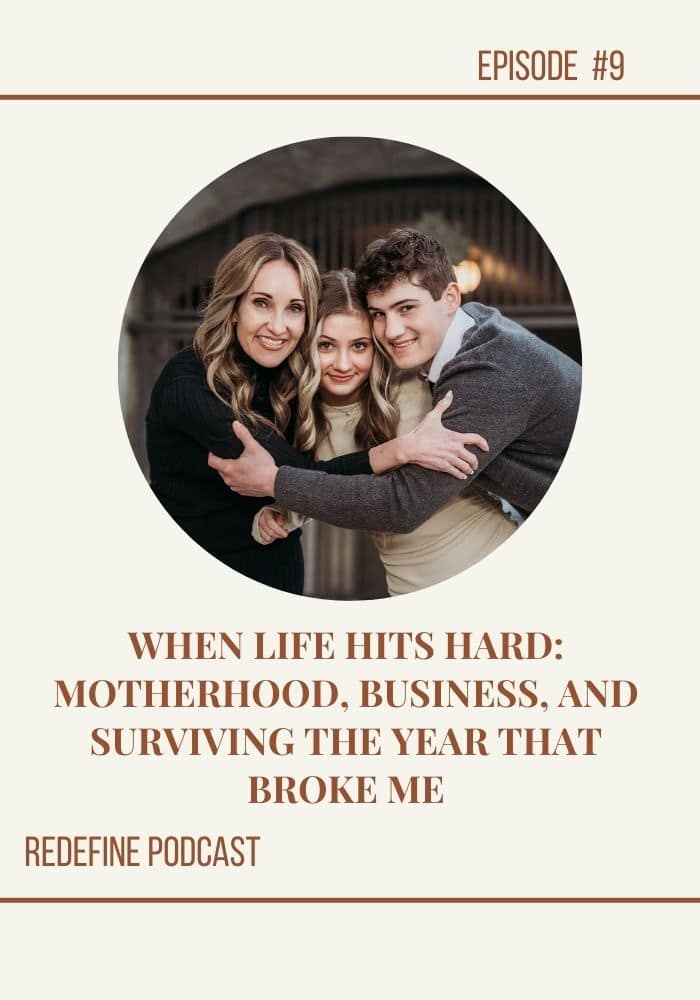
When Life Hits Hard: Motherhood, Business, and Surviving the Year That Broke Me

When Life Hits Hard: Motherhood, Business, and Surviving the Year That Broke Me

Last year was hard.

Not “busy season” hard.
Not “algorithm changed again” hard.
Not “launch didn’t convert” hard.


Life-altering hard.


In 2023, I got divorced and moved from Texas to Utah. New state. New home. New normal. I was rebuilding everything at once, my personal life, my identity, my routines. 


Shortly after we moved, my son left for Brazil on a two-year mission for our church. Two years. Different hemisphere. Different language. Different everything. I was so proud of him… and at the same time it was just different. 


Then in December of 2024, my daughter had a snow skiing accident and broke her back.


Yes. Her back.


The physical pain was intense. The recovery was long. But the mental toll? That was the part that almost broke me.

My daughter has wrestled for seven years. Wrestling wasn’t just a sport. It was her identity. It shaped how she saw herself – strong, disciplined, tough. And in one moment on a mountain, that identity was taken away.


As her mom, I wasn’t just navigating doctor visits and physical therapy. I was helping her grieve who she thought she was.

And I have always taken motherhood seriously. It is my number one priority. I don’t say that casually. I say it with conviction. I wanted to be a mom. I chose this role. I treasure it.


So between:


  • A divorce
  • A cross-state move
  • My son leaving the country
  • My daughter breaking her back
  • I was mentally, physically, and emotionally exhausted.

And I was also the provider.


The Entrepreneur’s Unspoken Reality: You Still Have to Show Up

Here’s the part we don’t talk about enough.


A very, very important part of being an entrepreneur is showing up.


We have to show up for our clients.
We have to show up on social media.
We have to show up in inboxes, on calls, inside launches, inside memberships, inside conversations.


Consistency builds trust.
Trust builds sales.
Sales build stability.


But what happens when you are exhausted?


What happens when your brain feels foggy and your nervous system is shot?
What happens when you’re finishing up appointments and you still have content to post, emails to write, and clients who need you at your best?


I wish I could tell you I had some magical formula.


I don’t.


I didn’t show up perfectly.
I didn’t show up at 100%.
Some days I barely showed up at all.


And my business felt it.

Revenue dipped. Energy dipped. Creativity dipped. I wasn’t on my game. I wasn’t as sharp. I wasn’t as strategic.


But I didn’t quit.


Sometimes survival is the win.


Life Will Break Your Illusion of Control

Here’s the truth no productivity hack will save you from:


Life is not always going to be easy.


Divorce happens.
Accidents happen.
Kids grow up and leave.
Health scares happen.
Loss happens.


You can color-code your Google Calendar all you want, but life doesn’t check it first.


So the real question isn’t:

 “How do I avoid hard seasons?”


The real question is:
“How do I prepare for them?”


Because they are inevitable.


The Power of Relationships

When everything feels unstable, relationships are the stabilizer.


I learned very quickly that isolation makes hard seasons harder.


Good relationships – friends, family, mentors, faith – became oxygen.

They were the people who:


  • Brought meals.
  • Sat with me when I didn’t have words.
  • Let me vent without trying to fix everything.
  • Reminded me I wasn’t failing… I was surviving.

Entrepreneurs tend to pride themselves on independence. We’re capable. Resourceful. Self-starters.


But independence without support is a fast track to burnout.


If you are building a business, build relationships with the same intensity.


Not networking-for-leads relationships.


Real ones.


The kind that can hold you when your capacity is gone.


Systems Save You When You Don’t Have Capacity

This is the part where my inner systems nerd comes out.


Because here’s what I know for sure:


When your energy disappears, your systems either catch you… or expose you.


During this season, I was grateful for every automation I had ever built.


Email sequences that ran without me.
Funnels that continued nurturing leads.
Onboarding processes that didn’t require me to reinvent the wheel.


Did they replace me? No.

But they reduced the load.

And when you are in crisis mode, reducing the load is everything.


We glamorize hustle.
We romanticize “just push through.”
But resilience in business isn’t built on hustle.


It’s built on infrastructure.


Systems are not just about scaling.
They are about protection.


They are the safety net for the version of you that will one day be tired, grieving, overwhelmed, or healing.


Build them before you need them.


Giving Yourself Permission to Be Human

One of the hardest parts for me wasn’t the logistics.


It was the pressure I put on myself. 


I am the provider.
I am the mom.
I am the leader.
I am the one who teaches other entrepreneurs how to build sustainable businesses.


I felt like I should handle it better.


But here’s what I’ve learned:


You can be strong and still be exhausted.
You can be capable and still need help.
You can be a leader and still be in a hard season.


Being human is not a brand flaw.


It’s reality.


And honestly? The entrepreneurs who pretend life never touches them are not the ones building sustainable success.


The ones who build longevity are the ones who build margin.


What I Would Do Differently (and What I’m Doing Now)

Hard seasons reveal weaknesses.


Not to shame you.
To strengthen you.


If I could go back, I would:


  • Build even more recurring revenue.
  • Reduce reliance on real-time energy (like constant content creation).
  • Expand my support network sooner.
  • Prioritize my own self-care and recovery just as seriously as my daughter’s physical therapy.


Now?


I am doubling down on margin.

More automation.
Clearer offers.
Less noise.
Deeper relationships.


Because I don’t want a business that only works when I’m at peak performance.


I want a business that works when I’m human.


If You’re in a Hard Season

Maybe you’re listening to  this and you’re in it right now.


You’re tired.
You’re stretched.
You’re showing up, but it feels heavy.


Let me say this:


You are not weak.
You are not behind.
You are not failing.


You are navigating real life.


And if you can keep going, even imperfectly, you are stronger than you think.


But also…


Don’t wait for the next crisis to prepare.


Build relationships now.
Build systems now.
Build margin now.


Because one day, you may need them more than you realize.


Last year broke parts of me.


But it also clarified me.


It reminded me that motherhood is my priority.
That business is a vehicle and not my identity.


That showing up doesn’t always mean shining; sometimes it just means staying.


And sometimes, staying is enough.

Join the Conversation

Let’s not stop the party here. Head on over to my Instagram or Facebook group, Redefine Your Business, and share your thoughts about today’s show. See you again, same time, same place next week!

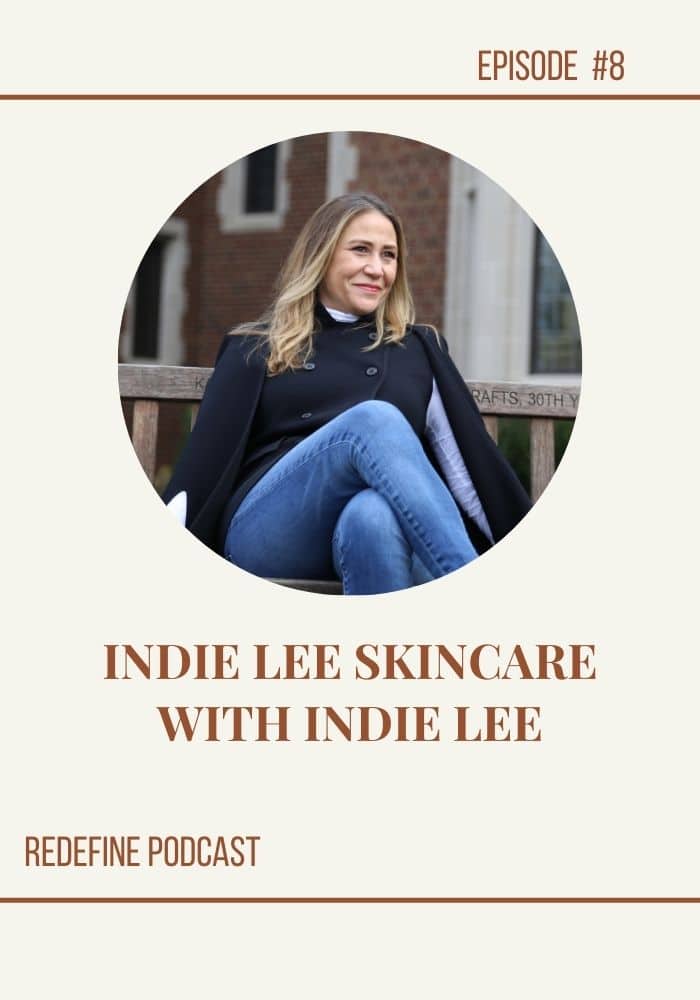
Indie Lee Skincare with Indie Lee

Redefining Beauty, Business & “Wellth” with Indie Lee

What happens when a life-threatening diagnosis becomes the catalyst for building a pioneering beauty brand?

In this powerful episode of the Redefine Business Podcast, Brittni Schroeder sits down with Indie Lee, founder of the award-winning clean beauty brand Indie Lee Skincare. From CPA to clean beauty trailblazer, Indie’s journey is one of resilience, reinvention, and redefining what success truly means.


Her story is not just about skincare. It’s about purpose. It’s about clarity. It’s about building a business that aligns with your values—even when the road is long, uncertain, and filled with unexpected detours.


From Corporate CPA to Conscious Creator

Indie’s path into beauty wasn’t conventional. She began her career as a public and private CPA, even running HBO’s International Finance Division. She traveled the world, built a successful career, and checked all the traditional boxes of achievement.


But deep down, something was missing.


After leaving corporate life to spend more time with her children, Indie immersed herself in the farm-to-table movement. She built a 750-square-foot greenhouse in her backyard, grew her own botanicals, and became deeply connected to clean living.

Then her health took a turn.


After being diagnosed with rheumatoid arthritis, she could no longer work in the greenhouse she had built with her own hands. Around the same time, her sister announced she was pregnant. Wanting to create safe, gentle products for her future nephew, Indie began crafting botanical-based baby products from her calendula and lavender harvest.


At the time, this was simply a heartfelt gift. She had no idea it was the beginning of something much bigger.


A Brain Tumor That Changed Everything

In November 2008, Indie began losing peripheral vision in her left eye. Within hours of undergoing a scan, she was told she had a brain tumor.


That 15-minute drive to the doctor’s office became one of the most transformational moments of her life.

Indie realized that for 37 years, she had been a passenger—not the driver—of her life. And whatever time she had left, she would live it with what she calls the “three P’s”:


  • Purpose

  • Passion

  • Being fully present

Doctors initially told her she had six months to live. But Indie refused to accept that as her ending.


While searching for answers, a neuroendocrinologist asked her a life-altering question: What are you putting on your skin?

That moment connected everything. Indie understood toxic load. She understood transdermal absorption. She realized that what we put on our bodies can be just as impactful as what we put in them.


And with that realization, her mission was born.


The Birth of a Clean Beauty Pioneer

After finding a surgeon willing to operate, Indie underwent brain surgery on Earth Day. Eight hours later, she woke up able to see clearly. The tumor was successfully removed.


Two months later, she launched her website.


Like many entrepreneurs, she assumed turning on a website meant customers would automatically show up. Instead, she quickly learned a foundational truth:


There is no easy button.


Marketing is work. Building a brand is work. Scaling a business is work.


Sixteen years later, Indie Lee Skincare is carried by major retailers and respected clean beauty destinations across the country, including:


  • Nordstrom

  • Ulta Beauty

  • Bluemercury

  • Credo Beauty

  • The Detox Market

  • Whole Foods Market

What began as a personal health crisis became a brand that helped pioneer the clean beauty movement.


The Myth of Overnight Success

One of the most powerful conversations in this episode centers around the illusion of overnight success.

Indie shares a truth that every entrepreneur needs to hear:


“It takes 10 years to be an overnight success.”

We live in a world of clickbait headlines and flashy revenue screenshots. But what we don’t see are the years of trial and error, failures, pivots, and persistence behind the scenes.


Indie reframes luck in a powerful way:

Luck is when hard work and timing coincide.


Yes, timing matters. Yes, opportunity matters. But neither replaces consistency, clarity, and hustle.


For Indie, success wasn’t just about revenue or retail expansion. It was about creating change in a largely unregulated industry. It was about educating and empowering consumers to read labels and make informed decisions.


That deeper mission is what sustained her through the long game.


Clean Beauty Meets Accessibility

One of the most exciting developments Indie shares in this episode is her expansion into Whole Foods with a four-product capsule collection called Indie Lee Botanicals.


This launch represents more than shelf space.


It’s about democratizing clean beauty—making effective, thoughtfully formulated products accessible in everyday spaces. As consumers become more aware of ingredient transparency, Indie believes we should read the labels of what we put on our bodies just as carefully as we read the labels of what we put in them.


Her return to botanical roots also nods back to her greenhouse beginnings. Full circle moments like this remind us that sometimes the original spark holds the most power.


Clarity, Core Values & Sustainable Hustle

Beyond skincare, this episode dives deep into entrepreneurship.

Brittni and Indie talk about:


  • The burnout that comes from constant hustle

  • The danger of comparing your beginning to someone else’s middle

  • Why mentorship matters

  • The importance of defining success for yourself

Indie emphasizes clarity as a superpower.


Many entrepreneurs say they want to be “successful,” but few define what that actually means. Revenue? Impact? Freedom? Flexibility? Industry disruption?


Without clarity, you can’t build a roadmap.


Indie also shares how perspective—especially after a health crisis—changes everything. She is intentional about how she spends her time, what she prioritizes, and how she builds her brand.


Success, for her, is rooted in “wellth”—the abundance of wellness, health, and intention.


Redefining Beauty Through Purpose

Indie’s story is ultimately about choosing purpose over perfection.


It’s about understanding that setbacks can be catalysts.


It’s about recognizing that failure teaches more than success.


It’s about building something aligned with your values—even when it takes longer than you expected.


For entrepreneurs listening, her message is clear:


  • There is no shortcut.

  • There is no easy button.

  • There is no copy-and-paste success formula.

But there is alignment.
There is clarity.
There is purpose.

And those things create longevity.


Connect with Indie Lee

You can explore Indie Lee’s products and learn more about her mission at:

🌿 Website: www.indielee.com
🌿 Instagram: @indielee


About Indie Lee

Indie Lee is the founder of the award-winning clean beauty brand Indie Lee Skincare, a company born from her personal health crisis and mission to create safe, effective products that empower conscious living. After surviving three brain surgeries and navigating life with autoimmune disease, Indie has become a passionate advocate for clean beauty, longevity, and redefining wellness.


Through her work and storytelling, she encourages women to embrace a life of “wellth”—the abundance of wellness, health, and intention—while balancing the realities of business, family, and healing. She continues to inspire a growing community to pursue purpose over perfection and beauty rooted in wellness.

Join the Conversation

Let’s not stop the party here. Head on over to my Instagram or Facebook group, Redefine Your Business, and share your thoughts about today’s show. See you again, same time, same place next week!

Ways I Use AI In My Business

WAYS I USE AI IN MY BUSINESS

I talked about AI in my last podcast, but I wanted to dive a little deeper and give you some real live examples. In this podcast. I am going to be talking about ways I use AI in my business. 

Podcasting is one of my favorite ways to connect — but it can also be one of the most time-consuming content formats if you don’t have systems in place.


Here’s how AI fits into my podcast workflow:


Step 1: Transcription with Dropbox AI

After recording my podcast, I use Dropbox’s AI transcription feature to automatically transcribe the episode. No manual work, no extra tools.


Step 2: Repurposing with ChatGPT

Once I have the transcript, I paste it into ChatGPT and use the same prompt every single time:


Write me show notes for the website in long blog post form. Make the article 1000–1500 words. Refrain from using too many quotes unless it is a direct quote pulled from the transcript. Include the following links that the guest has requested that we share in the show notes:


Bio:
Freebie:
Other links:

Using the transcript, write me a short meta description for the website.
Using the transcript, write me a fun, upbeat and friendly Instagram and Facebook caption to promote the podcast.
Using the transcript, write me a summary of the podcast that I can include on Libsyn.


From one recording, I get:

  • A long-form blog post
  • SEO-friendly meta description
  • Social media captions
  • A Libsyn-ready episode summary

That’s not cutting corners — that’s working smarter.


AI for Newsletters (Because Writing Weekly Emails Is a Lot)

Another place I use AI consistently is my newsletters.

Instead of overthinking every email, I take:


  • A blog post
  • A podcast episode
  • Or even just a few thoughts I want to share

Then I use this prompt:


“Write a 200-word newsletter with the following content. Make it short and sweet and have the call to action be…”

I fill in the relevant offer or link, tweak the tone to sound like me, and hit send.


AI helps me stay consistent without turning newsletters into a full-blown writing marathon every week.


Graphics & Visuals: Canva’s AI Tools (Magic Media Is My Favorite)

AI isn’t just for writing — it’s a game-changer for visuals too.


One of my favorite tools inside Canva is Magic Media.


I use this when I’m looking for a very specific image that I can’t find in stock libraries. Instead of scrolling endlessly, I describe exactly what I want.


For example:
“I need a flat lay image of a laptop computer with a cup of hot cocoa off to the side. Make the colors natural tones and the look minimal.”


Canva generates multiple images based on that prompt. If I don’t like the results, I can ask for variations or add more specific instructions.


Here’s the key: you have to train the AI. The more detailed you are, the better the results. There is a learning curve, but once you get it, it’s a massive time-saver.


Email Marketing AI Inside Flodesk

Another tool I use that’s quietly becoming more powerful is Flodesk.

While it’s not brand-new, Flodesk continues to roll out AI-powered features that support:


  • Generating email copy and subject lines
  • Creating on-brand images
  • Optimizing send times
  • Segmenting audiences
  • Predicting customer behavior based on engagement

These tools analyze real-time data to help improve open rates and clicks — without you having to guess what’s working.

This is a great example of how AI doesn’t always look flashy. Sometimes it’s working in the background, making your systems smarter.


AI Is Being Added Everywhere — You Just Have to Learn It

More and more platforms are implementing AI into tools you’re already using — CRMs, email marketing platforms, design software, schedulers, and analytics tools.


The opportunity isn’t just using AI.


The opportunity is taking the time to learn how to implement it well.


AI only works if it’s layered into solid systems. Otherwise, it becomes just another tool you pay for and don’t fully use.


Want Help Learning AI the Right Way?

If AI feels exciting but overwhelming — or if you’re not sure how to integrate it into your business without adding chaos — this is exactly what I teach inside The Meeting Place Membership.


In the month of February, we’re diving deep into AI:


  • How to use it for content
  • How to use it for systems and automations
  • How to make it support your business instead of complicating it

The Meeting Place is my business membership designed to help you build systems and automations from top to bottom — in a way that actually makes sense.


✨ You can join and cancel at any time
✨ Use code AUTOMATE to get 50% off
✨ Join here: www.brittnischroeder.com/membership

AI isn’t the future — it’s already here. Let’s make sure it’s working for you, not against you.

Join the Conversation

Let’s not stop the party here. Head on over to my Instagram or Facebook group, Redefine Your Business, and share your thoughts about today’s show. See you again, same time, same place next week!

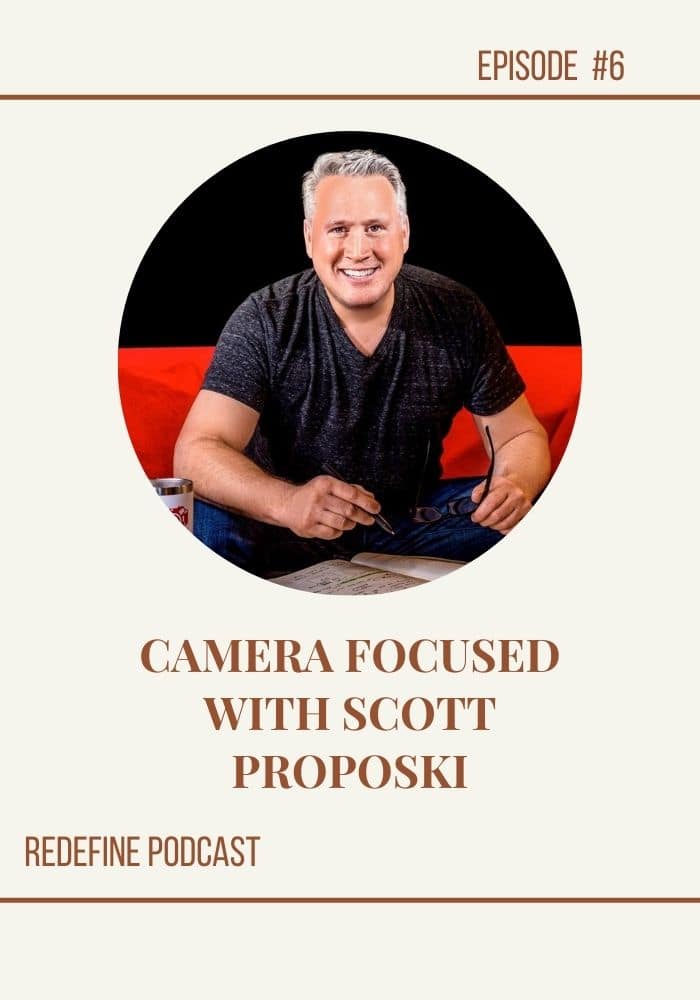
Camera Focused with Scott Proposki

In this episode of the Redefine Business Podcast, Brittni sits down with photographer, entrepreneur, and author Scott Proposki to talk about what it really takes to build a business that lasts — especially as a creative. Scott’s story is one of reinvention, resilience, and learning to harness what makes you different instead of fighting it.


With nearly three decades behind the camera and clients ranging from National Geographic to the White House, Microsoft, HBO, and major global brands, Scott has seen the highest highs of creative success. But what makes this conversation powerful isn’t just his résumé — it’s how he transformed personal struggles, business chaos, and unexpected setbacks into a repeatable system that now helps other photographers build stable, scalable companies.


This episode is packed with lessons about identity, systems, experience-driven marketing, and the mindset shift creatives need to grow beyond hustle.


Growing Up in Photography — and Getting a Head Start

Scott didn’t “discover” photography later in life — he grew up inside it. With multiple family members working as corporate photographers, cameras were part of his environment from childhood. That early exposure gave him a head start in understanding both the art and the industry.


After 9/11, a moment of global reset created unexpected opportunities. Scott found himself in New York City working with National Geographic — a pivotal break that accelerated his career. He credits moments like this not to luck alone, but to preparation meeting opportunity.


As Scott explains, people often call him lucky. His response is simple: the harder he worked, the luckier he became. Consistency, showing up, and being all-in positioned him to capitalize when doors opened.


That theme runs throughout the episode — success favors the prepared creative.


The Shift That Changed Everything: Selling Experience, Not Photos

One of Scott’s biggest breakthroughs came when he stopped selling photography and started selling outcomes.


Instead of positioning himself as someone who takes pictures, he positioned himself as someone who delivers an experience. That subtle shift changed how clients saw his value. He wasn’t competing on price or style alone — he was solving logistical problems and creating memorable moments.


He shares a defining example: pitching an event concept to the New England Patriots. The photography itself was secondary. What won the deal was his ability to design a seamless system where thousands of fans could move efficiently through an experience and walk away with a photo in minutes — without complaints.


He sold the vision.


That ability to map out the client journey — onboarding, delivery, execution — became his superpower. It’s a reminder that creative success isn’t just about talent; it’s about structure.


Brittni echoes this idea from her own experience: creatives often underestimate the emotional and experiential side of their brand. Clients don’t just buy photos. They buy how they feel during the process.


Discovering ADHD — and Turning It Into a Strength

In 2018, a coach suggested something Scott had never seriously considered: he might have ADHD.


After evaluation, the diagnosis was clear. At first, he viewed it through a lens of stigma. Mental health conversations weren’t as normalized then, and his instinct was to keep it private. But a simple question from his therapist shifted everything:


“If you told people, you’d probably change lives.”


That moment sparked his book Camera Focus.


Scott reframed ADHD not as a weakness, but as a superpower. The same hyperfocus that made him successful in photography could be directed toward business systems, leadership, and innovation. His brain didn’t need to be “fixed” — it needed to be understood.


The book uses photography metaphors to explain focus, clarity, and intentional business building, especially for creatives whose minds don’t operate in traditional boxes.


For many listeners, this part of the conversation is deeply validating. Success doesn’t require fitting a mold. It requires designing a business that works with your brain instead of against it.


Systems: The Foundation of Scaling

Scott didn’t just build a busy business — he built a scalable one. At one point, his company operated with 52 photographers nationwide. That level of growth isn’t possible without repeatable systems.


He became obsessed with process:


  • How clients move through the experience

  • How employees are onboarded

  • How communication flows

  • How quality stays consistent


He gamified operations and created frameworks that could be duplicated over and over. This allowed him to step out of constant firefighting and into leadership.


He’s blunt about it: if you want to scale, you must systematize. Talent alone won’t carry a growing business. Structure will.


Many photographers plateau because they rely entirely on personal effort. Scott’s journey shows what happens when creatives treat operations as a craft equal to the art itself.


Selling Vision and Attracting the Right People

Scott’s hiring philosophy is just as intentional as his client strategy. He didn’t just recruit photographers — he recruited believers.


By clearly communicating the company’s vision, he attracted people who wanted to be part of something bigger. Many didn’t even ask about pay at first; they were drawn to purpose.


That’s a powerful reminder for business owners: people want direction. They want clarity. When you articulate where you’re going, the right team members and clients self-select.


This applies whether you’re running a large organization or a solo creative studio. Vision builds loyalty.


Reinvention After Loss

While this episode focuses heavily on growth, Scott’s larger story includes a period of loss when the pandemic wiped out his business almost overnight. The principles from Camera Focus — systems, mindset, resilience — became the blueprint for rebuilding.


His work today isn’t just about photography. It’s about helping creatives develop businesses that can survive disruption.


That mission is bigger than income. It’s about sustainability and confidence.


Talking to the Check Writers

Scott ends the episode with a memorable pet peeve: photographers who only talk to other photographers online.


He encourages creatives to shift their messaging toward decision-makers — the people actually hiring them. Education and gear talk have their place, but growth comes from speaking directly to the customer.


It’s a simple but powerful marketing reminder: clarity of audience equals clarity of revenue.


The 3 O’Clock Coffee Philosophy

A fun insight into Scott’s daily rhythm: every day at 3 p.m., he stops everything for coffee and conversation. That ritual turned into his own podcast, The 3 O’Clock Coffee Podcast, where he interviews people with extraordinary stories.


It’s a small example of intentional living — building connection and reflection into the workday instead of chasing productivity nonstop.


Sometimes growth comes from slowing down.


Connect with Scott Proposki

Scott Proposki is a photographer, entrepreneur, and author with 27 years behind the camera, capturing stories for National Geographic, the White House, Microsoft, HBO, and top global brands. In 2019, he released Camera Focus to help creatives with ADHD harness their strengths. He never expected the book to save him when the pandemic wiped out his business in a week. After years of rebuilding, its principles evolved into the Camera Focus Method™, empowering photographers to build confident, resilient businesses. Today, Scott’s mission extends far beyond photography.


📧 Email: Scott@ScottProposki.com
📱 Phone: 1-978-423-0111
🌐 Websites: www.ScottProposki.com | www.CameraFocus.com
🔗 Camera Focus Method™: www.CameraFocusMethod.com


Freebie — Coffee Call With Scott (not a sales call):


📸 Instagram

💼 LinkedIn

More info

Join the Conversation

Let’s not stop the party here. Head on over to my Instagram or Facebook group, Redefine Your Business, and share your thoughts about today’s show. See you again, same time, same place next week!

AI Tools In Your Business Beyond ChatGPT

Beyond ChatGPT: Essential AI Tools Every Small Business Owner Should Know

Artificial Intelligence isn’t the future anymore. It’s here to stay and if you aren’t using it in your small business you will get left behind. While ChatGPT might be the one everyone talks about (for good reason), it’s just the tip of the AI iceberg. Across marketing, design, operations, customer support, sales, analytics, and automation, there are tools built to save time, and help you grow smarter.


Whether you’re a solopreneur or a small business owner with a team, these AI tools are worth exploring beyond the AI you already know.


Let’s dive into AI tools that can actually move the needle for your business.


Content Creation & Marketing

People always ask: How do I consistently create content that gets attention? Here are some tools that help.


Jasper (formerly Jarvis)

Best for: Long-form writing (blogs, sales pages, newsletters)


Jasper is an AI writing assistant that generates content based on prompts you give it. You can use it to draft blogs, craft engaging emails, write website copy, and more. Unlike general AI chat tools, it’s built specifically for marketing content.


Highlights:

  • Templates for blogs, email sequences, ads

  • Tone and voice customization

  • Integrations with SEO tools

Great if you want content faster without sacrificing quality.


Descript

Best for: Podcasters, video creators, and audio editors


Descript uses AI to transcribe audio and video into text that you can edit like a document. You cut text → the video/audio cuts too. It’s magic for marketers tired of clunky editing software.


Highlights:

  • AI transcription

  • Filler word removal

  • Video editing + screen recording

  • Automatic subtitles

Perfect for streamlining podcast and video production.


Copy.ai

Best for: Quick copy generation (ads, social, product descriptions)


Copy.ai focuses on short-form and conversion copy. It helps you generate ideas and variations quickly so you never stare at a blank caption again.


Highlights:

  • Instagram captions

  • Ad copy

  • Product and ecommerce descriptions

  • Brainstorming tools

If you get stuck writing marketing copy, this tool can help you get unstuck fast.


Design, Visuals & Branding

Not a designer? No problem. These AI tools make it easy to create visuals even if you can barely work a photo app.


Canva AI

Best for: Design assets + brand visuals


Canva now includes AI features that help you:

  • Generate designs from prompts

  • Create social templates

  • Edit backgrounds

  • Generate on-brand visuals quickly

If you already use Canva, the AI upgrades make your workflow noticeably faster.


Runway

Best for: Video editing with AI effects


Runway is an AI video editor that lets you remove backgrounds, generate video content, and apply effects without heavy software or editing skills.


Highlights:

  • Green screen removal with AI

  • Motion effects

  • Text-to-video

Great for social video content creators.


Midjourney & Leonardo.ai

Best for: AI image generation


Tools like Midjourney and Leonardo generate beautiful, AI-created images from text prompts. Perfect for unique visuals, mood boards, concept art, branding ideas—you name it.


Highlights:

  • Unique brand imagery

  • Quick visuals for blogs and socials

  • Mood board inspiration

If you’ve ever needed a custom image but didn’t want stock photos, these tools are game changers.


Automation & Workflows

Automation tools connect apps and automate actions so you can stop doing repetitive work.


Zapier

Best for: Connecting apps & automating tasks


Zapier links your apps together so when something happens in one app, it triggers something in another. For example:

  • New email subscriber → adds to CRM

  • New sale → creates a Google Sheet row

  • Form submission → sends a Slack message

Highlights:

  • Multi-step workflows

  • Integrates with hundreds of tools

  • No coding required

Zapier is ideal for saving hours of manual work every week.


Make (formerly Integromat)

Best for: Complex automations and visual workflows


Make is like Zapier on steroids—it allows more complex logic, conditional operations, and advanced monitoring.


Highlights:

  • Visual automation builder

  • Conditional steps

  • API integrations

If you want advanced automation (like CRM updates, data syncing, conditional messaging), Make is powerful.


Beeper AI

Best for: Unified inbox and response automation


Tools like Beeper AI can consolidate conversations across email, social, and messaging apps, and even help automate replies.


Highlights:

  • Conversation consolidation

  • AI-assisted replies

  • Multi-platform inbox

If multi-platform communication feels chaotic, this tool helps streamline it.


Customer Support

Responsive customer support builds trust. These AI tools make support fast and scalable.


Intercom

Best for: AI chat support on your website


Intercom combines live chat with AI automation, so customers can get instant answers, even when you’re offline.


Highlights:

  • AI support bots

  • Live chat

  • Help center integration

  • Ping when you need human support

Ideal if your business gets inquiries often and you want faster turnaround.


Tidio

Best for: Affordable AI chatbot + live chat


Tidio offers live chat and AI bots focused on conversions and support. It’s particularly popular with ecommerce businesses.


Highlights:

  • Pre-built templates

  • Lead qualification chatbots

  • Cart abandonment messaging

If you sell products online and want a friendly chat presence, this is a solid choice.


Analytics & Insights

Understanding your audience and performance helps you make smarter decisions.


Google Analytics with AI Insights

Best for: Website analytics


Google Analytics now includes AI insights that help you understand trends automatically without digging through reports.


Highlights:

  • Predictive metrics

  • Segment analysis

  • Automated insights

Great for seeing what actually works on your site.


Scheduling & Productivity

Getting organized never goes out of style.


Calendly and Acuity (with AI)

Best for: Smart scheduling


Calendly uses automation to:

  • Avoid double booking

  • Auto-reschedule

  • Add buffers

  • Integrate with calendars

Combine with AI replies and follow-ups to make scheduling effortless.


Notion AI

Best for: All-in-one workspace with AI help


Notion is already a favorite for project planning. When you add AI, it can:

  • Summarize notes

  • Generate templates

  • Create checklists from ideas

Perfect for solo operators and teams alike.


Bonus: Industry-Specific AI Tools

There are also niche AI tools worth mentioning:

  • Shopify Magic — AI product descriptions and store content

  • Dropbox AI

  • Tailwind

  • Instagram


AI isn’t a magic replacement for strategy, but it is a massive multiplier when used strategically. These tools can:

  • Save you hours every week

  • Improve content quality

  • Streamline operations

  • Elevate customer experience

  • Make data actionable

The secret isn’t using all the tools—it’s using the right ones for your business goals.


Start with the areas where you feel the most friction—marketing? customer support? content creation?—and pick a tool that helps you win back time.


AI shouldn’t replace your creativity… it should amplify it.

Join the Conversation

Let’s not stop the party here. Head on over to my Instagram or Facebook group, Redefine Your Business, and share your thoughts about today’s show. See you again, same time, same place next week!

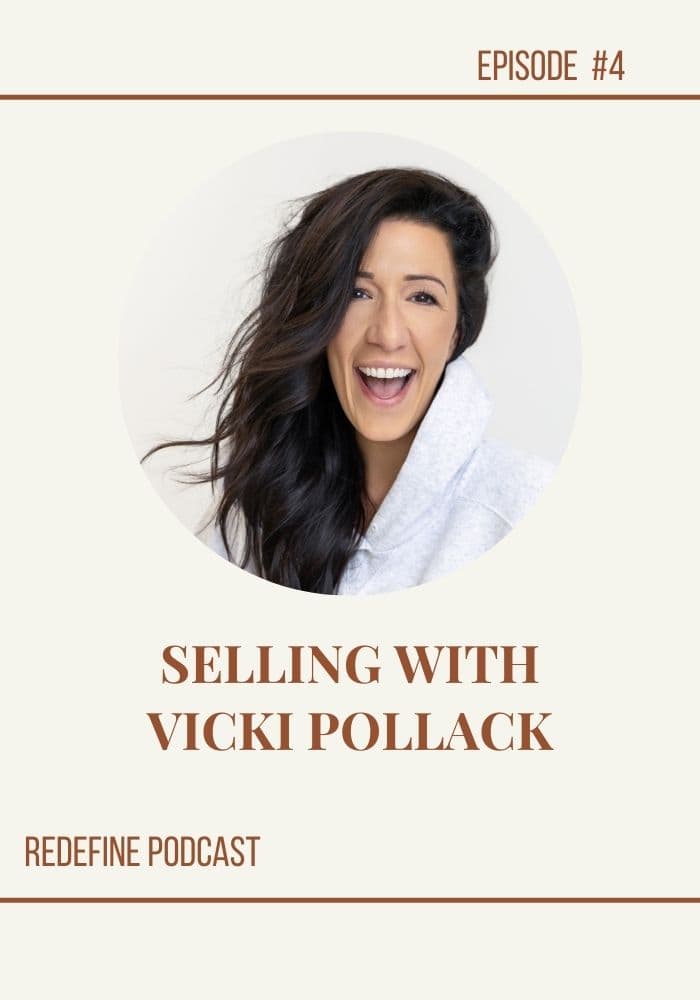
Selling with Vicki Pollack

Organic Growth vs. Paid Ads: What You Need to Know

Vicki shares her own journey with growth—one that’s refreshingly honest.

She spent nine years growing her original Instagram account to 10,000 followers organically. Her newer account grew to over 100,000 followers in 18 months, also organically.

Only after proving her messaging and offers did she begin running paid ads.

The key takeaway?
Ads don’t fix unclear messaging or weak content.

Paid traffic is powerful—but only when:

  • Your content is already converting

  • Your offer is validated

  • You’re ready to pay for data, not instant results

Running ads without that foundation often leads to wasted money and more frustration.


Why Market Research Can’t Be Skipped

One of the most important reminders in this episode is that market research is not optional.

Before scaling, before ads, before big launches, you need to know:

  • Do people actually want this?

  • Are they already paying for something similar?

  • What language do they use to describe their problem?

Testing and validating ideas is how you reduce risk—and build offers that sell sustainably.

If someone promises a guaranteed method that “always works,” Vicki’s advice is simple: be cautious.

Business isn’t copy-and-paste.


What Vicki Is Teaching at Fusion Collective

At the Fusion Collective Summit, Vicki is training on a framework she’s been developing called The Bullseye Method—designed to help entrepreneurs stop chasing sales and start building clarity-driven systems that naturally lead to them.

The focus isn’t just the sale itself—it’s everything surrounding it:

  • Top-of-funnel messaging

  • Content that attracts the right audience

  • Clear positioning and bio optimization

  • Strategic alignment across your platforms

If selling has felt harder than it should, this framework is designed to change that.


Where to Find Vicki Pollack

Vicki Pollack teaches the modern way to make money online through content, community, and digital offers. She helps entrepreneurs simplify their messaging, build offers that actually sell, and create systems that make online income make sense. Known for her straight-talk approach and clarity-driven strategy, Vicki focuses on helping people stop overcomplicating business and start building something sustainable.

Links:

Join the Conversation

Let’s not stop the party here. Head on over to my Instagram or Facebook group, Redefine Your Business, and share your thoughts about today’s show. See you again, same time, same place next week!

AUTOMATIONS WITH DANIELLE MCGINNIS

AUTOMATIONS WITH DANIELLE MCGINNIS

Running a business often starts with wearing all the hats — CEO, marketer, tech support, admin, and everything in between. But at some point, that hustle turns into a bottleneck. Your business can’t grow because you are holding everything together manually.


In this episode of the Redefine Business Podcast, Brittni sits down with Danielle McGuinness of Cutting Edge Operations, an online business manager and systems expert who helps entrepreneurs streamline, automate, and scale without burning out. Danielle is also one of the featured speakers at the Fusion Online Summit (Feb 3–5), making this conversation a perfect preview of what attendees can expect.


If you’ve ever felt stuck, overwhelmed, or tempted by every shiny new software tool on the internet — this episode is for you.


Meet Danielle McGuinness: Systems, Strategy, and Sanity

Danielle McGuinness is an online business manager and self-proclaimed “tech girlie at heart.” She works with business owners who feel stuck — not because they lack ambition, but because their businesses rely too heavily on them to function.

Her specialty? Helping entrepreneurs identify where they are the bottleneck and then removing them through better systems, smarter automations, and intentional processes.


As Danielle explains, most business owners don’t actually need more tools — they need clarity on how their business works first.


The Real Reason Businesses Get Stuck

One of the biggest challenges Danielle sees is what many entrepreneurs jokingly call “shiny object syndrome.” A business owner sees a peer using a tool they love, assumes it’s the missing piece, and implements it without understanding whether it actually fits their business.


The problem? Tools are often added before systems are defined.

Danielle emphasizes that systems and processes come first. Tools should support what already exists — not replace the thinking work required to build a functional business foundation.


Without clearly defined processes, even the best software will fall short.


Systems vs. Tools: Why the Order Matters

A key theme of the conversation is the difference between systems, processes, and tools:


    • Processes are how things get done in your business

    • Systems are the structure that supports those processes

    • Tools are simply the technology used to execute them

Many entrepreneurs skip straight to tools, hoping software will fix chaos. But without documented processes, tools often add more confusion instead of clarity.


As Danielle puts it, you shouldn’t be buying a tool to solve a problem you haven’t clearly defined yet.


The Five Phases of the Client Journey You Should Automate

Danielle walks listeners through the five core phases of the client journey that every business owner should evaluate and automate where possible.


1. Lead Capture & Scheduling

The first major red flag Danielle sees? The endless back-and-forth email dance.

In today’s world, potential clients expect instant access. A simple contact form paired with an automated scheduler allows prospects to connect with you without waiting on your inbox.

If someone wants to work with you, they should be able to take action immediately.


2. Onboarding (Don’t Accidentally Give “Scammer” Energy)

Once someone pays you, what happens next?

Danielle points out that many businesses collect payment and then go silent — not intentionally, but because onboarding isn’t automated. This can make even the most legitimate business feel disorganized.

A strong onboarding system typically includes:


    • Contract delivery

    • Invoices or payment confirmation

    • Clear next steps

    • Expectations around communication

Automation here builds trust and confidence right away.


3. Service Delivery Communication

Service delivery doesn’t mean constant communication — it means clear communication.

Danielle encourages business owners to proactively tell clients what’s happening behind the scenes. Even something as simple as letting them know they won’t hear from you for a few days can eliminate anxiety and unnecessary follow-ups.

Clarity = professionalism.


4. Offboarding (The Most Overlooked Phase)

Offboarding is where many entrepreneurs drop the ball — and leave money on the table.

Danielle explains that if you’ve done incredible work but don’t properly close the loop, you miss opportunities for:


    • Client retention

    • Referrals

    • Testimonials

    • Future offers

A strong offboarding process wraps the experience up with intention and keeps the relationship going beyond the project.


5. Retention, Referrals, and Revenue Continuity

The final phase ties everything together. Businesses that automate follow-ups, referral requests, and next-step offers are far more likely to create sustainable growth.


It’s not about being salesy — it’s about making it easy for happy clients to continue working with you or recommend you to others.


Danielle’s Favorite Tech Tools

Danielle shares some of the tools she loves and recommends, while emphasizing that budget and business stage always matter.


    • HighLevel – An all-in-one CRM that supports scheduling, email marketing, websites, memberships, pipelines, and more

    • Calendly – A solid option for beginners

    • Acuity Scheduling – A favorite for service-based businesses

    • TidyCal – A budget-friendly alternative

The takeaway? Choose tools that align with your current needs — and actually use the features you’re already paying for.


A Free Client Journey Assessment

Danielle has created a Client Journey Assessment to help business owners evaluate where their systems need the most attention. Click HERE


Instead of trying to fix everything at once, this assessment helps identify priorities so you can focus on the areas that will make the biggest impact first.


Catch Danielle at the Fusion Online Summit

Danielle McGuinness will be speaking at the Fusion Online Summit, February 3–5, where she’ll dive deeper into systems, automations, and client communication tools that help businesses scale sustainably.

This episode is just a preview of the value she brings.


GOAL SETTING FOR 2026

Goal Setting in 2026
Goal Setting for 2026

There’s something exciting about the start of the year. The calendar flips, the air smells like possibility, and you’re suddenly equipped with 365 fresh chances to grow, improve, and finally do that thing you’ve been dreaming about.


But here’s the kicker, if you don’t set goals, you’re not steering your life… you’re drifting through it like a confused GPS that needs more caffeine. .

So let’s talk about intentional goal setting across the areas of life that matter most: personal development, financial freedom, health, relationships, spirituality, education, and for entrepreneurs like you…business growth.


1. Personal Development: Become the Version of You You Envy

You are your greatest asset.

Look, if you don’t invest in you, nothing else has legs. Here are some of my personal development goals:


  • Reading 12 books this year (1 per month).
  • Practicing daily journaling.
  • Traveling more
  • Take more pictures
  • Go on 20 new hikes this year
  • Work on my book weekly

Personal development goals aren’t just soft goals. They lay the foundation for clarity, confidence, and courage. You’ll show up better in your business, relationships, and everything else.


2. Financial Goals: Plan Like You Mean It

Money goals are more than numbers on a bank statement. They’re a statement of intention.


Ask yourself:
Do you want stability? Growth? Freedom?

Set goals such as:


  • Saving a specific amount each month.
  • Paying off debt by Q3.
  • Increasing revenue by 25% this year.

Break these into quarterly milestones so you can celebrate wins before December rolls around.


3. Health Goals: Your First and Most Loyal Business Partner

I know, entrepreneurs don’t want to think about kale and sleep schedules. But your body fuels every goal.

Health goals don’t have to be extreme. Here are some of mine:


  • Lose 5lbs
  • Schedule all my annual check-ups like Mammograms and Colonoscopies that I have been putting off
  • Don’t eat after 9pm

Better health = more focus, more energy, better decision making = business win.


4. Relationships: Not Just a Nice-to-Have

As humans, we’re wired to connect. But growth often makes us busy not connected.  Our society makes it so we don’t ever have to leave our houses. 

Set goals like:


  • Spend more time with my kids that isn’t watching a television show together
  • Call a relative you love but haven’t spoken to in a while.
  • Join groups that align with your values.

Depth over scrolls, always. There is nothing that connects people more than face-to-face interactions.


5. Spiritual Goals: Fuel the Inner You

Whether your faith practice is rooted in religion, meditation, nature walks, or gratitude, spiritual goals keep you centered.


Here are some of mine:


  • Attend the temple monthly
  • Pray daily with my kids
  • Reading more spiritually material.

These create that sense of peace that makes stress less persuasive.


6. Educational Goals (Especially for Business Owners)

Here’s where it gets exciting for entrepreneurs and business owners: education isn’t a luxury,  it’s your competitive edge.


You can feel smart,  or you can be smart with a strategy.

As a business owner, learning new skills is the secret sauce that separates dreamers from doers. Growth in education translates directly into:


  • Better marketing strategies.
  • Sharper sales skills.
  • Smarter financial decisions.
  • A stronger, more sustainable business.

If you want to scale, evolve, or break past a plateau in your business,  you need to learn new things. And not just any things, strategic, actionable education that moves the needle.


That’s why continuing your learning this year matters more than another planner or another journal prompt.


And that leads perfectly into something I’m super pumped about…


Unlock Your Best Year Yet at the Fusion Collective Online Business Summit

If education is the rocket fuel to your business goals, consider this summit the launchpad.


I’m thrilled to be hosting the Fusion Collective Online Business Summit, a three-day, powerhouse, strategy-packed experience specifically designed to level up your business in 2026. 


This event runs February 3–5, 2026, from 9:00 AM – 3:00 PM MST each day — and it’s jam-packed with more than 30 expert speakers covering every corner of business growth. 


Whether you’re a coach, creator, service provider, or entrepreneur of any kind — this summit meets you where you are and takes you further.


What You’ll Learn: Real Tools, Real Strategies

We’re talking practical training you can use now — not vague “hustle later” advice. Sessions include insights on:


  • Automations & systems every business needs.
  • Business law essentials so you keep your brand bulletproof.
  • Affiliate marketing strategies that actually convert.
  • Social media systems and chatbots that save time and drive engagement.
  • Podcasting, blogging, and SEO tactics that grow your audience.
  • Email marketing that people actually open and love.

And that’s just a sampling,  there’s YouTube strategy, digital products, personal branding, ads, AI integration, and more. 


Learn From Leaders Who’ve Been There 

You won’t be listening to endless monologues,  you’ll get tactical sessions from speakers who are actively doing what they teach:

  • Digital educators and brand strategists.
  • Email and marketing experts.
  • Automation and systems pros.
  • Coaches, creators, and entrepreneurs with real-world success stories.

This is more than a summit — it’s a learning ecosystem that equips you with tools, frameworks, and tactics you can implement immediately.


Why This Matters for Your Goals

If part of your 2026 plan includes:


  • Growing your business,
  • Increasing revenue,
  • Learning systems that give you time back,
  • Or leveling up your skill set…

Then this summit is directly aligned with those goals.

Because the biggest growth leaps don’t come from wishful thinking, they come from strategic education and action.


Make This Year Count — With Intention and Momentum

You’ve got big dreams.


You want growth, fulfillment, and real results in every area of your life. Setting goals across personal, financial, health, relational, spiritual, and educational dimensions ensures you’re building a life, not just a to-do list.


If education and business growth are part of your vision for 2026, the Fusion Collective Online Business Summit is where that vision starts getting tactical. www.brittnischroeder.com/fusionSet your goals. Learn new skills. Take action. And let’s make this your best year yet.

CARRIE BEARS WITH CARRIE PIKE

Carrie Bears with Carrie Pike

Some ideas come from strategy. Others come from spreadsheets, marketing plans, or late-night brainstorming sessions. And then there are ideas that are born from grief—quietly, painfully, and unexpectedly—and go on to change lives in ways no one could have planned.


That’s exactly how Carrie Bears came to be.


Several years ago, long before this conversation was recorded, Carrie and I connected through a mutual friend. At the time, I had this idea stirring in my heart to start a podcast centered around grief. We recorded one episode together, and even then, I knew her story was something special. Carrie had built something meaningful, deeply personal, and incredibly impactful. So when I later launched my business podcast, I knew I needed her back—this time to talk about the business born from loss, love, and a simple but powerful idea: helping people hold on when letting go feels impossible.


A Loss That Changed Everything

Carrie’s story begins with the loss of her father. At the time, her mother was only 63 years old when he passed—a realization that still feels surreal decades later, especially now that her mom is in her 90s and continues to live a full life.


In the days following her father’s death, Carrie watched her mother go through his closet, surrounded by clothes that still carried his scent, his presence, his memory. Anyone who has experienced deep loss understands that moment—the way everyday items suddenly become sacred.


Carrie had learned to sew at the age of eight, something all the girls in her family were taught. While she didn’t love it at first, over time sewing became a creative outlet. Years earlier, she had even made small teddy bears from festive fabric to sell at a Christmas boutique. That experience lingered quietly in the background, waiting for the moment it would matter most.


Standing in that closet, overwhelmed by grief and memory, Carrie wondered: What if these clothes could become something tangible? Something comforting? Something that could help her family—and maybe others—through the pain?

She asked her mom if she could try making something out of her dad’s clothing. There was no grand plan, no business model—just grief, love, and a willingness to see what might help.


The First Bear—and a Moment That Changed Everything

Carrie created a teddy bear from her father’s shirt and gave it to her mother. The reaction was immediate and emotional. Her mom recognized the shirt right away—it was one she had given her husband herself.


Years later, Carrie discovered something she hadn’t known at the time: her mother slept with that bear every night. It became a source of comfort, a way to feel close to the man she loved, even after he was gone.

That moment planted a seed.


If this could help her family, maybe it could help others too.


From a Personal Gesture to a Purposeful Business

Not long after, while pregnant with her third son, Carrie found herself sharing the story during a pedicure appointment. In one of those seemingly ordinary conversations that turn out to be anything but, the technician mentioned someone connected to a grief counseling program at the University of Utah.


That connection led Carrie to Caring Connections, an eight-week grief program through the University of Utah’s College of Nursing. There, she met Beth Cole and Sherry Anderson—women who immediately understood the value of what Carrie was creating.


Their encouragement validated what Carrie felt in her heart: this wasn’t just a keepsake. It was a meaningful part of the grieving process.

From there, Carrie began attending events, hospice conferences, and community gatherings. She brought her bears—not to sell in the traditional sense, but to share an idea. Something that might help someone when they needed it most.


A Business Built on Trust, Care, and Word of Mouth

Today, Carrie Bears serves families across the country. More than 80% of her orders come from out of state, with people mailing their loved one’s clothing to her—an act that requires immense trust.


Each bear is made with intention, care, and communication. Carrie walks families through the process, keeps them informed, and treats every piece of clothing as if it were her own. Despite the emotional weight and responsibility, she has never lost a bear. Even in the rare instance when a package was stolen, it was returned after the thief realized it held no monetary value—only sentimental worth.


Carrie’s tagline says it best:


“Sometimes when it’s hard to let go, it helps to have something to hold on to.”

That philosophy guides everything she does.


The Role of Hospice and Community in Grief

Through this journey, Carrie has developed deep relationships with hospice organizations—places where grief is present every single day. She speaks with immense respect and gratitude for hospice workers, calling them angels for the way they care not only for patients, but for entire families.


Some hospices now offer Carrie Bears as gifts to grieving families, recognizing the comfort they provide during unimaginably difficult moments.


Carrie also participates in grief support groups, particularly for teens, offering space for honest conversation and connection. She is careful never to be pushy or sales-focused. Instead, she shows up, listens, and lets the work speak for itself.


Grief, Memory, and the Power of Being Present

During our conversation, we also reflected on the kindness people show in the aftermath of loss. From handmade jewelry to memory albums, from items crafted with handwriting or symbolic dimes, gestures like these leave lasting impressions.

One memory stood out deeply: a Sunday at church, where grief felt overwhelming. In the middle of quiet sobs, someone simply came and sat nearby—no words, no fixing, just presence. That act of sitting with someone in their pain remains one of the most powerful expressions of kindness there is.


It’s a reminder that grief doesn’t need to be solved. It needs to be witnessed.


Carrie Bears Today—and Where to Find Her

Carrie officially started Carrie Bears in 1999, and her work continues to evolve. While her business has grown, the heart of it remains the same: honoring love, memory, and connection.


You can find Carrie and her work here:

Carrie has also written books inspired by grief and remembrance. Her children’s book about 9/11 is available on Amazon, and her other book can be found on her website.


A Few Final Fun Notes

To close the episode, Carrie shared a couple of personal insights that offered a lighter glimpse into her life. Her pet peeve? Angry drivers—life is simply too short. Her simple pleasure? Hiking up a steep trail and sledding down afterward, proving that joy and grief can coexist beautifully.


Why This Story Matters

Grief is inevitable. It’s not a matter of if, but when. Carrie’s story is a powerful reminder that businesses don’t always start with ambition—they often start with empathy. With seeing a need. With choosing to help.


Carrie Bears is more than a product. It’s a bridge between love and loss, between memory and comfort, between heartbreak and healing.


And sometimes, when the weight of grief feels too heavy, having something to hold on to makes all the difference.

Join the Conversation

Let’s not stop the party here. Head on over to my Instagram or Facebook group, Redefine Your Business, and share your thoughts about today’s show. See you again, same time, same place next week!

Resources:

Smart Things To Do In Your Business for 2026

10 Smart Things Small Business Owners Should Do in 2026 to Grow Their Business

If you’re looking for proven small business growth strategies for 2026, you’re in the right place. This year is all about simplifying your systems, strengthening your online presence, and building momentum. I am going to offer you 10 smart things small business owners should do in 2026 to grow their business. 


1. Host a Quarterly Business Reset Retreat

A Quarterly Reset Retreat gives you dedicated time to review your goals, clean up your systems, and refresh your marketing strategy. Small business owners who check in often stay more organized and experience faster growth. Block the time, grab your favorite drink, and realign your business every 90 days.


2. Launch a Micro-Offer That Solves One Specific Problem

In 2026, niche offers are outperforming broad ones. A micro-offer, like a checklist, template, or mini-training. This helps you attract ideal customers quickly. Small, simple, and focused is the secret to high conversions.


3. Use AI Tools to Streamline Your Business Systems

AI isn’t just a trend, it’s a must. You can use AI for content creation, email automation, customer support, and workflow management. Think of it as hiring an intern who doesn’t need snacks or supervision.


4. Create a High-Value Lead Magnet That Actually Converts

Not all freebies are created equal. A powerful lead magnet will grow your email list and bring warm leads into your funnel. Focus on creating something actionable that solves an immediate problem for your audience.


5. Run a 30-Day Email List Growth Challenge

Challenges are one of the most effective online marketing strategies. A 30-day list-building challenge increases engagement, boosts visibility, and strengthens your community. It also positions you as the go-to guide in your niche.


6. Show Up Weekly on Video to Grow Your Visibility

Video marketing continues to dominate in 2026. Whether it’s TikTok, Instagram Reels, or YouTube Shorts, weekly video content helps you build trust faster than almost any other medium.


7. Build a Strategic Partnership Pipeline

Collaboration is a powerful small business growth strategy. Build relationships with complementary businesses for podcast swaps, guest trainings, and referrals. Partnerships expand your reach without extra ad spend.


8. Add at Least One Passive Income Stream

Digital products, like templates, mini-courses, guides, and automations, help you scale without trading more hours for dollars. A single strong passive product can bring in consistent monthly revenue.


9. Improve and Automate Your Customer Journey

A smooth customer journey keeps people coming back. Review your onboarding process, follow-up emails, and client experience. Add automations where possible to save time and deliver a seamless experience.


10. Schedule a Monthly CEO Day

One of the best things a small business owner can do in 2026 is schedule a monthly CEO Day. No admin, no client calls, just strategy, vision, financial review, and planning. This habit alone can transform your year.

Join the Conversation

Let’s not stop the party here. Head on over to my Instagram or Facebook group, Redefine Your Business, and share your thoughts about today’s show. See you again, same time, same place next week!