How to Host a Successful Webinar

How to Host a Successful Webinar

You’ve got the knowledge. You’ve got the audience. Now it’s time to bring it all together in a live online event that educates, inspires, and converts. Hosting a webinar doesn’t have to feel overwhelming — but it does require the right tools, a clear plan, and a little preparation behind the scenes. In this guide, we’re walking you through everything you need to host a successful webinar, starting where most entrepreneurs skip: the tech setup.


Step 1: Get Your Tech Set Up (Before Anything Else)

The foundation of a great webinar is a seamless technical experience. Nothing kills momentum faster than a laggy connection, an echo-filled microphone, or a registration page that doesn’t work. Getting your tech right before you even think about content is non-negotiable.


Your Zoom Setup

Zoom is one of the most reliable and widely used platforms for hosting webinars, and for good reason. It’s user-friendly, feature-rich, and trusted by audiences worldwide. Here’s how to set it up properly:


  • Choose the right plan: 
  • Schedule your webinar: Set your date, time, and duration. Enable registration so you can capture attendee details.
  • Test your audio and video: Use a quality external microphone if possible — your built-in laptop mic won’t cut it. Natural lighting or a ring light makes a huge difference on camera.
  • Do a dry run: Run a full practice session at least 24–48 hours before your live event. Test screen sharing, slides, polls, and the Q&A feature.

Your Flodesk Setup

While Zoom handles the actual event, Flodesk handles everything around it — registration, confirmations, reminders, and follow-ups. This is where your marketing lives, and it’s what turns a one-time event into a full email funnel.


  • Build your registration form: Create a Flodesk form or checkout page for your webinar. Keep it simple: first name and email is all you need.
  • Set up a confirmation email: As soon as someone registers, they should immediately receive a confirmation with the Zoom link, date, time, and what to expect.
  • Create a reminder sequence: Program at least two reminders — one the day before and one one hour before the webinar starts. These dramatically increase your show-up rate.
  • Plan your post-webinar sequence: Set up a follow-up email to go out within an hour of your webinar ending. Include a replay link, a recap of key points, and a clear call to action.


Step 2: Plan Your Content With a Clear Structure

A great webinar has structure that keeps your audience engaged from the first minute to the final offer. Think of it in three acts: the hook, the teaching, and the bridge to your offer.


Start strong with a powerful opening that acknowledges exactly where your audience is right now — their frustrations, their goals, and why this topic matters to them. People decide in the first few minutes whether to stay or tune out. Make those minutes count.


From there, deliver real, valuable teaching. Your goal isn’t to give away everything — it’s to create a shift in thinking that makes your audience realize they need your help to get the full result. Teach one powerful framework or concept with clear takeaways. Use stories, examples, and relatable language to bring it to life.


Finally, bridge into your offer naturally. The transition from teaching to selling should feel like the next logical step. When done right, your product or service becomes the obvious solution to the problem you’ve just helped them fully understand.


Step 3: Promote It Like You Mean It

A well-structured webinar with zero promotion is a presentation to an empty room. Start promoting at least 7–10 days in advance across every channel available to you.


  • Email your list: Use Flodesk to send a dedicated invitation email. Follow it up with 1–2 reminder emails before the event.
  • Post on social media: Share your registration link consistently. Use stories, reels, carousels, and countdowns to build anticipation.
  • Leverage your network: Ask collaborators, podcast hosts, or business friends to share your event with their audiences.


Step 4: Show Up Confidently on the Day

Log in to Zoom at least 20–30 minutes early. Do a final sound and video check. Have your slides open and ready to share. Keep a glass of water nearby and your outline printed or visible off-screen.


As attendees arrive, greet them warmly. Let them know you’ll be starting shortly and encourage them to say hello in the chat. This warms up the room and gets engagement flowing before you even begin.


During the webinar, speak conversationally — not like you’re reading a script. Pause. Ask questions. Acknowledge comments in the chat. The more present and human you feel, the more your audience will trust you.


Step 5: Follow Up and Keep the Momentum Going

The webinar ending isn’t the finish line — it’s the starting line for your sales sequence. Within 60 minutes of your event ending, your pre-built Flodesk follow-up sequence should already be landing in inboxes.


Send a replay link for those who missed it or want to rewatch. Include a short recap of the key takeaways and a clear, direct call to action — whether that’s booking a call, purchasing your course, or joining your program. Continue nurturing your new leads over the following days with value-driven emails that reinforce the transformation you talked about on the webinar.


You’re More Ready Than You Think

Hosting a successful webinar comes down to three things: solid tech, intentional content, and consistent follow-through. With Zoom handling your live event and Flodesk powering your email experience, you have everything you need to create a professional, high-converting webinar — even if it’s your very first one.


So stop waiting for the perfect moment. Set the date. Build the sequence. Show up. Your audience is already out there, and they’re waiting to hear from you.

Join the Conversation

Let’s not stop the party here. Head on over to my Instagram or Facebook group, Redefine Your Business, and share your thoughts about today’s show. See you again, same time, same place next week!

Human Design and Astrology Expert Andie Thueson

Finding Your Aligned Path: Human Design, Astrology, and Building a Business That Fits Who You Are

What if the struggles you’ve been facing in your business — the burnout, the confusion, the feeling that you’re always swimming upstream — aren’t because you’re doing something wrong, but because you’ve been operating against your own design? That’s the powerful question at the heart of this week’s episode of the Redefine Business Podcast.


Host Brittni Schroeder sits down with Andie Thueson, a Human Design and Astrology guide, host of the Own Your Peace podcast, and someone Brittni describes as a must-have conversation after meeting her at her monthly entrepreneur lunch in Utah. The result is a rich, thought-provoking discussion about self-discovery, business strategy, and the tools that can help you stop copying everyone else and start showing up as your truest self.


Who Is Andie Thueson?

Andie has been in the online world since 2013, originally as a health and wellness blogger. Around 2018 and 2019, she found herself feeling out of alignment — like the path she’d been on no longer resonated. She describes it as a “dark night of the soul,” a season where everything came into question.


It was during this period that an energy worker recommended she look into Human Design. Andie was skeptical, but curious. When she ran her chart, something clicked in a profound way — it was as if she suddenly had a language for things she’d always known about herself intuitively but had never been able to articulate. That experience sparked a journey that led to readings, coaching, courses, and eventually her own podcast. Today, having read hundreds of charts, Andie is passionate about helping others come home to themselves and find permission to live more authentically.


What Is Human Design — And Where Do You Start?

If you’re new to Human Design, Andie breaks it down beautifully. It’s a system that combines elements of astrology, the I Ching, the Kabbalah, and quantum physics to produce a personalized “energetic blueprint” based on your birth data. To run your chart, you only need three things: your date of birth, your place of birth, and your time of birth.


Andie offers a free chart calculator on her website. Head to her free resources page to get started: https://andiethueson.com/resources/


While there are online calculators and even AI tools that can give you some generic information, Andie recommends starting with a full reading for the most transformative experience. Her deep-dive readings run two and a half hours and are designed not just to tell you interesting things about yourself, but to show you how to make your insights practical and actionable — to move past blind spots and create real change.


The Five Energy Types: Which One Are You?

One of the foundational elements of Human Design is understanding your energy type. There are five: Reflector, Manifestor, Manifesting Generator, Projector, and Generator. Each moves through the world in a fundamentally different way, and understanding yours can shift everything.


Andie shares her own experience as a Projector — a type that makes up about 20% of the population. Projectors are natural guides. They see systems, they read people, and they’re here to direct and advise rather than to be the ones doing everything. When Andie understood this about herself, years of frustration began to make sense. She wasn’t meant to keep pace with high-energy “doers.” She needed more rest, more fluidity in her days. And when she started honoring that, her health, her work, and her life improved dramatically.


Generators and Manifesting Generators, on the other hand, make up about 70% of the population. They’re designed to respond to life — to follow what genuinely excites and lights them up. That popular phrase you’ve probably seen all over social media — “if it’s not a hell yes, it’s a no” — resonates so widely because it speaks directly to how generators are meant to operate. The more they follow their inner “yes,” the more life flows.


Authority: Learning How Your Body Communicates

Beyond energy type, Human Design also identifies your “authority” — essentially, the way your body is best designed to make decisions. Some people have an emotional authority, meaning they need to ride the wave of their feelings and make decisions from a place of emotional clarity rather than intellectual analysis. Others have a sacral gut authority, where that visceral yes-or-no response in the body is the guide. Still others might be “splenic” (intuitive knowing), or have what’s called a “self-projected” authority, where they need to talk things through out loud and hear the answer emerge in their own voice.


Andie shares how understanding her own emotional authority transformed her decision-making. She had been conditioned — like so many of us — to believe that emotional decisions were bad decisions. But for her, emotions are actually the compass. When she stopped overriding how she felt in favor of what looked logical on paper, everything changed.


Layering in Astrology: Your Midheaven and Brand Identity

Human Design doesn’t exist in isolation for Andie — she layers in astrology to get an even fuller picture, particularly when working with business owners on their brand and content strategy. One placement she pays special attention to is the Midheaven, which speaks to how you’re meant to show up publicly.


For example, Andie’s Midheaven is in Libra, so aesthetics are an important part of her brand — how things look matters. Someone with a Scorpio Midheaven might lead with depth and intensity in the way they present themselves. And for those with Cancer placements (like both Andie and Brittni, who are both born in late June and early July), there’s a natural gift for empathy and that nurturing, mothering energy that draws people in and helps them feel deeply seen and understood.


Applying This to Your Business

This is where the conversation gets especially rich for entrepreneurs. So often, business owners look at what’s working for someone else and try to replicate it — only to find themselves uncomfortable, inconsistent, and ultimately unsuccessful. Andie argues that this is because they’re ignoring their own design.


A generator who gets excited about a trending topic and wants to stitch someone’s video? That’s their magic. Do it. A projector who wants to share their unique perspective and show people how they see the world? That’s their lane. Own it. The goal isn’t to copy a strategy — it’s to find the strategy that works with your energy, not against it.


Brittni echoes this from her own experience as a marketing coach: you don’t have to be on social media if it doesn’t work for you. There are multiple ways to build a successful business, and the most sustainable ones are rooted in your authentic strengths.


Connect With Andie Thueson

If this conversation has you curious — and it likely will — here’s where you can learn more and connect with Andie:

About Andie: Andie Thueson is a Human Design and Astrology guide, host of the Own Your Peace podcast, and the permission slip you didn’t know you needed. She helps women cut through the noise, come home to their inner knowing, and take aligned action toward a life that’s deeply, unapologetically their own. Her work is equal parts grounded and expansive, because the soul stuff and the real-life stuff both matter.

Website: andiethueson.com Free Resources: https://andiethueson.com/resources/ Instagram: https://www.instagram.com/therealandiethueson/ Facebook: https://www.facebook.com/andrea.m.thueson

Whether you’re a seasoned entrepreneur or just starting out, this episode is a reminder that the most effective business strategy is one built around who you actually are. Tune in, run your chart, and give yourself permission to do things your way.

Join the Conversation

Let’s not stop the party here. Head on over to my Instagram or Facebook group, Redefine Your Business, and share your thoughts about today’s show. See you again, same time, same place next week!

Why Webinars Work So Well

Why Webinars Work So Well

Webinars are a powerful tool to use as a business owner. If your business sells a product or a service, a webinar can be a complete game changer.


Not only do webinars help you sell, they also help you grow your email list, move people into your funnels, and attract the right audience from the start. Every registration is a new lead. Every attendee is someone who has already raised their hand and said, “I’m interested in this.”


That alone makes webinars incredibly valuable.


Webinars combine three powerful elements: education, trust-building, and real-time engagement.


Instead of asking someone to read, click, and decide on their own, you’re walking them through an experience. You’re not just telling them your product or service is valuable, you’re actually showing them.


And here’s what makes webinars even more powerful: they’re intimate.


Unlike social media, where your content is pushed out to a broad, often distracted audience, a webinar room is filled with people who intentionally signed up to be there. They are targeted. They are interested. They are paying attention.


This creates a completely different energy… one that’s more focused, more connected, and far more likely to convert.


1. You Get Undivided Attention (Which Is Rare These Days)

Let’s be honest…attention is currency, and it’s in short supply.


Social media gives you seconds. Emails might give you a minute if your subject line hits. But a webinar? That’s 30–60 minutes of focused time with your audience.


That kind of attention allows you to:


  • Tell a compelling story
  • Explain your framework or process
  • Address objections before they even come up
  • Build real momentum toward a decision

When someone takes the time to attend a webinar, they’re investing their time, which is valuable.


They’re also there for a reason. They signed up because the topic matters to them. And if they’re interested in what you’re teaching, there’s a very good chance they’ll be interested in what you’re selling.


2. You Build Trust Faster Than Any Other Medium

People don’t buy because they understand what you do. They buy because they trust you.


A webinar accelerates that trust-building process in a way that almost nothing else can.


Your audience gets to:

  • Hear your voice
  • See your personality
  • Experience how you teach or solve problems
  • Feel your energy


This creates a deeper connection. Instead of feeling like a stranger on the internet, you start to feel familiar. Safe. Credible.


And because webinars are more intimate than social media, that trust builds even faster. You’re not competing with scrolling, notifications, or distractions, you have their attention in a focused environment.


When trust goes up, resistance goes down.


3. You Can Teach Before You Sell (Without Giving Everything Away)

One of the biggest mistakes people make when selling is jumping straight to the offer. Most buyers aren’t ready for that yet.


They’re still asking:

  • Will this actually work for me?
  • Is this person legit?
  • Do I even understand the problem fully?


A webinar gives you the space to teach something meaningful, something that creates a real shift for your audience.


When done right, your training should:

  • Solve a small but significant part of the problem
  • Reframe how they think about their situation
  • Show them what’s been missing


And here’s the key: when people experience a breakthrough during your webinar, they naturally start to associate that result with you and realize they need your help to get the full transformation.


That makes the transition into your offer feel like the next logical step… not a pushy sales pitch.


4. You Handle Objections in Real Time

Objections are one of the biggest barriers to sales, and most of them go unaddressed in traditional marketing.


Webinars give you an advantage: you can anticipate and respond to concerns as they arise.


Whether it’s through:

  • The way you structure your content
  • Stories and examples you share
  • A live Q&A session

You’re able to meet your audience exactly where they are.


Common objections like:

  • “I don’t have time”
  • “I don’t have money”
  • “I’ve tried this before”
  • “Will this work for my situation?”


…can be addressed naturally throughout the presentation.


By the time you make your offer, many of those hesitations have already been resolved.


5. You Create a Natural Path to the Sale

A great webinar executed correctly doesn’t feel like a random presentation followed by a sudden pitch.


It feels like a journey.


You start by meeting your audience where they are. You acknowledge their struggles and goals. Then you guide them through a new way of thinking or approaching the problem.


By the end, your product becomes the bridge between where they are now and where they want to be.


That’s what makes webinars so effective:

They don’t force a sale, but they offer a solution.

6. You Can Sell at Scale (Without Burning Out)

One of the biggest advantages of webinars is scalability.


You can run them:

  • Live, to build urgency and connection
  • Automated (evergreen), to create consistent sales
  • Hybrid, combining both strategies


This means you can:

  • Grow your email list on autopilot
  • Feed your funnels consistently
  • Reach more people without increasing your workload
  • Generate revenue even when you’re not actively “selling”


For business owners who want to stop trading time for money, this is a game-changer.


A single well-crafted webinar can continue converting for weeks, months, or even years.


7. You Attract More Qualified Buyers

Not everyone who follows you is ready to buy, and that’s okay.


Webinars naturally filter your audience.


The people who:

  • Register
  • Show up
  • Stay engaged


…are typically more invested and more likely to take action.


These aren’t cold leads, they’re warm, qualified, and already interested in the topic you teach.


That means your sales conversations become easier, your conversion rates improve, and you spend less time trying to convince people who were never the right fit to begin with.


8. You Create an Experience, Not Just a Pitch

At the end of the day, people remember experiences, not bullet points.


A webinar allows you to create a moment:

  • Where someone feels seen
  • Where something finally clicks
  • Where they start to believe change is possible


That emotional connection is what drives action.


Because buying isn’t just a logical decision, it’s an emotional one built on trust and backed by logic.


Webinars work because they meet people where they are.


They give your audience the time, space, and guidance they need to move from:


 confused → clear
skeptical → trusting
interested → ready


They help you grow your audience, nurture your leads, and sell your offers. 


And unlike social media, where you’re casting a wide net, webinars bring the right people into the room, people who are already interested, already engaged, and already leaning in.


If you’ve been relying on scattered marketing efforts or inconsistent sales, a webinar can become the backbone of a more predictable, scalable system.


Not because it’s complicated… but because it’s intentional.

Join the Conversation

Let’s not stop the party here. Head on over to my Instagram or Facebook group, Redefine Your Business, and share your thoughts about today’s show. See you again, same time, same place next week!

Using Human Design and ChatGPT in Your Business with Amy Sanders

Have you ever looked at another woman online, watched her seemingly effortless success, and decided to copy exactly what she was doing — only to have it completely fall flat for you? You’re posting, you’re showing up, you’re doing all the things, and yet something just isn’t clicking. If that sounds familiar, this episode is for you.


This week on the Redefine Business Podcast, Brittni sat down with the incredible Amy Sanders — transformational coach, entrepreneur, and founder of The Mirror — for a conversation that gets real, gets deep, and honestly might make you rethink everything you thought you knew about why your business isn’t where you want it to be.


Meet Amy Sanders

Amy Sanders is a transformational coach and the creator of The Unblocked Method™ — a powerful approach that helps women stop forcing results and start becoming the version of themselves who naturally attracts them. She’s the founder of The Mirror, an AI coaching tool that doesn’t just tell you who you are — it shows you why you’re stuck and helps you shift it in real time. Known for her direct, no-fluff style and deep identity work, Amy helps women move beyond awareness and into real transformation — where everything finally starts to click.


With over 25 years of entrepreneurial experience, Amy has truly walked the walk. She’s been a broke single mom, rebuilt her life from the ground up, and created a lifestyle that she once could only dream of. That lived experience is exactly what makes her coaching so powerful — she’s not teaching theory, she’s teaching what actually works.


Why Strategy Alone Isn’t Enough

One of the biggest takeaways from this conversation is something that might feel a little uncomfortable at first: the reason your business isn’t growing probably has very little to do with your strategy, and a whole lot to do with your identity.


Amy explains that when clients come to her for business coaching, the conversation almost always turns inward. Beneath every stalled launch, every inconsistent income month, and every moment of self-doubt is usually an unhealed identity layer. It could be something from a past relationship, a deeply held belief about what you’re worthy of, or a story you’ve been telling yourself for years — but it shows up directly in your results.


This is why copying someone else’s strategy rarely works long-term. You might see another coach or entrepreneur absolutely thriving on social media and think, “If it’s working for her, it’ll work for me.” But if your identity, personality, and values don’t align with her approach, you’ll constantly feel like you’re climbing uphill. The strategy isn’t the problem. The misalignment is.


Amy’s philosophy is simple but profound: when your identity matches your effort, things start to flow. When it doesn’t, everything feels like a struggle — no matter how hard you work or how many tactics you try.


The Blocks That Are Holding You Back

So what are the most common blocks Amy sees in the women she works with? A few come up again and again.


Imposter syndrome is almost universal, especially when you’re starting something new. Amy reminds us that imposter syndrome isn’t unique to entrepreneurship — it shows up in a regular job too. The key is to not let it stop you. The way through it is simply doing the work and building confidence over time.


Money blocks are another big one. Amy has found that how much money a person makes often comes down to what they believe they’re worthy of attracting. Two women can follow the same business model, and one will seem to make money easily while the other struggles constantly. The difference often isn’t skill or strategy — it’s the story they’re running underneath it all about what they deserve.


Visibility blocks might be the most quietly damaging of all. Many women, particularly those who were told from a young age that their voice didn’t matter, carry a deep fear of being seen. They hold back from posting, from going live, from speaking up — and then wonder why their business isn’t growing. Amy speaks from personal experience here: visibility was once a massive block for her too.


The common thread through all of these is that women are conditioned to play small. To not talk about their success, to shrink so others feel comfortable, to dim their light so they don’t come across as “too much.” And as Amy puts it — playing small never gets you the results you want. The world needs more women who are willing to step into their power.


Why You Need Someone on the Outside

Both Brittni and Amy are passionate advocates for having a coach or mentor — not because you’re incapable of figuring things out yourself, but because it’s genuinely hard to see your own blind spots when you’re in the middle of them.


Amy made a beautifully honest point during the conversation: even as a successful coach who helps others get out of their own weeds every single day, she still finds herself stuck in her own from time to time. That’s not a failure — that’s just the reality of being human and running a business. Entrepreneurship is a roller coaster, and no one is immune to the dips.


The value of having someone on the outside is that they can see things you simply cannot see when you’re emotionally invested and deep in the details. A great coach doesn’t just give you strategy — they help you understand why you keep getting in your own way.


Introducing The Mirror

Amy is incredibly excited — and honestly, her excitement is contagious — about her latest creation: The Mirror.


The Mirror is an AI-powered coaching tool that combines two powerful frameworks — Human Design and the Enneagram — with Amy’s signature Unblocked Method™. Here’s what makes it truly unique: it’s not a generic chatbot that tells you what you want to hear or overwhelms you with a list of 500 things to try. The Mirror is designed to help you look inward, identify what’s actually blocking you, and guide you toward a clear, focused next move.


Human Design gives you your energetic blueprint — essentially a map for how you’re designed to show up in life and business. The Enneagram reveals your core fears and behavioral patterns. Together, they give Amy’s method context that’s completely specific to you. So whether you bring a business challenge, a relationship issue, or a money question to The Mirror, it’s not going to hand you a cookie-cutter answer. It’s going to help you understand yourself more deeply and move forward with clarity.


Amy has been testing it with clients, and the results have been phenomenal. It’s accessible, it’s powerful, and it meets you right where you are — without needing to book a full coaching session.


You can learn more about The Mirror and all of Amy’s work at her website below. And if you want to start understanding your own money blocks, make sure to grab her free Money Magnet resource — it’s the perfect first step.


👉 Free Money Magnet Resource: http://amysanders.co/money-magnet

Join the Conversation

Let’s not stop the party here. Head on over to my Instagram or Facebook group, Redefine Your Business, and share your thoughts about today’s show. See you again, same time, same place next week!

How to Get Booked as a Podcast Guest

How to Get Booked as a Podcast Guest

Let’s be honest—getting featured on podcasts is one of the most underrated ways to grow your business. You’re borrowing someone else’s audience, building authority fast, and creating long-form content without having to host a show yourself.

But “just pitch to podcasts” is terrible advice if you don’t have a system.

So let’s fix that.


Step 1: Create a Media Kit That Makes You a “Yes”

Before you pitch a single podcast, you need something that positions you as a no-brainer guest.

That’s your media kit.


Think of it as your highlight reel, clean, clear, and built to answer one question: Why should someone have you on their show?


Here’s what to include:


Your Bio

Have a short and long version ready.

  • Short: 2–3 sentences
  • Long: 1–2 paragraphs

Make it relevant to the audience you’re pitching to. Nobody cares about your life story, they care about what you can teach their listeners.


Your Speaking Topics

Be specific here. Skip vague topics like “marketing tips.”

Instead, go with:

  • “How to Build a Funnel That Converts Without Posting Daily”
  • “The 3 Automations Every Service-Based Business Needs”
  • “From Burnout to Systems: Scaling Without Working More Hours”

Give 7-10 strong, outcome-driven topics.


Features + Collaborations

Have you been featured anywhere? Podcasts, blogs, summits, collaborations—list them all! 

Even if you’re newer, include:

  • Guest trainings
  • Instagram Lives
  • Workshops
  • Membership teaching

This builds credibility fast.


Your Stats

This is where you show your reach and authority.

Include things like:

  • Social media following
  • Email list size
  • Podcast downloads (if you have one)
  • Website traffic (if relevant)

You don’t need massive numbers, you just need clarity.


Contact Info + Links

Make it ridiculously easy to book you.

Include:

  • Email address
  • Website
  • Social media links
  • Scheduling link (huge bonus)

Headshots + Linkable Bio

This is where most people drop the ball.

Have:

  • 1–2 high-quality headshots
  • A Google Drive or webpage with downloadable assets
  • A copy-and-paste bio hosts can easily use

Make their life easy, and you immediately stand out.


Step 2: Build a Podcast Outreach Database

Now that you look legit, it’s time to get organized.

Because random pitching = inconsistent results.

Create a simple database (Airtable, Google Sheets—whatever you’ll actually use).


Track things like:

  • Podcast name
  • Host name
  • Topic/niche
  • Contact info
  • Where you found them
  • Date pitched
  • Follow-up date
  • Status (pitched, booked, declined, etc.)

This turns your outreach into a system instead of a guessing game.


Step 3: Find Podcasts in Your Niche

This is where most people overcomplicate things—you don’t need a fancy strategy. You just need consistency.

Start here:


Search Podcast Platforms

Use platforms like Apple Podcasts and Spotify.

Search keywords your ideal client would type in.

For example:

  • “online business”
  • “email marketing”
  • “mindset for entrepreneurs”
  • “small business growth”

Then go down the rabbit hole.

Find shows → click episodes → check guests → find more shows.


Google Search

Search phrases like:

  • “top podcasts for [your niche]”
  • “best [industry] podcasts”
  • “[your niche] podcast guest submission”

You’ll find curated lists you can pull from quickly.


Look at People Like You

Find others in your niche who are getting booked.


Then ask:
“Where are they showing up?”


Those are warm leads.


Step 4: Join Communities Looking for Guests

There are entire communities dedicated to connecting hosts and guests—you just have to show up.


Look for Facebook groups like:

  • Podcast guest collaborations
  • Podcast booking communities
  • Entrepreneur networking groups

Search terms like:

  • “podcast guest”
  • “be a guest expert”
  • “podcast interviews”

Hosts are actively posting in these groups saying:

“Looking for a guest on XYZ topic.”


Which means… you’re not cold pitching. You’re responding to demand.


Step 5: Other Ways to Find Podcast Opportunities

Let’s expand your visibility a bit:

  • Instagram: Search “podcast host” or “[your niche] podcast”
  • LinkedIn: Great for more professional audiences
  • Your Network: Ask your audience or clients if they host or know someone who does
  • Email Newsletters: Some hosts promote guest opportunities there
  • Podcast Directories/Websites: Many shows have “Be a Guest” pages

Also—don’t underestimate just asking.

If you love a podcast, reach out.


Step 6: Start Reaching Out (Without Overthinking It)

This is where momentum happens.


Keep your pitch simple:

  • Who you are
  • What you teach
  • Why it’s relevant to their audience
  • A few topic ideas

That’s it.


No novels. No over-explaining.


And please, personalize it.

Mention something specific about their show so they know it’s not copy/paste.


Step 7: Follow Up (Because Most People Don’t)

This is your unfair advantage.


Most people send one email and never follow up.


You? You will.


Follow up 5–7 days later.

Keep it short and friendly.


Half your bookings will come from the follow-up alone.


Step 8: Pro Tip That Turns Listeners Into Leads

Let’s talk about the part most people miss.


Getting on a podcast is great.

But converting that audience? That’s the real win.


Always have a freebie ready.


Something simple like:

  • A checklist
  • A mini training
  • A template
  • A guide

This becomes your call-to-action at the end of the episode.


Instead of saying:

 “Follow me on Instagram…”


You say:
“Go grab my free [resource] at…”


Now you’re turning listeners into email subscribers—and building an audience you actually own.


Podcast guesting isn’t about luck, it’s about systems.


When you:

  • Show up with a strong media kit
  • Track your outreach
  • Consistently find aligned shows
  • Pitch with clarity
  • And follow up like a pro

You stop hoping to get booked… and start expecting it.


And the best part?

Every interview builds your authority, your network, and your visibility—without you having to create more content from scratch.


So start messy, start simple, but start.


Because your next client might already be listening. 


If you want to get started grab my Media Kit Template inside my shop. Click HERE


Join the Conversation

Let’s not stop the party here. Head on over to my Instagram or Facebook group, Redefine Your Business, and share your thoughts about today’s show. See you again, same time, same place next week!

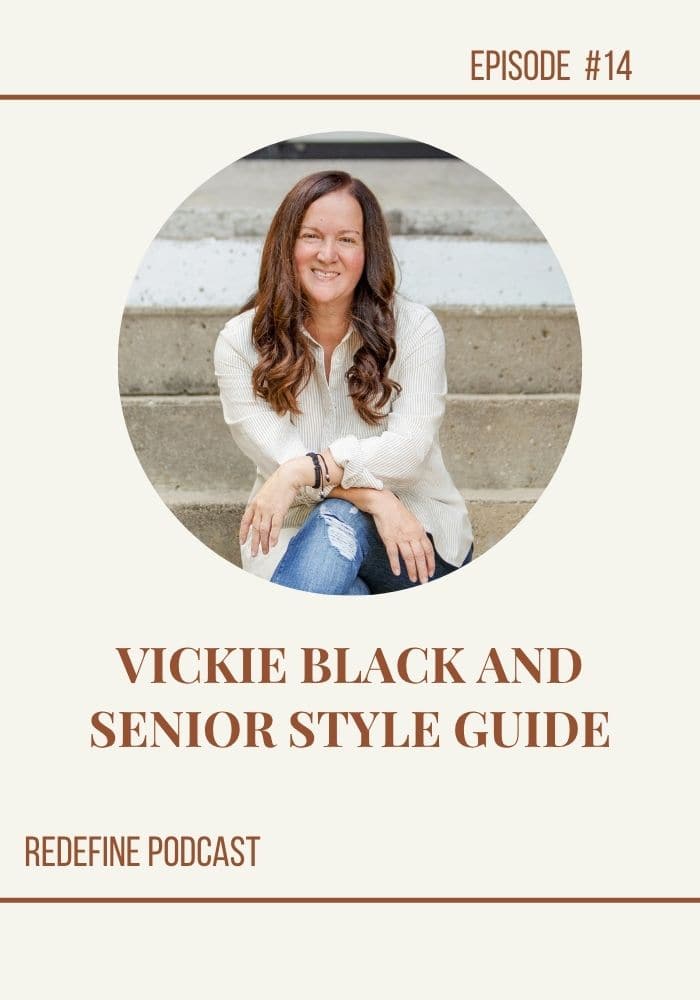
Vickie Black and Senior Style Guide

Vickie Black and Senior Style Guide: Building Community, Connection, and Confidence in the Photography Industry

If you’ve ever felt like entrepreneurship can be lonely—or that you’re navigating your business without a clear roadmap—this episode is going to resonate deeply.


In this episode of the Redefine Business Podcast, Brittni Schroeder sits down with Vickie Black, the founder of Senior Style Guide (SSG), to talk about her journey from photographer to industry leader, and how she built one of the most recognized communities for senior photographers.


From starting a blog with no clear monetization plan to launching a magazine, hosting events, and building a thriving membership, Vickie’s story is a powerful reminder that sometimes the boldest decisions lead to the biggest breakthroughs.


Meet Vickie Black

Vickie Black is the founder of Senior Style Guide (SSG), a community built to support and connect senior photographers in the photography industry. Launched as a blog in 2011 and the first senior industry print magazine in 2012, SSG has grown into a comprehensive platform featuring print and digital education, online events, Facebook communities, shootouts, The PUSH Conference, destination events, and the HOT 100—an annual contest highlighting exceptional senior photography across the globe.


Through every facet of Senior Style Guide, Vickie remains dedicated to educating photographers, creating authentic connection, and raising the standard of senior photography worldwide.


From Record Store Owner to Photographer

Vickie’s entrepreneurial journey didn’t begin in photography—it started with owning a record store. After recognizing the shift in the music industry with the rise of digital technology, she made a smart exit and began exploring photography full-time.


Like many photographers, she started by saying “yes” to everything—pets, weddings, babies, and more. But over time, she realized that photographing weddings wasn’t aligned with the life she wanted. The long weekends away from her family pushed her to reevaluate her path.


That’s when everything changed.


After photographing her first senior session (despite having no prior experience), she quickly fell in love with that niche. It offered the creativity she craved without the long-term commitments of weddings.


The Power of Choosing a Niche

One of the biggest turning points in Vickie’s business came when she made a bold decision: to stop photographing weddings entirely and focus solely on senior photography.


This wasn’t an easy choice. At the time, she had weddings booked and a steady income stream. But she knew that splitting her focus was holding her back.


The moment she fully committed, everything shifted.


She gained clarity. She found direction. And most importantly, she created space to build something bigger.


Starting Senior Style Guide

With a clear vision in mind, Vickie launched Senior Style Guide as a blog in 2011. Her idea was simple: feature senior photographers and create a space dedicated to that niche.


At the time, the concept wasn’t widely understood—and not everyone believed in it.


In fact, she faced criticism from others in the industry. Some questioned her branding, her strategy, and how she would ever monetize a platform that promoted other photographers.


But instead of letting that feedback stop her, she used it as fuel.


She continued to show up consistently, feature photographers, and refine her vision.


And then came the next big leap.


Turning a Blog Into a Magazine

After about a year of running the blog, Vickie considered shutting it down. Growth was slow, and the future felt uncertain.


But instead of quitting, she pivoted.


She decided to launch a print magazine.


With no prior experience in publishing, she taught herself how to design it, reworking it multiple times until it was ready. When it finally launched, it became a defining moment—not just for her business, but for the entire senior photography industry.


What started as a simple blog transformed into a respected platform that photographers aspired to be featured in.


Community Over Competition

One of the most powerful themes in this episode is the importance of community.


Both Brittni and Vickie reflect on the photography industry and how it can sometimes feel competitive or even cutthroat. But they also emphasize the value of finding your people—the ones who support you, challenge you, and celebrate your success.


Vickie shares how a group of photographers, who initially offered tough (and sometimes harsh) feedback, ultimately helped her grow. Their honesty pushed her to improve, and over time, they became a source of encouragement and support.


This idea of “rising tides lift all ships” is woven throughout the conversation.


Because at the end of the day, success isn’t about competing—it’s about collaborating.


The Importance of Authenticity and Transparency

Another key takeaway from this episode is the importance of being real.


Vickie and Brittni both discuss how frustrating it can be when people present themselves one way online but show up completely differently in real life.


Authenticity matters.


So does transparency.


Vickie shares stories of mistakes and failures—like showing up to a session without her gear—and how those moments actually built stronger connections within her community.


Because when you’re honest about your journey, people trust you more.


And that trust is what builds lasting relationships and successful businesses.


Evolving With the Industry

Senior Style Guide has never stayed stagnant.


Over the years, it has evolved to include:

  • A print magazine
  • Educational resources
  • Online events
  • Conferences like PUSH
  • Destination experiences
  • A thriving online community


Most recently, Vickie has expanded into a membership model, designed to provide photographers with ongoing education, support, and connection.


This membership brings together multiple industry experts, offering diverse perspectives and real-time learning opportunities.


It’s a reflection of what the industry truly needs: not just education, but connection.


Building a Business That Aligns With Your Life

One of the most refreshing parts of this conversation is Vickie’s perspective on success.


She emphasizes that building a business isn’t just about making money—it’s about creating a life you actually enjoy.


For her, that meant stepping away from weddings, focusing on what she loved, and building something that allowed her to be present for her family.


It also meant taking risks.


Leaping without knowing exactly how things would turn out.


And trusting that the process would lead her where she needed to go.

Join the Conversation

Let’s not stop the party here. Head on over to my Instagram or Facebook group, Redefine Your Business, and share your thoughts about today’s show. See you again, same time, same place next week!

How to Use the Threads App in Your Business

Why You Shouldn’t Be Sleeping on Threads for Your Business Growth

If you’ve been feeling overwhelmed by constantly trying to keep up with Instagram’s algorithm, perfect your content, or stay relevant online… this episode is going to feel like a breath of fresh air.


In this episode of the Redefine Business Podcast, Brittni Schroeder dives into a platform that many business owners are either overlooking or completely ignoring: Threads.


While it might seem like just another social media app to manage, Brittni breaks down why Threads is actually one of the easiest and most effective platforms right now for building visibility, connection, and real conversations—without the pressure of perfection.


If you’ve been craving a simpler, more authentic way to show up online, this episode is your sign to start paying attention.


What Makes Threads Different?

Threads, connected to Instagram, feels similar to platforms like Twitter (now X), but with a unique advantage: it’s still in its growth phase.


That means:

  • Organic reach is higher
  • Content doesn’t need to be polished
  • Conversations matter more than aesthetics


Unlike Instagram, where visuals and editing often take center stage, Threads is primarily text-based. It rewards quick thoughts, personality, and genuine interaction over curated content.


This shift creates a huge opportunity for business owners who are tired of spending hours creating “perfect” posts.


Instead of performing, Threads allows you to simply connect.


And as Brittni emphasizes—connection is what converts.


Step 1: Shift Your Mindset

One of the biggest mistakes you can make is treating Threads like Instagram 2.0.


It’s not.


There’s no need for:

  • Perfectly curated grids
  • Highly edited videos
  • Overthought captions


Threads is more like a mix of mini blog posts, quick thoughts, and real-time conversations.


Think of it as a space to share things like:

  • A quick tip your audience needs today
  • A mistake you see people making
  • A simple win they can implement immediately


This approach not only saves time, but it also makes your content feel more human and approachable.


Step 2: Focus on Conversation-Driven Content

If you want to grow on Threads, the goal isn’t just to post—it’s to start conversations.


Brittni highlights several types of content that perform especially well:


Opinion Posts

Take a stand on something in your industry. These posts naturally spark discussion and replies.


Relatable Call-Outs

Make your audience feel seen by calling out common struggles or habits. When people relate, they engage.


Mini Value Drops

Share quick, actionable tips your audience can immediately apply. Short, helpful content is highly saveable and shareable.


Storytelling

Give your audience a behind-the-scenes look at your life or business. Sharing real experiences builds trust much faster than polished content ever could.


A key takeaway here is balance. Mixing business insights with personal moments creates a stronger connection with your audience.


Step 3: Promote Without Feeling Salesy

When it comes to promoting your offers, Brittni encourages finding the balance between saying nothing and sounding like a constant sales pitch.


Her go-to strategy? The 80/20 rule:

  • 80% value
  • 20% promotion


Instead of aggressively pushing your offers, make your promotions feel natural and conversational.


For example, rather than saying:
“Join my challenge—link in bio”


Try:
“I’m hosting a 5-day challenge where I walk you through this step-by-step. If you want in, it’s in my bio.”


It’s subtle, inviting, and far more effective.


Step 4: Use Threads to Grow Your Email List

Threads isn’t just about visibility—it can also become a powerful top-of-funnel tool.


Brittni explains how to align your content with your offers by:

  • Talking about the problems your freebie solves
  • Creating posts around those specific pain points
  • Softly introducing your lead magnets


Simple mentions like:
“I created a free checklist that walks you through this—it’s in my bio if you want it”

are enough to drive traffic without overwhelming your audience.


Another important strategy? Repetition.


Because of how Threads works, content gets buried quickly. That means repeating your messaging is not only okay—it’s necessary.


Step 5: Engage Like a Human

Threads heavily rewards interaction.


If you want your content to be seen, you need to:

  • Reply to comments
  • Engage with other people’s posts
  • Start and participate in conversations


Spending even 10–15 minutes a day engaging in your niche can significantly boost your visibility.


Brittni shares that by intentionally engaging and posting consistently, she quickly started seeing major traction—including tens of thousands of views in a short time.


Step 6: Stay Consistent (Without Overcomplicating It)

One of the best parts about Threads? It’s fast.


You don’t need:

  • A 30-day content calendar
  • Canva graphics
  • Hours of planning


Instead, aim for 1–3 posts per day that include a mix of:

  • Value
  • Opinions
  • Relatable thoughts


You can create meaningful content in minutes, making it one of the most efficient platforms for staying visible.


Step 7: Repurpose Your Content

If you’re already creating content for your business, Threads becomes even easier.


You can repurpose:

  • Instagram captions
  • Emails
  • Blog posts
  • Client conversations


By breaking these into smaller pieces, you can turn one piece of content into multiple Threads posts.


This allows you to stay consistent without adding more work to your plate.


Step 8: Track What’s Working

Threads provides real-time feedback, making it easy to see what resonates with your audience.


Pay attention to:

  • Which posts get replies
  • Which ones are shared
  • What sparks conversations


Then, do more of what’s working.


Interestingly, Brittni notes that content that performs well on Instagram doesn’t always translate the same way on Threads—so experimentation is key.


The Bigger Picture: Visibility + Connection = Growth

At its core, Threads isn’t about perfection—it’s about presence.


It’s about showing up consistently, sharing what you know, and creating conversations that bring people closer to your world.


When you pair that visibility with:

  • A strong lead magnet
  • A simple landing page
  • A nurturing email sequence


You create a system that leads to real, sustainable growth.


Final Thoughts

If you’ve been overthinking your content, waiting for everything to be perfect, or feeling stuck trying to “crack the algorithm,” this is your sign to try something new.


Threads offers a refreshing, low-pressure way to connect, share, and grow your audience.


And as Brittni says, your next client might be just one conversation away.

Join the Conversation

Let’s not stop the party here. Head on over to my Instagram or Facebook group, Redefine Your Business, and share your thoughts about today’s show. See you again, same time, same place next week!

Video Content with Alicia Henderson

How to Use LinkedIn Video to Build Authority and Attract High-Paying Clients with Alicia Henderson

If you’ve been sleeping on LinkedIn as a business owner, this episode might just be your wake-up call.


In this episode of the Redefine Business Podcast, Brittni sits down with video and personal branding strategist Alicia Henderson to break down why LinkedIn is one of the most powerful (and underutilized) platforms for service-based business owners—and how video can completely transform your visibility and growth.


Whether you’ve dabbled in LinkedIn or avoided it altogether, this conversation will shift how you think about building your brand online.


Why LinkedIn Is a Goldmine for Business Owners

Alicia doesn’t sugarcoat it—LinkedIn is where the buyers are.


Unlike other platforms that can feel saturated and noisy, LinkedIn offers a unique opportunity to stand out and connect directly with people who are ready to invest. Alicia describes it as a “blue ocean,” meaning there’s far less competition compared to platforms like Instagram.


Instead of constantly chasing leads, LinkedIn allows you to position yourself in front of decision-makers, professionals, and business owners who already have the resources to hire and invest.


Another major advantage? The algorithm.


LinkedIn moves slower, which means your content has a longer lifespan. You don’t need to post daily to stay relevant. In fact, Alicia recommends starting with just four posts per week and spending the rest of your time engaging with your audience.


The Mistake Most People Make on LinkedIn

One of the biggest “aha” moments in this episode is realizing why many people don’t see results on LinkedIn—it’s not the content, it’s the audience.


If your network is filled with former coworkers, classmates, or people outside your niche, your content won’t resonate or convert.


As Alicia explains, you need to intentionally build your network with the right people:


  • Ideal clients
  • Industry peers
  • Referral partners
  • Centers of influence

This shift alone can completely change your results.


Instead of broadcasting to the wrong audience, you’re creating content for people who actually need—and want—what you offer.


How to Build a High-Quality LinkedIn Network

So how do you actually build the right audience?


Alicia breaks it down into simple, actionable steps:


1. Connect with Your Peers

Start by finding people who do similar or complementary work. These relationships can lead to collaborations, referrals, and increased visibility.


2. Seek Out Ideal Clients

Use LinkedIn’s search function to find people in your niche or industry. You can search by job title, location, or even specific interests.


3. Leverage Existing Networks

One of the easiest “cheat codes” Alicia shares is to look at who your connections are connected to. Browse their networks and find aligned people to engage with.


4. Engage Before You Pitch

Instead of immediately selling, focus on building relationships. Comment on posts, start conversations, and show up consistently where your audience already is.


This relationship-first approach is what sets LinkedIn apart from other platforms.


Understanding Connections vs. Followers

LinkedIn gives users two ways to engage with your profile: connecting and following.


A connection is more like a mutual relationship, while a follower simply wants to see your content.


Interestingly, Alicia points out that followers can actually be more valuable. These are people who are intentionally choosing to consume your content without necessarily wanting a personal connection.


And that’s a good thing.


It means they’re interested in what you have to say—and potentially what you have to offer.


Why Video Is Dominating on LinkedIn

If there’s one thing Alicia wants you to take away from this episode, it’s this: start using video.


Video is currently one of the most effective ways to stand out on LinkedIn because it naturally stops the scroll and grabs attention.


While many users are still relying on long text posts and carousel graphics, video allows you to:


  • Showcase your personality
  • Build trust faster
  • Differentiate yourself from competitors
  • Increase visibility through LinkedIn’s video features


And the best part? You don’t have to reinvent the wheel.


You Don’t Need to Create New Content

One of the biggest misconceptions about LinkedIn is that you need entirely new content for the platform.


Not true.


Alicia encourages business owners to repurpose content they’re already creating for Instagram or TikTok.


That means:


  • Reels
  • Talking head videos
  • B-roll clips
  • Voiceovers


All of it can work on LinkedIn.


In fact, LinkedIn has even brought in talent from TikTok to help evolve its video experience—so short-form, engaging video is only becoming more important.


What Types of Videos Work Best?

The answer? Almost all of them.


Alicia recommends mixing up your content to keep your audience engaged:


  • Talking head videos (thought leadership)
  • Behind-the-scenes B-roll
  • Voiceover content
  • Repurposed short-form videos


This variety keeps your content interesting and encourages people to keep watching.


Best Practices for LinkedIn Video

  • Keep videos between 90 seconds and 2 minutes
  • Use vertical video format
  • Break longer topics into short series
  • Stay consistent with posting

Short, digestible content performs far better than long, drawn-out explanations.


What NOT to Do With Video

One of Alicia’s more controversial takes? Stop creating “how-to” content.


While it may feel helpful, constantly teaching step-by-step processes can actually position you as a free resource instead of a paid expert.


Instead, focus on:


  • Thought leadership
  • Insights
  • Perspectives
  • Storytelling

Give people the “what” and “why,” not always the “how.”


This keeps your expertise valuable and encourages people to work with you instead of trying to DIY everything.


Simple Video Setup (No Fancy Equipment Needed)

If you’ve been avoiding video because you think you need expensive equipment, Alicia keeps it simple.


All you really need is:


  • Your phone (the back camera works best)
  • Natural light or a basic ring light
  • A tripod or stand
  • A simple microphone

That’s it.


You can create high-quality, effective content without a big investment. The key is consistency, not perfection.


Standing Out in a Crowded Online Space

At the end of the day, LinkedIn video gives you a unique opportunity to stand out in a space where many people are still playing it safe.


By showing up on video, building intentional connections, and sharing valuable insights, you position yourself as a go-to expert in your industry.


And in a world where attention is everything, that visibility can directly translate into opportunities, clients, and growth.

Join the Conversation

Let’s not stop the party here. Head on over to my Instagram or Facebook group, Redefine Your Business, and share your thoughts about today’s show. See you again, same time, same place next week!

How to Build a Challenge

How to Grow Your Email List Fast with a Simple Challenge Strategy

If you’ve ever launched an offer and heard… crickets, you’re not alone. One of the biggest reasons launches fall flat isn’t because your offer isn’t valuable—it’s because you don’t have the right audience seeing it.


In this episode of the Redefine Business Podcast, Brittni Schroeder breaks down one of the most effective (and often overlooked) strategies for rapidly growing your email list: hosting a challenge.


After coaching a membership client through a disappointing launch, Brittni realized the root issue wasn’t the offer—it was visibility. And visibility starts with your email list. So she decided to dive deep, test the strategy herself, and share exactly what she’s learned.


If you’ve been struggling to grow your list—or want a more engaging way to connect with your audience—this episode walks you step-by-step through how to build a high-converting challenge.


Why Challenges Work So Well

A well-designed challenge does more than just grow your email list—it builds momentum.


According to Brittni, a successful challenge accomplishes three key things:


  • Attracts your ideal audience

  • Builds trust quickly

  • Naturally leads into your paid offer


Instead of passively waiting for people to join your list, a challenge gives them a reason to engage now. It creates energy, urgency, and connection—all in a short period of time.


Step 1: Focus on a Micro Transformation

One of the biggest mistakes people make is trying to do too much.


Your challenge should not promise a complete life or business overhaul. Instead, it should focus on a specific, achievable result—what Brittni calls a “micro transformation.”


Examples might include:


  • Launch your first lead magnet in five days

  • Book three discovery calls in a week

  • Grow your email list by 100 subscribers


The key is to identify something your audience desperately wants and make it feel doable within a short timeframe.


Step 2: Keep It Short and Focused

When it comes to challenges, shorter is better.


While it may be tempting to create a 30-day experience packed with value, Brittni emphasizes that longer challenges often lead to drop-off. People lose interest, get busy, or simply don’t finish.


The sweet spot? 3–7 days, with 5 days being ideal.


A five-day challenge strikes the perfect balance:


  • Long enough to create real results

  • Short enough to maintain engagement

  • Easier to promote and complete


Step 3: Map Out Daily Wins

Each day of your challenge should build on the last, guiding participants toward a clear outcome.


Brittni suggests this simple framework:


  • Day 1: Clarity – Define goals and direction

  • Day 2: Strategy – Create a plan

  • Day 3: Build – Start implementing

  • Day 4: Refine – Improve and adjust

  • Day 5: Launch/Implement – Take action


This structure keeps participants moving forward while creating a sense of progress and accomplishment.


Step 4: Choose the Right Delivery Method


There are multiple ways to deliver your challenge:


  • Email-only

  • Private groups (Facebook, GroupMe, etc.)

  • Text-based (SMS)

  • Pop-up communities (like Kajabi)

  • Or a hybrid approach

However, if your goal is email list growth, email must be a core component.


Even if participants disengage from a group or stop attending live sessions, they’re still on your email list—giving you the opportunity to continue nurturing that relationship.


Step 5: Create a High-Converting Opt-In Page

Your landing page plays a huge role in your challenge’s success.


Brittni recommends making sure it clearly answers three questions:


  1. What will I achieve?

  2. How long will it take?

  3. Why should I trust you?

Clarity and credibility are everything. Show people exactly what they’ll gain—and why you’re the person to guide them.


Step 6: Warm Up Your Audience Before Launch

One of the biggest mistakes entrepreneurs make is dropping a link and hoping for the best.


Instead, build anticipation.


Start talking about your challenge 1–2 weeks before it launches by:


  • Sharing common mistakes

  • Busting myths

  • Offering quick tips

  • Showing behind-the-scenes content


This “warm-up” phase builds trust and gets your audience excited before you ever ask them to sign up.


Step 7: Promote It Everywhere

When it comes to promotion, Brittni has one rule: talk about it more than you think you should.


Your challenge should be visible across:


  • Instagram posts and stories

  • Email marketing

  • Facebook groups

  • Your website

  • Collaborations and affiliates

  • Email signatures and profiles


And don’t just post once—talk about it daily. Repetition isn’t annoying; it’s necessary.


Step 8: Deliver Massive Value

Once your challenge begins, consistency is key.


Show up, over-deliver, and create an engaging experience by:


  • Celebrating participant wins

  • Answering questions

  • Keeping energy high

  • Encouraging interaction


The more supported your audience feels, the more likely they are to stay engaged—and eventually invest in your next offer.


Step 9: Transition Into Your Offer Naturally

Your challenge should lead seamlessly into your paid offer.


Instead of surprising your audience at the end, be transparent from the beginning. Let them know what’s coming and how they can continue working with you.


By the final day, your audience should:


  • See results

  • Trust your expertise

  • Feel ready for the next step


Step 10: Repurpose and Reuse

The beauty of a challenge is that it doesn’t have to be a one-time effort.


After running it live, you can:


  • Turn it into an evergreen funnel

  • Use recordings as bonus content

  • Repurpose emails into blog posts

  • Create social media content from daily lessons


This allows you to maximize your effort and continue generating leads long after the challenge ends.


Step 11: Track Your Metrics

Finally, don’t skip the data.


Pay attention to:


  • Landing page conversion rates

  • Email open and click rates

  • Participation levels

  • Cost per lead (if running ads)

  • Sales conversions


Tracking these metrics helps you refine your strategy and improve future challenges.

Join the Conversation

Let’s not stop the party here. Head on over to my Instagram or Facebook group, Redefine Your Business, and share your thoughts about today’s show. See you again, same time, same place next week!

Organization Coach Margo Staten

Decluttering, Psychology & High-Performance Living with Margo Staten

If you’ve ever opened your closet and immediately felt overwhelmed… or stood in your kitchen wondering how two people somehow own 40 coffee mugs… this episode is for you.


On this episode of Redefine Business, Brittni Schroeder sits down with psychology professor and decluttering expert Margo Staten to talk about something most entrepreneurs underestimate: the mental and emotional weight of clutter.


Margo isn’t just an organizing coach. She’s a psychology professor with a master’s degree in psychology and over 15 years of experience helping women reduce overwhelm, regulate their nervous systems, and design homes that support high-performance living. As the founder of Be Good to Yourself by Margo, she blends habit formation, psychology, and practical organization to help women create spaces that feel calm, intentional, and supportive.


What she shares in this conversation may completely shift how you think about clutter.


Clutter Isn’t a “Stuff” Problem — It’s a Psychological One

One of the biggest takeaways from this episode is simple but powerful: clutter is rarely about organization. It’s about meaning.


Margo explains that when women come to her asking for help organizing their homes, it’s usually not a storage or container issue. It’s a decluttering issue — and more specifically, a psychological one.


Our homes reflect our histories.

The environment we grew up in.
Our caregivers’ habits.
Financial experiences from childhood.
Seasons of lack or abundance.
Identity shifts like motherhood, career changes, or divorce.


Someone who grew up in a home filled with excess may unconsciously mirror that pattern in adulthood. On the flip side, someone who experienced financial scarcity may over-acquire items later in life as a way of compensating for childhood lack.


When we understand what our belongings represent — security, identity, status, memory, or fantasy — it becomes easier to release what no longer serves us.


Decluttering isn’t about throwing things away. It’s about understanding why we held onto them in the first place.


Clutter Is Subjective (And You Don’t Have to Be a Minimalist)

One of the biggest misconceptions Margo addresses is the idea that to be “clutter-free,” you have to become a minimalist.


You don’t.


Clutter is subjective.


Margo is an avid reader with hundreds of carefully curated and organized books. For someone else, that might feel excessive. But for her, those books bring joy and inspiration.


Some people have beautifully color-coded wardrobes but very little decor. Others keep sentimental items displayed because they spark happiness.


The goal isn’t to live in a sterile, furniture-less home. The goal is intentionality.


You can even be what Margo calls a “maximalist” and still be clutter-free — as long as your belongings are used, loved, and not financially destructive.


Your space should support your life, not suffocate it.


The Two “Eye-Twitch” Areas: Closets and Kitchens

When Brittni asks what areas clients struggle with most, Margo doesn’t hesitate: closets and kitchens.


In kitchens, the biggest culprit is the “just in case” mentality.


Just in case I host Thanksgiving.
Just in case I need this extra serving platter.
Just in case I have guests.


Meanwhile, many households rarely host and consistently use the same small rotation of items.


Decluttering the kitchen often requires challenging hypothetical future scenarios and being honest about actual habits.


But the closet is where the deeper work happens.


Closets often hold the “before kids” wardrobe, clothes from past relationships, size-two jeans waiting for “one day,” blazers for a corporate life that never happened, and dresses for events we don’t actually attend.


The wardrobe holds the past self, the fantasy self, and sometimes the grief of who we used to be.


For mothers especially, letting go of smaller-sized clothing can feel like letting go of a version of themselves. That’s not just practical — it’s emotional.


Margo encourages thoughtful curation. Keep what aligns with your current life. Release what belongs to a version of you that no longer exists.


Decluttering becomes an identity recalibration.


Teaching Kids to Declutter Early

Margo’s daughter began decluttering at just four years old.


Rather than framing it as “getting rid of things,” Margo teaches it as habit formation. One of her favorite times to practice this is around the holidays.


Before or after receiving new gifts, children can choose items to release — not to “make room,” but to practice intentional ownership.


These habits compound. Children raised with awareness around clutter grow into adults who understand space, systems, and consumption.


Organized Chaos vs. Functional Systems

There’s an important distinction between chaos and creative flow.


An artist’s studio may look chaotic to an outsider, but it’s often functional to the creator. What matters isn’t perfection — it’s whether your space supports your productivity and peace.


For entrepreneurs working from home, this becomes even more important.

Your home environment impacts focus, energy, stress levels, decision fatigue, and nervous system regulation.


Clutter isn’t neutral. It taxes your brain.


When your environment feels lighter, your business often does too.


Decluttering as Nervous System Regulation

Margo believes decluttering is one of the most underestimated tools for lowering stress.


Clutter creates visual noise. Visual noise keeps your brain on alert.


When you simplify your environment, you reduce decision fatigue, increase clarity, free up mental bandwidth, and create momentum.


For high-performing women and entrepreneurs, this isn’t about aesthetics. It’s about performance, calm, and capacity.


Working with Margo

Through Be Good to Yourself by Margo, Margo offers self-paced online courses, PDF workbooks and guides, decluttering workshops, a curated wardrobe course, and global one-on-one coaching through an application process.


She also hosts the podcast Let’s Talk About Clutter, where she dives deeper into the emotional and psychological side of decluttering.


Grab her FREE resource:
Ultimate Moms Decluttering Guide
https://view.flodesk.com/pages/625c7bdb5a98458d0c473048


Connect with Margo:

Instagram: https://www.instagram.com/begoodtoyourself_by_margo
YouTube: https://www.youtube.com/c/BeGoodtoYourselfbyMargo
Facebook: https://www.facebook.com/margo.staten
TikTok: https://www.tiktok.com/@begoodtoyourselfbymargo8?_t=8VUkqj8n07X&_r=1
Podcast: https://letstalkaboutclutter.buzzsprout.com/share


Join the Conversation

Let’s not stop the party here. Head on over to my Instagram or Facebook group, Redefine Your Business, and share your thoughts about today’s show. See you again, same time, same place next week!