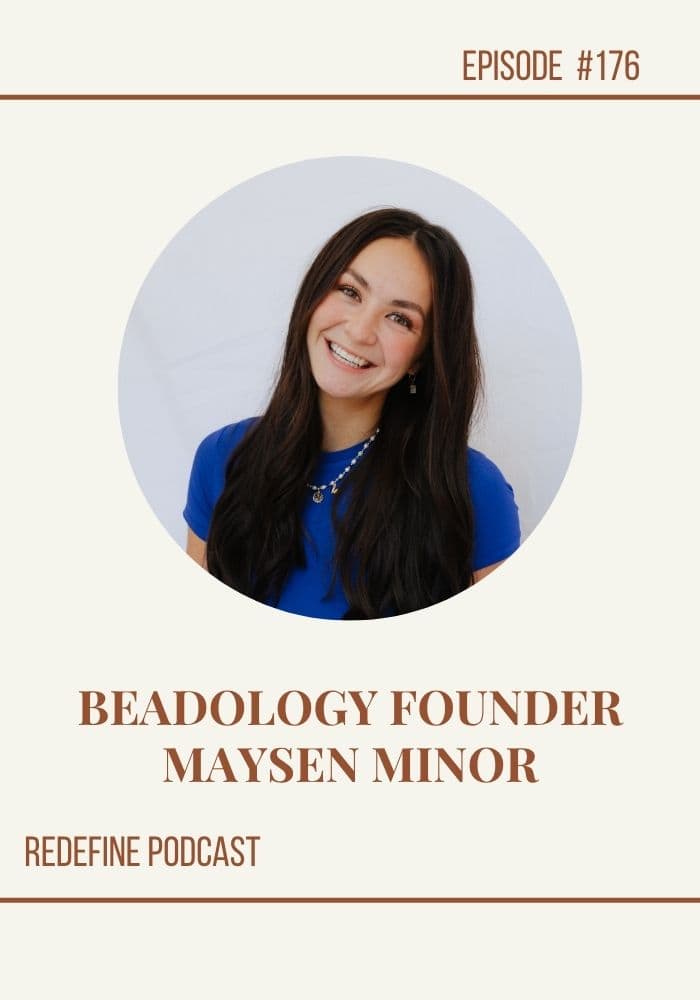
Beadology Founder Maysen Minor

Beadology Founder Maysen Minor

When you think of starting a business, most people imagine needing big investments, polished branding, and years of planning. But for Maysen Minor, all it took was a $1 challenge in a college entrepreneurship class—and a spark of creativity. In this week’s episode of the Redefine Business Podcast, I sat down with this 25-year-old girl boss to hear the incredible story of how she turned a few beads and some string into Beadology, a successful DIY jewelry business with not one but two retail storefronts in Utah.


From Lemonade Stands to Bead Shops

Like many entrepreneurs, Maysen has always had that innate drive to create and earn. Whether it was setting up lemonade stands as a kid or teaching tumbling classes in high school, she found fulfillment in building things from scratch.


But her real entrepreneurial journey started at UVU, where a college business class assigned her a unique challenge: start a business with just $1—or nothing at all, using only what you already own. That’s when she discovered some beads and string she had at home, and the idea for beaded rings was born.


She started small—selling $3 rings to friends, classmates, her track team, and even her hairdresser. She reinvested her earnings to buy more materials, and her side hustle quickly snowballed.


“I had this burning feeling of excitement in my heart, and I knew I needed to take this seriously.”


That challenge lit a fire in Maysen that’s never gone out. She placed 6th in her class’s competition but walked away with something even better: a clear vision of what she wanted to build.


Building Beadology from the Ground Up

At first, the business was called “Nandemo”, a Japanese word Maysen learned on her mission that means “anything.” It reflected her belief that anyone could create something special. But after a while, she realized the name was confusing and hard to pronounce, so she rebranded as Beadology—a name that now stands out at markets, birthday parties, and storefronts across Utah.


Her booth became known for its interactive DIY experiences. While other vendors just sold jewelry, Maysen invited people—especially kids—to make their own. That hands-on creativity became her signature offering.


As her reputation grew, so did demand. Parents started asking her to host birthday parties. Maysen began loading her car with supplies and traveling all over Utah. But the dream of having a permanent space never left her mind. With a lot of prayer, determination, and hustle, she eventually opened her first storefront at Shops at Riverwoods in Provo, and later expanded to Draper.


“Nobody was begging me to have a store. My parents were like, ‘Don’t do that.’ But I just knew in my heart that if I did it, people would love it.”


Marketing with Authenticity and Word of Mouth

Marketing Beadology has been a journey of trial, error, and intuition. Maysen leaned heavily into Instagram, showing up authentically and consistently—even when it was scary or awkward to promote herself.


Her growth has been organic, fueled by happy customers, word-of-mouth, and in-person events. One of her first big collaborations was with Mika Rose, and more recently, she’s partnered with brands like Zupas. She’s also seen the power of micro-influencers and everyday customers tagging Beadology after a fun experience.


“You think you’re talking about your business too much, but then someone connects you with the right person or the next opportunity. You just have to keep showing up.”


Young, Ambitious, and Rooted in Faith

At just 25 years old, Maysen is aware of how unusual her journey is. While many young women her age are still trying to figure out what’s next, she’s managing employees, expanding a brand, and inspiring hundreds of customers every week.


Still, she remains humble—and deeply grounded in her values.


“Whether I’m a big success or a huge failure, as long as I stay close to God and close to my family, everything’s going to be okay.”


That mindset has carried her through doubt, imposter syndrome, and the constant challenge of being taken seriously as a young entrepreneur.


Beadology: Where Creativity and Confidence Meet

More than just a jewelry shop, Beadology is a space where creativity, community, and confidence come together. Whether you’re a little girl making your first necklace or a group of friends enjoying a girls’ night out, the experience is as memorable as the jewelry you take home.


“The best part of my job is seeing a little girl run to the mirror, put on her necklace, and say, ‘I look so beautiful.’ That never gets old.”


Want to Experience Beadology for Yourself?

Use code: REDEFINE at beadology.co to get 100% OFF your booking fee when you schedule your own DIY jewelry workshop!

Follow Maysen and Beadology Online:

Personal IG: @maysen_minor

Business IG: @beadology_utah

TikTok: @beadology_utah

Website: www.beadology.co

Join the Conversation

Let’s not stop the party here. Head on over to my Instagram or Facebook group, Redefine Your Business, and share your thoughts about today’s show. See you again, same time, same place next week!

Kajabi: Breaking Down My Tech Stack

How I Use Kajabi in My Business: Breaking Down My Tech Stack

When I first started my coaching business, I knew right away that I wanted to create digital courses. Kajabi  was one of the first platforms I fell in love with. After years of purchasing digital courses and using other platforms, Kajabi is still my favorite platform for digital courses.  Kajabi has become one of my favorite tools in my business.


From landing pages to sales pages, digital course hosting to seamless checkouts, Kajabi helps me run my business like a streamlined machine. Today I’m sharing exactly how I use Kajabi, what features I love the most, and a few powerful tools it offers that I don’t use, but you might want to.


Why Kajabi Works for Me

I have several digital courses and Kajabi is by far my favorite. That is the original reason I purchased Kajabi. 


Here are a few of the features that I use: 


1. Landing Pages

Every solid funnel starts with a great landing page, and Kajabi makes creating one almost fun (yes, fun). I’ve used Kajabi to build:

  • Freebie opt-ins
  • Webinar registrations
  • Event sign-up pages
  • Waitlist forms
  • Workshop and challenge registration pages

Kajabi’s builder is drag-and-drop, so no coding is needed. Plus, they have professional templates you can customize for your brand. Whether I’m promoting a free lead magnet or a paid offer, Kajabi helps me spin up a sleek landing page in minutes.


I can even track page performance, which makes testing headlines, images, and buttons super easy. Small tweaks, big impact!


2. Seamless Checkouts and Sales Pages

Let’s be honest, a clunky checkout can kill a sale. That’s why I love Kajabi’s checkout system. It’s clean, mobile-friendly, and optimized for conversions.

I use Kajabi for:


  • One-time product purchases
  • Digital course checkouts
  • Coaching offers and intensives
  • Payment plans and subscriptions

Some of my favorite features?


  • Order bumps: Add low-cost add-ons right before checkout.
  • One-click upsells: Offer another product after purchase with zero friction.
  • Custom thank-you pages: Start nurturing or upselling instantly.

All my sales pages are also built on Kajabi, using their templates or from scratch. Whether I’m showcasing testimonials, adding video, or using a countdown timer to create urgency, Kajabi helps me make it look polished and professional every time.


3. Hosting and Delivering My Digital Courses

This is where Kajabi really earns its crown. I host all my courses, my business membership, and training replays inside Kajabi, and the experience for my students is awesome-sauce.


Whether it’s a course or a membership with monthly content drops, Kajabi allows me to:


  • Upload video lessons
  • Add downloadable resources
  • Organize modules and sections
  • Set up progress tracking
  • Unlock content (drip-style) over time
  • Create a clean, branded experience for learners

Students can log in anytime, access their materials, and pick up where they left off. No “where’s my login email?” or “how do I access lesson three?” confusion.


This also means I’m not having to manually deliver content. Once they buy, the system does the rest. Automation = sanity.


4. Mobile App Access for Me and My Clients

Kajabi offers a mobile app that makes life easier for both entrepreneurs and students. My clients can access their courses, templates, and downloads on the go, and I can check in on sales, student progress, or make updates when I’m out and about.


It’s a small thing that makes a big difference, especially when so many people are consuming content from their phones.


5. Analytics That Actually Make Sense

One of my favorite things about Kajabi is how easy it is to track what’s working. You can’t grow if you don’t know what’s converting, right?


Kajabi gives me real-time insight into:


  • Sales and revenue
  • Offer performance
  • Landing page conversions
  • Student progress
  • Opt-in form submissions

This makes it super easy to double down on what’s working and tweak what’s not. I don’t need to cobble together data from five platforms—I can see it all from one dashboard.


So… Is Kajabi Worth It?

Kajabi might not be the cheapest platform on the block, but in my opinion, it’s one of the smartest investments I’ve made in my business. When you add up what it replaces (landing page software, sales page builders, checkout tools, the value is worth it.


And more importantly, Kajabi allows me to create a streamlined, automated business model that can grow without me being chained to my laptop 24/7.


A Few Kajabi Features I Don’t Use (But You Might!)

Now that you’ve seen how I use Kajabi in my business, I should also mention a few features that Kajabi offers, but I don’t personally use (at least not know):


  • Pipeline Builder for Funnels: Kajabi offers visual funnel templates for things like lead magnets, webinars, and product launches. These are great if you’re just getting started and want a plug-and-play funnel builder.

  • Community Feature: Kajabi has a built-in community platform (think private Facebook group but hosted inside Kajabi) where your students or members can connect, post, and chat. Super helpful if you want to build a community off social media.

  • Podcast Hosting: Yep, Kajabi also lets you host and distribute your podcast episodes. You can link it to Apple Podcasts and Spotify, all from your Kajabi dashboard.

  • Email Marketing: Kajabi includes email broadcasting and automations, so you don’t technically need a separate email service provider. While this is super convenient, I currently use a different tool for email marketing that better fits my workflow.

Kajabi is hands-down one of the most powerful tools I use to run my business. It helps me stay organized, look professional, and automate like a boss. Whether you’re a coach, creator, or digital product seller, Kajabi gives you the structure and tools to scale, without the tech burnout.


If you’re looking to simplify, automate, and create systems that actually grow your business (instead of running you ragged), Kajabi is a platform worth checking out.


Have questions? Want to peek behind the curtain of my Kajabi setup? Just reach out, I’m always happy to show you how to make it work for your business.


TRY OUT KAJABI HERE

Join the Conversation

Let’s not stop the party here. Head on over to my Instagram or Facebook group, Redefine Your Business, and share your thoughts about today’s show. See you again, same time, same place next week!

The Right Way to Use AI in Your Business with Madelyn Furlong

How to Use AI in Your Marketing Strategy Without Losing Your Voice


Artificial intelligence has taken the business world by storm—and for good reason. But while AI tools like ChatGPT can be incredibly powerful, they can also feel overwhelming or impersonal if not used correctly. On this episode of the Redefine Business Podcast, Brittni sits down with marketing strategist and website designer Madeline Victoria to break down exactly how you can use AI in your business the right way.


Whether you’re intimidated by AI or eager to learn more about how it can support your marketing efforts, this conversation is packed with practical tips to help you streamline content, stay visible, and maintain your brand voice.


Meet Madeline Victoria

Madeline Victoria is a marketing strategist and website designer who helps service providers streamline their marketing and build websites that actually convert. What began as a side hustle in college—offering social media management—soon grew into a full-time business. Now, Madeline works with busy CEOs, coaches, and entrepreneurs to help them market smarter, not harder.


Why AI is a Game Changer in Business

Let’s be honest: AI can feel intimidating at first. But as Brittni and Madeline agree, it’s not something to fear, it’s something to learn. The truth is, if you’re not using AI in your business yet, you’re already falling behind.


That said, it’s important to remember one thing: AI is a support tool, not a replacement. You’re still the brain behind your business. AI should work for you, not speak as you.


4 Smart Ways to Use AI in Your Business

Madeline breaks down four practical ways she and her clients are using AI right now:


1. Content Creation

AI is incredibly helpful for brainstorming and drafting content. Madeline shares how she uses ChatGPT to:

  • Generate social media post ideas based on past content

  • Draft Instagram captions from outlines or key points

  • Create Instagram Reel scripts and bullet points for more structured content


The key here? Always edit the output. AI can help you save time and provide a starting point, but it’s up to you to make sure the content aligns with your voice and brand. “We still have to be the brains and the strategy behind our business,” Madeline says.


2. Repurposing Content

One of the biggest challenges entrepreneurs face is the pressure to create new content constantly. That’s where AI can be a lifesaver.


Madeline uses ChatGPT to take long-form content (like podcast transcripts or blog posts) and break it down into multiple formats, such as:


  • Blog posts

  • Emails

  • Instagram captions

  • Reel scripts

  • Carousel post outlines


This not only saves time, but helps reinforce your message across different platforms. And if you’re posting on multiple platforms like LinkedIn, Facebook, or Instagram, AI can help you tweak your message for each one.


3. Boosting Visibility with SEO

AI can also help with your SEO strategy by:

  • Suggesting keywords for blog titles, captions, and meta descriptions

  • Optimizing website copy

  • Writing alt text or image descriptions

With platforms like Instagram now incorporating keyword search, optimizing your captions is more important than ever.


4. Internal Processes and Custom GPTs

Madeline also uses custom GPTs to streamline internal systems. These custom setups help automate:

  • Email responses

  • Subject line generation

  • Client communications

  • Podcast pitches


You can even use ChatGPT to help you build a custom GPT, by telling it exactly what kind of assistant you need.


A Few AI Don’ts to Keep in Mind


As powerful as AI can be, there are some best practices to follow:


  • Don’t copy and paste AI content without editing. It often uses repetitive phrases like “in today’s digital landscape,” “dive in,” or overuses emojis and cliches.

  • Train it to match your brand voice. You can upload brand guides, past content, and more to help refine the responses.

  • Don’t let AI replace your expertise. Your audience is smart—they can tell when something is overly robotic or impersonal.

“The quickest way to lose trust with your audience is when your content screams AI,” says Madeline.


When used strategically, AI can feel less like a scary piece of tech and more like a trusted business partner. Whether you’re using it to generate ideas, repurpose content, boost SEO, or improve internal systems, the key is to stay in control. Keep your voice. Keep your brand. Let AI handle the busy work—so you can focus on what you do best.


Grab Madeline’s Free Resource

Want a quick way to start using AI for content repurposing?


Madeline offers a free 20-Minute Content Kit, which includes a custom GPT and a workbook to help you turn one idea into multiple pieces of content fast. Grab it HERE


Connect with Madeline

Join the Conversation

Let’s not stop the party here. Head on over to my Instagram or Facebook group, Redefine Your Business, and share your thoughts about today’s show. See you again, same time, same place next week!

Acuity Scheduling App: Breaking Down My Tech Stack

Time is your most valuable resource as a business owner. You can’t make more of it, and no amount of hustle can change the fact that there are only 24 hours in a day. That’s where smart systems come in and a scheduling app like Acuity Scheduling can completely transform how you operate.


Let’s talk about how this simple tool becomes a game-changer for streamlining client bookings, reducing no-shows, and creating a professional experience from the very first interaction. Whether you’re a coach, consultant, creative, or service provider, Acuity isn’t just a calendar it’s going to be your new best friend.


What is Acuity Scheduling?

Acuity Scheduling is an online appointment scheduling tool that lets clients book appointments directly into your calendar, without the back-and-forth emails and calendar ping-pong. It’s like having a virtual assistant who never sleeps and always gets the time zone right.


With Acuity, you set your availability, services, pricing, and preferences and it does the rest. Clients choose their time, get reminders, pay (if you have that plan), and even fill out intake forms, all before your meeting even starts.


Why a Scheduling App is Crucial in Business

If you’re still scheduling appointments manually, you’re burning time that could be spent making money, serving clients, or just breathing between Zoom calls. Here’s what a scheduling tool like Acuity actually gives you:


1. Time Freedom

You no longer have to monitor your inbox like a hawk. Once you set your availability, Acuity does the rest.


2. Professionalism

Automated scheduling makes you look legit. It’s a seamless experience for your clients and a huge credibility boost. First impressions matter, and sending someone your custom booking link says, “I run a tight ship.”


3. Fewer No-Shows

Acuity sends automated email and text reminders, which drastically reduce forgotten appointments. No-shows?


4. Streamlined Workflows

You can collect payments, set buffer times, ask intake questions, and sync to your other business tools. Everything flows, and you stay out of the weeds.


5.  Communication

As your business grows, Acuity grows with you. It allows you to communicate without actually doing the work. You can create automated emails, reminders, and follow-ups.


Top Features of Acuity Scheduling (That Will Make You Wonder How You Lived Without It)

Let’s break down some of Acuity’s best features and how they’re more than just bells and whistles. These are the things that make your business more efficient, your brand more elevated, and your life more organized. Remember my favorite saying is minutes add up to hours. 


Automated Reminders

Acuity sends automatic confirmation emails and reminders via email and/or SMS. You can customize these messages to add your branding, links, or any pre-appointment prep details. This reduces no-shows and ensures clients are prepared.


 Integrated Payments

Collect payments at the time of booking through PayPal, Stripe, or Square. Want to charge for consultations? Require a deposit? Offer a discount code? It’s all baked in.


Custom Intake Forms

Need to gather client details before a session? Intake forms can be required during booking. Say goodbye to frantic “Can you send me your logo before the call?” emails.


Time Zone Intelligence

Acuity handles time zone conversions so you don’t have to. Whether your client is in New York or New Zealand, it shows them your availability in their time zone. No mental math, no confusion.


Calendar Syncing

Syncs with Google Calendar, iCloud, Outlook, and Office 365. Everything stays up to date, and you won’t double-book even if you have multiple calendars running.


Multiple Staff or Calendars

Running a team? Acuity lets you set up individual availability for multiple team members under one account. Great for agencies, studios, or coaching collectives.


Packages, Subscriptions & Memberships

Want to offer a 5-session coaching package or a monthly membership? Acuity allows clients to purchase packages and then book their sessions from what they’ve already paid for. Hello, recurring revenue!


Group Events & Classes

Acuity isn’t just for 1-on-1s. Host workshops, webinars, or fitness classes and allow multiple people to register for the same time slot. Perfect for scaling your impact.


Integrations Galore

It plays nicely with Zoom, Google Meet, Mailchimp, QuickBooks, Zapier, and more. So whether you’re triggering email workflows, accounting, or CRM tagging, your systems are talking behind the scenes.


Real Talk: What Does This Look Like in Action?

Let’s say you’re a business coach (like yours truly 😉). You offer discovery calls, 1:1 strategy sessions, and VIP days. With Acuity, you can:


  • Create three different appointment types with different lengths and pricing
  • Set buffer times before and after each session (because nobody wants back-to-back Zoom fatigue)
  • Require a questionnaire before strategy sessions to come in prepared
  • Automatically add new bookings to your Google Calendar and Zoom
  • Collect full payment for VIP days upfront and offer payment plans
  • Tag new clients in your email list through an integration like ConvertKit or Flodesk

And the best part? This all happens on autopilot. You’re not juggling DMs, texts, or sticky notes. You’re showing up to sessions prepped, polished, and present.


How to Know If Acuity is Right for You

Let’s be honest: there are a lot of scheduling tools out there. Calendly, Dubsado, HoneyBook—each has its own bells, whistles, and quirks. But Acuity stands out for solo entrepreneurs and small teams because of its:


  • Ease of use
  • Depth of customization
  • Affordable pricing
  • Seamless user experience

If you’re looking for a scheduling system that scales with you and doesn’t require a tech degree to set up, Acuity is a safe and savvy bet.


Don’t Wait to Automate

Every time you manually schedule a call, send a reminder, or chase a payment, you’re spending time on something that could be automated.


Acuity isn’t just a tool, it’s a business asset. It helps you reclaim your time, show up like a pro, and give your clients the VIP experience from the first click. If you’re serious about growing your business, stop managing your schedule in the margins. Let Acuity take the wheel.


To sign up for Acuity click HERE


Join the Meeting Place Membership for $50 for a limited time. Use code SUMMER at checkout. 


Join the Conversation

Let’s not stop the party here. Head on over to my Instagram or Facebook group, Redefine Your Business, and share your thoughts about today’s show. See you again, same time, same place next week!

 
Redefine Business Podcast
 

I’m Brittni Schroeder!

I’m a Diet Coke drinkin, chocolate eatin, Netflix watchin, all-around good time! I want to show you how to grow and scale your business. Let’s be business BFFs! 

Women's Business Coach


Networking With Angelica Pompy

The Power of Networking with Angelica Pompy


Today’s episode is packed with heart, strategy, and major lightbulb moments. I sat down with the incredible Angelica Pompy—a business coach, speaker, marketing strategist, and the vibrant founder of Pompy Portraits—to talk about one of the most important but often overlooked pieces of building a business: networking.


This conversation is full of energy and encouragement, but more than that, it’s packed with practical advice on how to show up authentically, build relationships that matter, and create real connection in a world that often feels disconnected. If networking feels uncomfortable, overwhelming, or like something that’s just not you, this episode will change your perspective—and maybe even make you excited to attend your next event.


Who is Angelica Pompy?

Angelica Pompy wears many hats—and she wears them well. She’s a sought-after business coach and marketing strategist who helps creative women build profitable businesses with confidence and clarity. Through her signature program and educational resources under Angelica Pompy Education, she teaches foundational strategies, efficient systems, and intentional marketing that actually drives growth.


But her journey didn’t start with coaching. Angelica is also the founder of Pompy Portraits, a bold, full-service photography studio in Jacksonville, Florida that specializes in empowering women through maternity and boudoir photography. From capturing powerful images to guiding women through the challenges of entrepreneurship, Angelica’s mission is all about helping women feel confident, seen, and capable—whether in front of the camera or behind a business.


From Photographer to Coach: Angelica’s Business Evolution

In the episode, Angelica shares how she made the pivot from full-time photographer to business coach. Her photography business was thriving—complete with a team, a strong client base, and a full-service studio that offers everything from hair and makeup to same-day photo reveals. But she found herself craving something more: deeper conversations, more strategic impact, and the ability to empower women beyond the lens.


That’s when coaching came into focus.


Angelica now helps female entrepreneurs show up confidently in their businesses by teaching money-making strategies, content marketing, and systems that support long-term success. And networking, she says, has been one of the most critical elements of both her business growth and personal development.


Why Networking Still Matters (Now More Than Ever)

With the rise of social media and online business, it’s easy to assume that face-to-face networking is a thing of the past. But Angelica argues the opposite: in-person connection is more powerful than ever.


She explains that while you can blast your business on Instagram all day, there’s something irreplaceable about looking someone in the eye, sharing your passion, and letting them feel your energy. When people experience your enthusiasm and authenticity in person, that interaction leaves a lasting impression—something an algorithm simply can’t replicate.


She describes networking as her love language and urges listeners not to underestimate the power of a handshake, a conversation, or even a heartfelt DM.


How to Make Networking Feel Natural and Intentional

If networking makes you cringe, you’re not alone. Angelica gets it—many people associate networking with awkward elevator pitches or transactional small talk. But she’s on a mission to flip that narrative.


In the episode, she breaks down how to make networking feel intentional and aligned with who you are. For Angelica, that means asking meaningful questions like, “What do you love?” instead of jumping into, “What do you do?” This approach leads to deeper, more personal conversations that create connection far beyond business.


She shares that when she’s entering a room—whether physical or virtual—she always sets an intention. She asks herself:


  • Why am I going to this event?

  • Who do I want to meet or connect with?

  • What’s the purpose of this interaction?


By walking in with clarity, she makes sure she’s not just showing up—she’s showing up with purpose.


The Importance of the Follow-Up

One of the biggest mistakes people make after networking? They forget to follow up.


Angelica emphasizes that the real magic often happens after the initial interaction. Whether it’s a DM, an email, a coffee chat, or simply staying top of mind through social media, nurturing those connections is key. She reminds us that people don’t always need your product or service right now, but they will remember you when they do—if you’ve stayed present in their world.


She also offers a practical tip: make it easy for people to stay connected with you. Invite them to join your email list, follow you on Instagram, or connect on LinkedIn. Keep showing up, and eventually, that familiarity turns into trust.


Networking is a Long Game

Angelica and I both agreed—networking isn’t about walking out of the room with a sale. It’s about planting seeds. It’s about being memorable, kind, curious, and consistent. And over time, those relationships blossom into collaborations, referrals, and sometimes even lifelong friendships.


She encourages listeners to be open to conversations that have nothing to do with business. Because the more you know about a person—their family, their values, what brings them joy—the more likely you are to build a meaningful, lasting connection.


Freebie: Angelica’s Networking Workbook

If you’re still feeling unsure about how to network effectively, Angelica has created a resource that will help you walk into any room with confidence.


Her FREE Networking Workbook includes:

  • Questions to ask before attending a networking event

  • Tips on identifying the right rooms and events for your goals

  • Guidance on what to say, how to follow up, and how to build lasting relationships


Grab your copy here:
https://angelicapompy.com/business-church-trial


Connect with Angelica Pompy

Angelica is all about real connection—and she’d love to hear from you. If something in this episode resonated with you, don’t hesitate to reach out and say hello. Consider it your first step into the world of networking.


Join the Conversation

Let’s not stop the party here. Head on over to my Instagram or Facebook group, Redefine Your Business, and share your thoughts about today’s show. See you again, same time, same place next week!

Why You Should Start a Podcast

WHY YOU SHOULD START A PODCAST

Have you’ve ever thought, “Should I start a podcast?” The answer is YES. Stick around, because I’m about to break down why now is literally the best time to grab a mic and hit record.


Why Podcasting Is the Move Right Now

People consume content in all sorts of ways these days. We scroll. We swipe. We double tap. But more than ever, we listen. Podcasts are booming because they’re personal, portable, and powerful. Whether folks are commuting, folding laundry, or pretending to work while scrolling LinkedIn  podcasts are there.


But beyond convenience, podcasting is one of the most dynamic tools for:

  • Sharing your ideas

  • Marketing your biz

  • Building authority

  • Networking

  • And connecting with audiences around the world

It’s like your own little radio show but without the studio, the gatekeepers, or the weird elevator music.


Grow Your Network Like a Boss

One of the best benefits of podcasting? Networking. Yes, it helps your business. Yes, it helps your brand. But also? It gets you in rooms you didn’t even know existed.


Here’s how podcasting boosts your connections:


  • Guest Appearances: Invite amazing people in your industry. Pick their brains, share their genius, and tap into their audience.

  • Collaborations: Team up with other podcasters. Cross-promote, co-create, and build something even bigger.


And if you’re thinking, “But I don’t know anyone yet!” — guess what? Having a podcast makes it 10x easier to invite someone to a conversation. It’s not cold pitching. It’s a warm invite to share the mic.


Audience Growth — Let’s Talk Strategy

Now let’s get into the juicy stuff: growth. Podcasting isn’t just talking into the void, but it’s building a loyal, engaged community. But here’s the catch: you gotta be intentional.


Here’s your game plan:


  • Consistency: Drop episodes on a schedule. Weekly, biweekly, monthly — just pick one and stick to it.

  • Engagement: Shout out your listeners. Ask questions. Reply to their DMs. People stay where they feel seen.

  • Promotion: Use your social media, your email list, your cat’s Instagram — whatever. Promote every episode like it’s Beyoncé’s album drop.

  • SEO: Yep, podcasting helps with search rankings (more on that next), but first — make sure your titles and descriptions are keyword-rich and juicy.

SEO

I know, I know “SEO” sounds scary.. But stay with me. Because podcasting isn’t just good for your voice, it’s good for your visibility.


Here’s how podcasting boosts your search engine mojo:


  • Backlinks: Guests and collaborators often link back to your episodes — which tells Google you’re a big deal.

  • Content Repurposing: Transcribe your episodes and drop them on your blog. Now you’ve got searchable, indexable content.

  • Keyword Optimization: Add those relevant keywords to your episode titles, descriptions, and show notes.

  • Engagement Metrics: High downloads, listens, and shares tell the algorithm, “Hey, this content matters.”

Pro Tip: Make detailed show notes. Include timestamps, summaries, and links. Not only does it help your listeners — it feeds the SEO gods too.


Let’s Talk Gear

Okay, techy stuff. I know it can be intimidating, but starting a podcast doesn’t mean dropping thousands on a home studio. Here’s the lowdown on what you actually need to sound professional:


  • Microphone: USB mics like the Blue Yeti or Audio-Technica ATR2100x are budget-friendly and sound great.

  • Headphones: Plug them into your mic (not Bluetooth!) to monitor audio and catch weird sounds before they ruin a great take.

  • Pop Filter: That little screen that catches your p’s and b’s from punching people’s eardrums. Cheap, effective, essential.

  • Recording Software: Try Audacity (free), GarageBand (free for Mac), Zoom (for interviews), or Adobe Audition if you’re fancy.

  • Computer: Just make sure it can handle your recording/editing software without turning into a frozen potato.

Where Do Your Episodes Live?

Once you’ve got a few episodes recorded, you’ll need to choose a podcast hosting platform. Think of it like the Airbnb for your audio files. It hosts them and sends them to directories like Apple Podcasts, Spotify, Google Podcasts, and more.


Here are a few hosting faves:


  • Buzzsprout: Super user-friendly, great support, solid analytics.

  • Libsyn: A classic reliable and widely respected.

  • Podbean: Unlimited storage and bandwidth? Yes please.

  • Anchor (by Spotify): Free, simple, and great for beginners.

  • Kajabi: If you’re already on the platform, it’s handy, but don’t expect the robust analytics you’ll find elsewhere.

Stay Organized (Like the Pro You Are)

Last but not least, keep your podcast organized. Trust me, future-you will thank you when you’re not scrambling to remember what you named Episode 12.


Here’s what to track:


  • Episode number and title

  • Publication date

  • Guest info (bio, socials, contact)

  • Status (recorded, edited, scheduled, published)

  • Notes or links mentioned

Tools to help you stay sane:


  • Google Sheets or Excel for a simple tracker

  • Airtable for a more visual, customizable setup

Trello or Asana if you want to project-manage the whole shebang

MY PODCAST STARTER KIT

I’ve compiled my favorite podcasting tech in a store front, just to make your start-up even easier!

CLICK HERE

Join the Conversation

Let’s not stop the party here. Head on over to my Instagram or Facebook group, Redefine Your Business, and share your thoughts about today’s show. See you again, same time, same place next week!

Jessica Frew the Decision Coach

Shove Your Shoulds: Making Bold, Aligned Decisions with Jessica Frew

In this week’s episode of the Redefine Business Podcast, Brittni Schroeder sits down with returning guest, decision-making coach Jessica Frew, to have a deep, candid conversation about one of the most overlooked aspects of personal and business growth: the power of aligned decision-making.


Jessica Frew is no stranger to navigating life’s unexpected turns. As a wife, ex-wife, mom, stepmom, and bold action taker, Jessica has lived through some of life’s hardest experiences—from betrayal to divorce to rebuilding a new kind of family dynamic. And through it all, she’s discovered one universal truth: peace, confidence, and personal empowerment begin with making your next best decision.


Jessica is the creator of the Be.Be.Be Decision-Making Formula—a framework designed to help women unlearn unhealthy decision-making patterns and start leading bold lives in alignment with who they were created to be. In this episode, Jessica and Brittni discuss how trauma, conditioning, and life experiences impact our ability to trust ourselves—and how to reclaim that trust one choice at a time.


The Power of Decision-Making

Jessica shares how so many of us—especially women—struggle with decision-making because of early conditioning. From being told what to wear or how to behave, to being taught to suppress our feelings, these subtle (and not-so-subtle) messages create a disconnect between our inner knowing and our outer actions.


She explains that our decision-making patterns are shaped not just by our experiences, but by cultural, social, and religious conditioning as well. For example, after betrayal, many women begin to second-guess themselves—wondering if they missed red flags or if their intuition can even be trusted anymore.


But according to Jessica, confidence isn’t something we wait to have before making a choice—it’s something we build by making choices. “Confidence grows when we make decisions,” she says. “The real issue comes when we don’t make any decisions at all.”


What Does It Mean to Make an Aligned Decision?

We hear the term “alignment” all the time in the coaching and personal development world—but what does that really mean?


For Jessica, it comes back to one core human need: safety.


We want to feel safe being ourselves, safe showing up authentically, and safe taking action even when the outcome is uncertain. Aligned decision-making isn’t about doing what others think you should do—it’s about doing what feels safe, empowering, and true to you.


Her upcoming book, Shove Your Shoulds: Become a Decision-Making Badass and Live the Bold Life You Deserve, digs deep into this topic. In it, Jessica helps readers identify where they’ve been “shoulding” on themselves or others—those moments where judgment or external pressure creeps in—and walks them through a framework for making bold, values-driven decisions.


Pre-order the book or join the waitlist at shoveyourshoulds.com/pre-order


Parenting, Failure, and Business: How It All Connects

Brittni and Jessica also reflect on how our approach to decision-making shows up in parenting and business. Jessica points out that when we micromanage our children or try to protect them from failure, we rob them of the opportunity to build confidence through trial and error.


The same applies to business.


Entrepreneurs often deal with decision fatigue—endless overthinking, fear of failure, and trying to find the “perfect” path forward. But as Jessica says, perfection isn’t the goal—progress is.


You have to be willing to fail, evaluate, and try again. Because every decision, even the wrong ones, teach you something that informs the next right step.


Why This Matters in Business

Your relationship with yourself—the ability to trust your gut, show up authentically, and lead with confidence—directly affects your success as a business owner.


Jessica shares that if you’re disconnected from your own inner voice, it creates a disconnect with your audience. People are drawn to realness and authenticity, and when you lead your business from a place of alignment and safety within yourself, it naturally attracts the right clients.


“People want real people,” she says. “That’s the connector right now.”


Whether you’re in a season of rebuilding, making tough business choices, or simply trying to step more fully into who you are, this episode offers encouragement, insight, and practical advice to help you move forward—boldly.


Connect with Jessica Frew

Website + Book Info: ShoveYourShoulds.com
Instagram: @heyjessicafrew
Podcast (Past Episodes): Husband in Law – Co-hosted with her husband and ex-husband
Book: Shove Your Shoulds: Become a Decision-Making Badass and Live the Bold Life You Deserve. Pre-orders available here!

Join the Conversation

Let’s not stop the party here. Head on over to my Instagram or Facebook group, Redefine Your Business, and share your thoughts about today’s show. See you again, same time, same place next week!

Automations Are the MVP of My Summer

If you’re anything like me, your business is your baby but also, so is your actual family. And your sanity. 


Which is why automations have become my favorite employees. They don’t sleep, they don’t call in sick, and they never ask for a raise. 


Automating parts of my business has been one of the smartest things I’ve ever done—not just for efficiency, but for freedom. As a busy entrepreneur, I’ve learned that automations don’t replace your magic… they amplify it.


So let’s break it down: Why are automations so dang important? And what exactly can you automate without your business turning into a robot takeover?


Why Automations Matter More Than Ever

In case you need convincing, here’s why automations deserve a VIP seat in your business:


1. Time Is Your Most Valuable Asset

Automations buy you back the time you’ve been spending on repetitive tasks. You can focus on things only you can do: like creating, connecting, and closing sales.


2. They Make You Look Like You’ve Got It All Together

Your leads don’t need to know that you’re replying to DMs in pajamas while your house is totally trashed. Automations help create a smooth, professional customer experience from first touch to final sale.


3. They Don’t Forget

Unlike us scatter brained humans, automations don’t drop the ball. They send every email, deliver every freebie, and follow up with precision.


The Core Automations Every Business Needs

Now, I know “automation” can sound a little techy or intimidating, but it really comes down to this: setting up systems once that run over and over again without you.


Here are some of the key automations I recommend every online business owner have in place:


1. Lead Magnet Delivery Automation

You know that freebie you worked so hard on? Whether it’s a checklist, eBook, or mini course, you should never be manually emailing it to people. Set up a landing page and an email sequence that automatically delivers your freebie the moment someone signs up.


Pro tip: This is also your opportunity to start building trust. Don’t just send the freebie, send a few nurture emails after that to introduce who you are, how you help, and invite them to take the next step.


2. Welcome Sequence

Think of this as your virtual handshake. When someone joins your email list, you want them to get to know you! Automate a series of emails that:


  • Welcome them warmly

  • Share your story and mission

  • Highlight a few client wins

  • Offer something helpful (free or paid!)

  • Invite them to follow you on socials or book a call

Done well, a welcome sequence can turn cold subscribers into warm leads that are ready to buy.


3. Abandoned Cart Emails

If you sell digital products, services, or memberships, this one’s a must. Did you know that around 70% of people abandon their carts before checking out? A simple automation that reminds them to come back (and maybe sweetens the deal with a bonus or discount) can recover a ton of lost revenue.


4. Client Onboarding Workflow

Whether you work with 1:1 clients or have a group program, onboarding should be smooth and consistent. Automate welcome emails, contract signing, intake forms, and first-call scheduling to avoid the back-and-forth and set expectations from the get-go.

Bonus points if you include a little surprise and delight (like a video from you or a digital gift!).


5. Sales Funnels

Yes, funnels are automations too! A good funnel walks someone through the customer journey—from stranger to superfan—on autopilot. It might look like:


  1. Freebie opt-in

  2. Email nurture sequence

  3. Product or service offer

  4. Deadline or urgency email

  5. Post-purchase follow-up or upsell

Once it’s built, it works for you 24/7—so whether you’re on vacation or deep in mom-mode, your funnel is still turning leads into cash.


6. Post-Purchase Email Flow

Your job isn’t done once someone buys! Set up a post-purchase automation that:


  • Thanks them for their order

  • Tells them what to expect

  • Delivers the product or access info

  • Requests a testimonial or feedback

  • Offers a related product or upgrade

This is how you build long-term relationships (and repeat customers!).


7. Social Media Scheduling

Ok, this one isn’t email-based, but it’s still automation magic. Tools like Later, Metricool, or Planoly let you batch your content and schedule it out in advance—so your Instagram can stay alive while you’re off the grid.


Real Talk: Automations Let Me Slack Off (and Still Get Paid)

This summer, I’ve been what I like to call “professionally chill.” I’m working way fewer hours, saying yes to more impromptu hikes, and spending long afternoons outside.


But here’s the thing: My business hasn’t slowed down.


Because while I’ve been slacking off (strategically, of course), my automations have been hustling behind the scenes. I’ve still grown my list, booked clients, and made sales—all without showing up every single day.


And that’s exactly what I want for YOU.


Want to Learn How to Set Up These Automations?

If you’re ready to stop trading time for money, build systems that work when you don’t, and finally stop feeling like you’re always behind…


Come join me for a free training:

🎉 The Automation Blueprint for Businesses
📆 Tuesday, June 24th
⏰ 10:00 AM MST


I’ll walk you through the exact automations I use in my business and show you how to set them up (without needing to be a tech wizard).


You’ll learn how to:

  • Set up your lead magnet automation

  • Create a nurture sequence that builds trust

  • Design a simple but powerful sales funnel

  • Onboard clients with ease

  • And more!

REGISTER HERE

Join the Conversation

Let’s not stop the party here. Head on over to my Instagram or Facebook group, Redefine Your Business, and share your thoughts about today’s show. See you again, same time, same place next week!

My Tech Stack for Automating, Organizing, and Growing My Business

My Tech Stack for Automating, Organizing, and Growing My Business

Running a digital business is like being the ringleader of a very ambitious circus. Between coaching clients, creating content, sending emails, running launches, and keeping up with your 27-tab browser habit (don’t judge me)—you need tools that do the heavy lifting without driving you nuts.


Welcome to my tech stack breakdown! I’m pulling back the curtain on the platforms and programs I use to keep my business automated, streamlined, and scaling like a boss. If you’ve ever wondered how I manage it all, this is your backstage pass.


Here’s the lineup:


Kajabi: The Main Event

If my business was a house, Kajabi would be the foundation. It’s the all-in-one platform where my courses, membership, landing pages, funnels, and checkout systems live.


I use Kajabi to:


  • Host my Meeting Place Business Membership

  • Deliver online courses

  • Create beautiful landing pages and opt-ins

  • Set up automated email sequences

  • Manage product offers and payments

What I love about Kajabi is that it keeps things simple. One login, one dashboard, and boom—I’m in control of my digital empire. No duct-taping 17 platforms together. Kajabi handles the customer experience from opt-in to testimonial.


Flodesk: Email Marketing, But Make It Pretty

If Kajabi is the engine, Flodesk is the glittery megaphone I use to talk to my audience. It’s my go-to for sending beautifully designed emails that actually get opened.


Why I chose Flodesk:


  • The templates are chef’s kiss—stunning and easy to customize.

  • I can automate welcome sequences, nurture funnels, and launch emails.

  • Unlimited subscribers and emails (yes, please!).

  • The visual workflow builder makes mapping out email automations feel like a craft project, not a chore.

I use Flodesk for things like list-building challenges, nurture sequences, and dreamy weekly newsletters that keep my audience engaged and clicking.


Zapier: My Magical Middleman

You know that moment when someone signs up for a freebie, and suddenly, their info magically appears in Airtable, Kajabi, and Flodesk like some tech fairy waved a wand?


Yeah. That’s Zapier.


Zapier is the behind-the-scenes wizard that connects all my tools together. I use it to:


  • Send leads from my forms to Airtable

  • Add new purchases to Kajabi automations

  • Trigger reminder emails via Flodesk

  • Move data between apps like I have a personal assistant named “Zap”

It’s the glue that makes my automations seamless. Honestly, Zapier has saved me from about 742 hours of manual data entry—and at least 3 breakdowns.


Acuity: My Virtual Front Desk

Acuity answers that question so I don’t have to. It’s my scheduling platform, and it makes booking calls, coaching sessions, or podcast interviews a total breeze.


I use Acuity for:


  • Discovery call bookings

  • Private coaching sessions

  • Strategy intensives

  • Automating reminders + follow-ups

Acuity syncs with my Google Calendar, sends automated reminders, collects intake forms, and takes payments. It’s like having a receptionist who never takes a lunch break.


Airtable – My Brain in a Spreadsheet

Airtable is where all the organized magic happens. I use it as my command center for content planning, podcast tracking, launches, and project management.


A few of my Airtable bases include:


  • Podcast guest management

  • Content calendar & repurposing tracker

  • Launch planning

  • CRM for leads and clients

  • Course content outline and progress

It’s more flexible than a spreadsheet, prettier than Google Sheets, and powerful enough to track every moving part of my business. Plus, with automations and views, I can slice and dice my data however I want. Airtable gives big boss energy.


Canva: Design Like a Pro (Without Being One)

I am not a graphic designer. But Canva makes me look like one.


I use Canva to create:


  • Social media graphics

  • Email headers

  • Course slide decks

  • Lead magnets

  • Promo materials

  • Reels covers and IG story templates

With brand kits, templates, and folders galore, Canva helps me stay consistent and on-brand—even when I’m creating content on the fly.


Adobe Creative Cloud: For My Fancy Moments

When I need to kick things up a notch, I lean into Adobe Creative Cloud. Specifically:


  • Photoshop for advanced graphics

  • Premiere Pro for video editing

  • Lightroom for photo touch-ups

This is the more “pro-level” side of my stack, and while I don’t use these tools every day, they’re my go-to when I need high-quality media for launches, YouTube, or polished promo content. Bonus: I occasionally impress my photographer friends with my Lightroom presets.


Asana: My Digital To-Do List (With Superpowers)

Running multiple projects, launches, and content streams? Enter Asana. It’s where I manage:


  • Weekly to-dos

  • Client deliverables

  • Team communication

  • Product launches

  • Blog post ideas (including this one!)

Asana lets me set due dates, assign tasks, add notes, and track progress—all without losing my mind. It’s my productivity buddy that gently nudges me to stay on track. (Okay, sometimes not-so-gently. But I need the tough love.)


Why My Tech Stack Matters

My tech stack is more than just a list of tools—it’s the system that supports my growth, my creativity, and my clients. Every program plays a specific role, and together, they create a well-oiled machine that:


  • Saves me time

  • Keeps my offers organized

  • Helps me serve my audience better

  • Lets me automate what I can, so I can focus on what really matters (like helping entrepreneurs build their empires.

If you’re a business owner who feels like you’re juggling flaming swords, let me say this: your tech stack should feel like a support system, not a stress factory. Start small, integrate intentionally, and build systems that work for you.


Need help figuring out what tools to use or how to set them up? That’s my zone of genius. Let’s build your automated, streamlined business together.

Join the Conversation

Let’s not stop the party here. Head on over to my Instagram or Facebook group, Redefine Your Business, and share your thoughts about today’s show. See you again, same time, same place next week!

How to Market Your Business Without Using Social Media

How to Market Your Business Without Using Social Media 


Sometime, it can feel like social media is the only way to market your business. Between endless Instagram reels, algorithm changes, and the pressure to post daily, it’s easy to burn out and wonder: Is there another way?


Good news: There absolutely is. You can successfully grow and market your business without dancing on TikTok, battling the Instagram algorithm, or responding to DMs 24/7. In fact, there are plenty of business owners who’ve built profitable, sustainable brands without depending on social media—and you can too.


Here’s how to market your business without social media (and still see growth, visibility, and sales):


1. Build (and Nurture) an Email List

If social media is the party, your email list is the VIP lounge. It’s where real relationships are built, sales are made, and customer loyalty is nurtured.


  • Offer a valuable freebie (lead magnet) to attract subscribers. Think: checklists, templates, mini-trainings, or discounts.

  • Set up an email nurture sequence to build trust and introduce people to your offers.

  • Send consistent value-packed emails. You don’t need to be spammy—just helpful and human.

Pro Tip: You own your email list. Algorithms can’t touch it.


2. Leverage SEO + Blogging

People are searching Google every single second—why not be the answer they find?


  • Create blog posts targeting topics your ideal clients are searching for. Use tools like Ubersuggest or AnswerThePublic to find relevant keywords.

  • Optimize your website and blog content with on-page SEO best practices (think: keywords in headings, image alt text, internal links).

  • Include CTAs (calls to action) to your offers, services, or email opt-ins in every post.

Long-form content (like blogs) lives forever on Google—unlike a 24-hour Instagram story.


3. Be a Guest on Podcasts

Podcast guesting is one of the most powerful ways to build your audience without social media.


  • Find shows that speak to your target audience and pitch yourself as a guest.

  • Share valuable insights, tell your story, and include a CTA to your lead magnet or website.

  • Bonus: most podcast hosts promote the episode for you, giving you exposure to their built-in audience.

 Power Move: Create a media kit to streamline the pitching process (or grab a done-for-you template ).


4. Focus on Referrals + Word of Mouth

Word of mouth is still king—especially when it’s intentional.


  • Ask happy clients for testimonials and referrals.

  • Create a referral program that rewards people for spreading the word.

  • Network in real life or virtually through communities, memberships, and masterminds.

Your best marketing tool? A raving client who can’t stop talking about you.


5. Use Strategic Collaborations

Partnering with other businesses or creators who serve your ideal audience can be a goldmine.


  • Host a joint workshop, giveaway, or challenge.

  • Create a bundled offer together.

  • Offer each other’s audiences a special bonus or discount.

Collaborations expand your reach without needing to build it all from scratch. And no, you don’t need to post a “collab reel” to make it work.


6. Build an Evergreen Funnel

Evergreen funnels are like the silent salespeople of your business.


  • Create an opt-in → email sequence → offer flow that nurtures and sells on autopilot.

  • Drive traffic to your funnel through blog posts, podcast interviews, guest features, or paid ads (if you want).

  • Update and optimize over time based on performance data.

Set it up once. Tweak as needed. Let it work while you sleep.


7. Create YouTube Content

If you enjoy teaching or talking through content, YouTube is an underrated powerhouse.


  • It’s the second-largest search engine behind Google.

  • Videos live for years, unlike fleeting social posts.

  • You can repurpose blog or podcast content into video format for extra reach.

The best part? You don’t need to go viral—just be valuable.


8. Leverage Pinterest for Traffic

Okay, hear me out—Pinterest isn’t really social media. It’s a visual search engine.


  • Pin your blog posts, lead magnets, and product pages.

  • Optimize with keywords your audience is searching for.

  • Use Tailwind to automate your pinning schedule.

Pinterest traffic is slow-burn and long-lasting. One well-placed pin can drive traffic for years.


9. Write for Other Websites (Guest Blogging)

Guest blogging is a great way to tap into new audiences and build backlinks (hello, SEO!).


  • Pitch articles to websites or online publications your dream clients read.

  • Provide value and link back to your site or lead magnet.

  • Include your bio and a clear call-to-action.

Authority, exposure, and SEO boost—all in one.


10. Use Email Signatures, Invoices, & Every-Day Touchpoints

Every single interaction is a chance to market your biz.


  • Add a link to your lead magnet or website in your email signature.

  • Include upsells or referrals in your invoice or thank-you emails.

  • Mention your offer during customer service or support convos (gently and authentically).

Marketing doesn’t always have to be loud. Sometimes it’s subtle and strategic.


You Don’t Need Social Media to Succeed

Let’s be real—social media can be helpful, but it’s not required. You don’t have to be a content machine or keep up with the latest trends to build a thriving, impactful business.


Instead, focus on strategies that:
You own (like email and SEO)
Work long-term (not just while you’re online)
Feel aligned with your energy and business goals


Whether you’re stepping away from social completely or just want to diversify your traffic, these strategies can help you show up, serve your people, and sell your offers—no algorithm dancing required.


Need help building a marketing system that doesn’t rely on social?
Grab my Media Kit Template, start pitching yourself for interviews and podcasts, and watch the visibility roll in—no reels required


Grab the Media Kit Template HERE

Join the Conversation

Let’s not stop the party here. Head on over to my Instagram or Facebook group, Redefine Your Business, and share your thoughts about today’s show. See you again, same time, same place next week!