Creating Your Brand Story with Kris Jones

Today, I’m excited to welcome Kris Jones, founder of Red Door Stories. Kris has been in the marketing industry for over 23 years, working with major brands like Nike and Adidas before shifting focus to small business owners and solopreneurs. Her expertise in branding, website design, and storytelling has helped countless entrepreneurs craft compelling narratives that resonate with their audiences. Let’s dive into our conversation!


The Evolution of Branding and Storytelling

Kris started her career as a visual storyteller, specializing in brand design and visuals. But as the digital landscape evolved, she noticed a major shift: having a beautifully designed website was no longer enough.


“In the early days of the internet, a polished website was all you needed to look like a legitimate business,” Kris explains. “But as online competition grew, businesses needed more than just visuals—they needed a strong, clear message that communicated what made them unique.”


Kris realized that many of her clients struggled to craft this message. They were too close to their own businesses to articulate their value in a compelling way. “It’s like trying to read the label from inside the bottle,” she says. “You know your business inside and out, but writing about it in a way that connects with others is a whole different challenge.”


This realization led Kris to dive deep into the world of storytelling. She became one of the first certified StoryBrand coaches, trained directly by Donald Miller before the book Building a StoryBrand even hit the shelves. Kris immersed herself in learning how to craft narratives that drive engagement and business growth.


Why Storytelling Matters in Marketing

Kris firmly believes that every entrepreneur has a compelling story inside them—they just need help uncovering it. The key, she says, is shifting the focus away from yourself and making your customer the hero of the story.


“In storytelling, there’s always a hero and a guide. Think of Star Wars: Luke Skywalker is the hero, and Yoda is the guide,” Kris explains. “In business, your client should be Luke Skywalker, and you should be Yoda. Your job is to guide them to success, not position yourself as the main character.”


One of the biggest mistakes businesses make is centering their brand story around themselves rather than their audience. “99.9% of websites position the business owner as the hero,” Kris says. “But there’s only room for one hero in a story. If you make yourself the hero, you’re unintentionally pushing your potential clients out of the narrative.”


Instead, the most effective brand stories invite customers into a journey, showing them how the business can help them overcome challenges and achieve their goals.


Common Mistakes in Brand Storytelling

Kris has worked with countless entrepreneurs who struggle with their messaging. Here are some of the biggest mistakes she sees:


  1. Focusing too much on personal achievements – While your background is important, your brand story should primarily focus on how you help your customers.
  2. Lack of clarity – Confusing or vague messaging leads to lost potential clients. Your website copy should be clear and easy to understand.
  3. Trying to appeal to everyone – A great story speaks directly to a specific audience. Trying to be everything to everyone waters down your message.
  4. Not guiding the customer – Instead of telling customers how great you are, show them how you can solve their problems and improve their lives.


How to Craft Your Signature Story

So, how do you uncover and refine your brand story? Kris takes her clients through a four-phase process:


  1. Mining for Gold – “Your story isn’t invented; it’s mined,” Kris says. In this phase, she asks strategic questions to extract the most valuable parts of your journey.
  2. Crafting the Signature Story – Once the key elements are identified, Kris writes a compelling, structured narrative that clearly conveys your brand’s message.
  3. Implementing the Story – The crafted story is applied across various touchpoints: website copy, elevator pitches, video scripts, and marketing materials.
  4. Attracting More Clients – A strong story makes marketing easier. When potential clients resonate with your message, they feel like they already know and trust you, making sales conversations smoother and more effective.

Kris emphasizes that your signature story is an asset that can be repurposed in multiple ways. Whether it’s for your website, social media, or presentations, a well-crafted narrative creates consistency and strengthens your brand’s identity.


The Power of Being Memorable

At the end of the day, great marketing is about being memorable. People may not need your product or service today, but when they do, you want them to think of you first. A compelling brand story builds that connection and trust.


Kris’s approach to storytelling has helped countless businesses clarify their messaging and attract more clients. If you’re struggling to articulate your brand story, it might be time to work with a pro like Kris to mine for gold and refine your message.

Connect with Kris

Get on the book release waitlist:

“How to Easily Create a Story-Driven Website that Turns Visitors into Clients”

Website 

Instagram

Facebook

Linkedin

Join the Conversation

Let’s not stop the party here. Head on over to my Instagram or Facebook group, Redefine Your Business, and share your thoughts about today’s show. See you again, same time, same place next week!

The Importance of Giving Back in Your Business

Success in business is often measured by revenue, profit margins, and growth metrics. While these indicators are important, they don’t tell the full story of what makes a business truly impactful. One of the most meaningful ways to build a long-lasting brand is through giving back.


Whether through charitable donations, community service, or mentorship, businesses that prioritize generosity not only help others but also cultivate a loyal customer base, inspire communities, and strengthen their brand reputation. In this post, I want to share my personal journey with service and how it has shaped my business and my life.


My Journey to a Life of Service

From a young age, I felt called to serve. I even dreamed of joining the Peace Corps, picturing myself working in a third-world country to help the less fortunate. Later in life, I considered going back to school to earn a nursing degree, thinking that a medical background was the best way to make an impact.


But it turned out that my ability to serve didn’t come through medicine—it came through photography.


For ten years, I worked as a photographer, and in 2012, a friend approached me with an opportunity to travel to Haiti to help open a school with a nonprofit organization called Haitian Roots. This organization is dedicated to providing education to children in Haiti, where schooling is a luxury rather than a right. Families have to pay for their children’s education, and in one of the poorest countries in the world, many simply can’t afford it.


When I arrived in Haiti, I was overwhelmed by the level of poverty. I had lived in El Paso for years, near the border of Mexico, where I had seen homes built on top of each other and people struggling to make ends meet. But what I saw in Haiti was beyond anything I had ever imagined.


Despite the challenges, our team worked to set up a school in a small building with no electricity and only a few classrooms. I will never forget seeing kindergartners meeting in an alleyway because there wasn’t enough space inside. It was a humbling, life-changing experience.


One night, during a reflection session, one of the nonprofit’s founders said something that stuck with me:


“You don’t choose Haiti; Haiti chooses you.”


From that moment on, I felt called to continue serving. I joined the board of directors for Haitian Roots and spent the next four years traveling to Haiti, taking photos to raise awareness, securing sponsors, and raising thousands of dollars to fund children’s education.


Service remained a central part of my life, and in 2017, after the tragic passing of my son, I started my own nonprofit organization. Over the years, we have established Compassion Clubs in schools and awarded over $70,000 in scholarships. Giving back has become an integral part of my business, and I have seen firsthand how it can strengthen communities and create lasting change.


Why Giving Back Matters in Business

When businesses incorporate service into their core values, the benefits extend far beyond making a difference in the world. Giving back can:


1. Build Stronger Communities

Businesses thrive when communities thrive. Whether by donating a percentage of profits to charities, sponsoring local events, or organizing volunteer initiatives, businesses can play an active role in creating a more vibrant and sustainable environment.


For example, many local businesses sponsor youth programs, provide school supplies, or support food banks. These efforts create a ripple effect, improving community stability and fostering goodwill among residents.


2. Boost Employee Morale and Engagement

Companies that prioritize service often experience higher employee engagement and satisfaction. Employees feel more connected to their workplace when they see that their company cares about more than just profits.


I remember my ex-husband’s company, GE, organizing quarterly service projects where employees volunteered at food banks while wearing company-branded shirts. It was a powerful way to bring people together and create a sense of purpose within the organization.


3. Attract Like-Minded Customers and Partners

People want to support businesses that align with their personal values. Brands like TOMS and Patagonia have built their reputations on giving back, offering initiatives such as donating a pair of shoes for every pair purchased.


By prioritizing service, businesses naturally attract customers and partners who share similar values, leading to stronger relationships, increased word-of-mouth referrals, and collaborations with socially responsible organizations.


4. Provide Tax Benefits and Financial Incentives

While the primary motivation for giving back should be to make a positive impact, there are also financial benefits to consider. Many charitable contributions are tax-deductible, meaning businesses can reduce their taxable income by donating to approved nonprofit organizations.


5. Strengthen Brand Storytelling and Marketing

Consumers value authenticity. Businesses that showcase their charitable initiatives in a genuine way can create stronger emotional connections with their audience.


However, it’s important to give with the right intentions. People can sense when businesses are only donating for publicity rather than for genuine impact. Focus on making a difference first, and the rest will fall into place.


Sharing real stories—whether through social media, blog posts, or video content—helps humanize a brand and inspire others to get involved.


6. Create a Lasting Legacy

At the end of the day, true success isn’t just about profit margins—it’s about the impact a business has on the world. Even small acts of kindness can create meaningful change.


You don’t need millions of dollars to make a difference. Sometimes, the most valuable thing you can offer is your time.


How to Incorporate Giving Back Into Your Business

If you’re inspired to make service a bigger part of your business, here are some ideas to get started:


  • Donate a percentage of profits – Choose a cause that aligns with your brand and commit to donating a portion of your sales or profits.
  • Offer pro bono services – Use your skills to help nonprofits or struggling entrepreneurs.
  • Encourage employee volunteering – Organize a volunteer day or provide paid volunteer hours.
  • Partner with charities – Collaborate with nonprofits on initiatives that align with your mission.
  • Launch a cause-based product – Donate proceeds from a specific product to charity.
  • Support local businesses – Strengthen your community by sourcing materials or services from local vendors.
  • Use your platform to advocate – Raise awareness about important social issues through your marketing channels.


Giving back isn’t just a moral obligation—it’s a strategic advantage. By embedding generosity into your business model, you can create a brand that people genuinely want to support.


Final Thoughts

If you haven’t yet incorporated giving back into your business, now is the perfect time to start. Whether big or small, every act of kindness has the power to create positive change. True success isn’t measured by what you achieve but by the impact you leave behind.


So, how will you give back this year?

Join the Conversation

Let’s not stop the party here. Head on over to my Instagram or Facebook group, Redefine Your Business, and share your thoughts about today’s show. See you again, same time, same place next week!

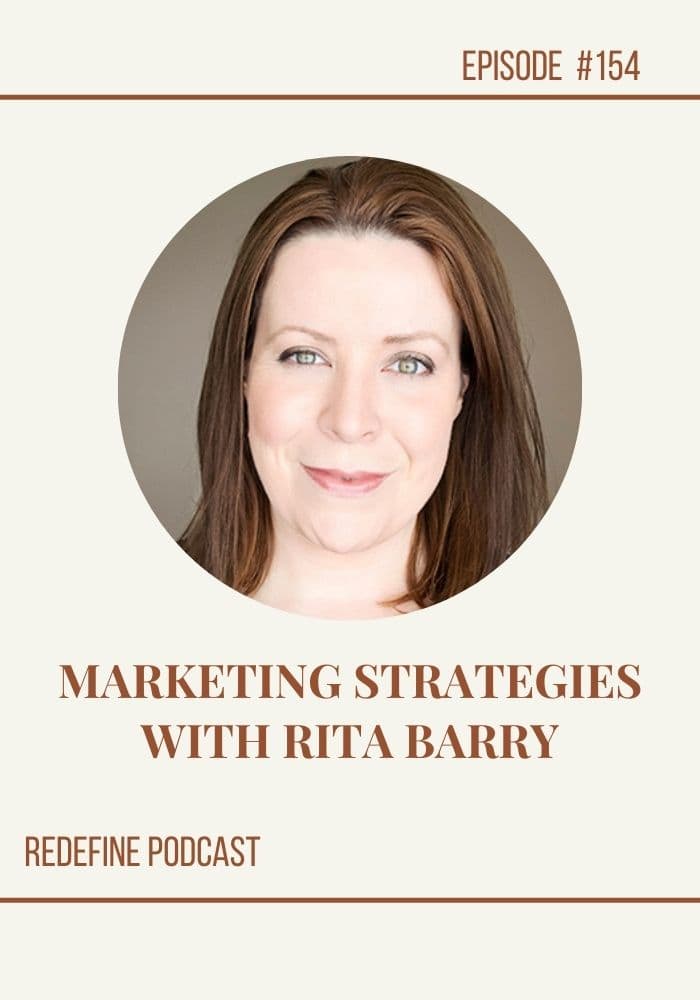
Marketing Strategies with Rita Barry

Marketing often gets a bad reputation as something complicated, ambiguous, or even downright frustrating. Many business owners, especially first-time entrepreneurs, find themselves lost in the sea of marketing tactics, hoping to find the secret formula to success. In this blog podcast, Brittni and Rita Barry, the owner of the digital marketing agency Rita Barry & Co., break down why focusing on strategy, rather than just tactics, is key to a thriving business.


Understanding the Difference: Strategy vs. Tactics

Many entrepreneurs jump into marketing by focusing on tactics rather than strategy. They hear about trending methods—Instagram reels, TikTok videos, webinars—and assume that implementing these will automatically bring success. But marketing isn’t just about tactics; it’s about creating a strategy that aligns with business goals.


A tactic is a specific action you take—such as posting daily on social media or creating a webinar funnel. Strategy, on the other hand, is the big-picture plan that dictates why and how you use these tactics. A well-crafted marketing strategy ensures that every action you take is purposeful and measurable.


Common Marketing Mistakes Entrepreneurs Make

1. Jumping on Trends Without a Plan

Many entrepreneurs see others succeeding with a certain approach and assume it will work for them too. However, what works for a major influencer with a massive following and a large advertising budget may not work for a small business just starting out. Blindly adopting tactics without understanding their purpose often leads to wasted time and resources.


2. Lack of Clear Goals and Metrics

It’s easy to get caught up in social media posting without knowing if it’s actually driving business growth. A common mistake is assuming that likes, shares, and follows directly translate to sales. In reality, successful marketing requires clear objectives and a way to track progress—whether that’s through website traffic, lead conversion rates, or revenue growth.


3. Ignoring the Importance of Messaging

Marketing is not just about showing up—it’s about communicating the right message to the right audience. Many businesses struggle with vague or broad messaging that fails to resonate with their ideal customers. The more specific and tailored your messaging, the more effective it will be.


4. Failing to Drive Traffic Strategically

Having a great offer, course, or lead magnet is only half the battle. The real challenge is getting people to see it. Many entrepreneurs assume that simply posting on social media will generate enough traffic, but in reality, most successful businesses rely on multiple sources of traffic, including paid advertising, search engine optimization (SEO), and partnerships.


How to Build a Marketing Strategy That Works

1. Start with Your Business Goals

Before deciding on tactics, clarify what you want to achieve. Are you looking to increase sales by 20%? Generate 1,000 new leads? Expand your email list? Identifying your goals will help you determine which marketing methods will be most effective.


2. Choose the Right Traffic Source

Instead of relying solely on organic social media, successful entrepreneurs diversify their traffic sources. Some effective strategies include:


  • Lead Magnets: Freebies like eBooks, checklists, or templates that attract potential customers.

  • Low-Cost Front-End Products: Self-liquidating offers like $4.99 digital guides or $27 mini-courses to generate leads.

  • Paid Ads: Facebook, Google, and YouTube ads allow for rapid testing and scaling.

  • SEO and Content Marketing: Blog posts and YouTube videos that drive long-term organic traffic.

  • Partnerships and Collaborations: Guest blogging, podcast interviews, and joint ventures that expand reach.


3. Test and Optimize

One of the biggest secrets behind successful marketing is constant testing. Large brands and influencers run multiple versions of ads, landing pages, and emails to see what works best. Even without a huge budget, small businesses can test messaging through:


  • Running low-cost Facebook ads to see what resonates with their audience.

  • Tracking email subject lines and click-through rates.

  • Using analytics to see which social media posts drive the most engagement and conversions.

4. Create a Multi-Funnel Approach

Many successful businesses don’t rely on just one funnel or sales path. Instead, they use multiple entry points to lead customers to their main offer. For example, a coaching business might have:


  • A free webinar funnel.

  • A book funnel offering a low-cost introductory product.

  • A high-ticket coaching funnel targeting premium clients.

By diversifying traffic sources and optimizing conversion points, businesses can create a more sustainable marketing system.


Marketing Success Takes Strategy, Not Just Hustle

Marketing doesn’t have to be overwhelming, but it does require intentional planning. Instead of chasing the latest trends or randomly posting on social media, take a step back and create a strategy that aligns with your business goals. Whether through lead magnets, paid advertising, or high-converting funnels, the key is to focus on what works for your business and scale from there.


Want to Assess Your Marketing Strategy?

If you’re unsure about where your marketing stands, check out the Marketing Quiz at marketingquiz.co. This free assessment helps business owners identify strengths and opportunities for improvement, making it easier to create a data-driven strategy.


Join the Conversation

Head on over to my Instagram or Facebook group, Redefine Your Business, and share your thoughts about today’s show. See you again, same time, same place next week!


What is a Lead Magnet and Why You Need One

A well-crafted lead magnet can be a game-changer for capturing your target audience and turning them into qualified leads. This podcast will cover strategies to create effective lead magnets and examples to inspire you. Whether you’re starting with a single lead magnet idea or brainstorming multiple magnet ideas, this guide will help you reach your goals.


What is a Lead Magnet?

A lead magnet is a valuable piece of content or resource offered in exchange for your audience’s email addresses or other contact information. It’s a win-win situation: your audience gets valuable information, and you gain potential leads to nurture.


Why Lead Magnets Matter

Lead magnets are essential for lead generation. They help businesses attract their target audience, solve a specific problem, and build trust. Offering the right lead magnet examples ensures that your audience finds the resource irresistible, encouraging them to engage with your brand.


Top Lead Magnet Ideas

Here are some great lead magnets to consider:

  1. Cheat Sheets – Provide a quick, actionable guide to solving a common pain point for your target audience.
  2. Case Studies – Showcase real-life examples of how your product or service solved a problem. This is a powerful way to appeal to prospects and build credibility.
  3. Templates – Offer an editable lead magnet template your audience can use immediately.
  4. Interactive Lead Magnets – Quizzes or calculators tailored to your audience’s needs can help generate qualified leads while keeping them engaged.
  5. Valuable Content – E-books, guides, or whitepapers packed with valuable information can position you as an expert in your field.

How to Make Your Lead Magnet Stand Out

Creating a perfect lead magnet requires a deep understanding of your audience’s pain points and desires. Here are a few tips to ensure your lead magnet is effective:


  1. Solve a Specific Problem: An irresistible lead magnet directly addresses a pressing issue your potential customer faces.
  2. Keep It Actionable: Offer steps or tools that your audience can apply immediately. For example, a checklist or a cheat sheet can work wonders.
  3. Use Eye-Catching Design: Visual appeal matters. An attractive lead magnet will grab attention and convey professionalism.
  4. Focus on Your Buyer Persona: Tailor your content to match the needs of your audience. Your buyer persona should guide the tone, format, and focus of your lead magnets.


Best Practices for Lead Magnets

To ensure success, follow these best practices:


  • Use email marketing to distribute your lead magnet ideas effectively.
  • Create multiple lead magnets tailored to different segments of your audience.
  • Promote your lead magnets on recent posts, social media platforms, and landing pages.
  • Include a strong call-to-action to encourage downloads.


Lead Magnet Examples

Here are some lead magnet examples that work across industries:


  1. Digital Marketing Guides – A comprehensive guide to digital marketing strategies that solve your audience’s most pressing challenges.
  2. Sales Lead Templates – A fillable document to help businesses generate and track their sales leads.
  3. Interactive Quizzes – Create a fun, engaging experience while capturing potential leads.
  4. Case Studies – Show how others have used your product to achieve success, offering valuable content for those still evaluating their options.


Takeaways

An excellent lead magnet is not only about offering something valuable but also about presenting it in a way that appeals to your target audience. From great lead magnets like case studies and templates to specific lead magnets addressing unique problems, the possibilities are endless. Remember, successful lead magnets drive engagement, capture qualified leads, and contribute to the growth of your business. Start brainstorming your next lead magnet idea today!

Join the Conversation

Head on over to my Instagram or Facebook group, Redefine Your Business, and share your thoughts about today’s show. See you again, same time, same place next week!


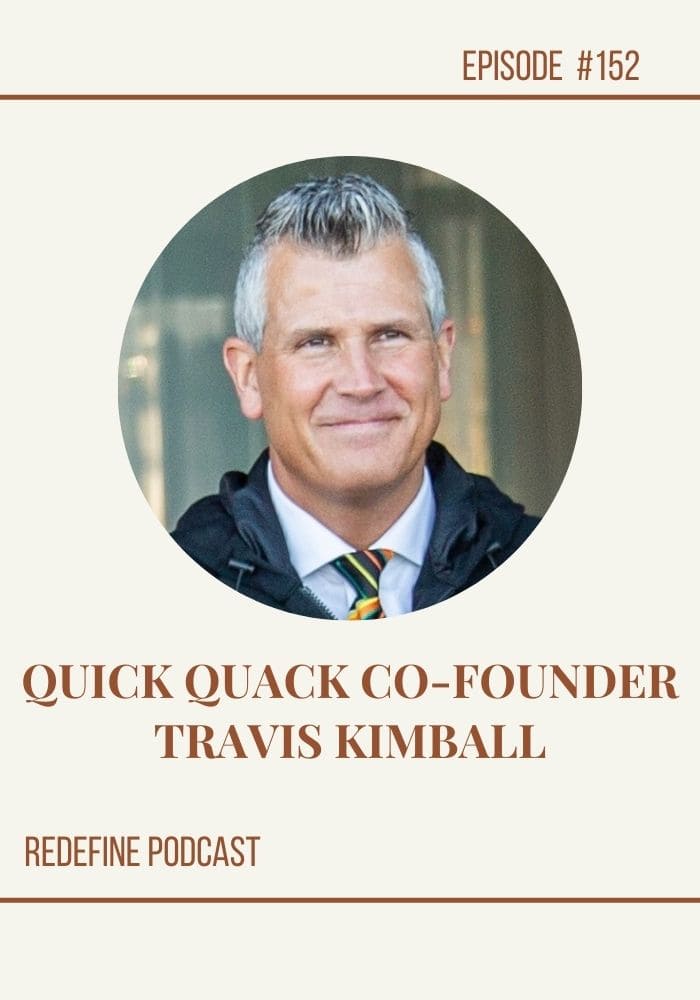
Quick Quack Co-Founder Travis Kimball

Quick Quack Co-Founder Travis Kimball

Starting and growing a business is never an easy feat, but for Travis and his partners, it was about more than just washing cars—it was about building a company with a greater mission. From the early struggles to a turning point that changed everything, their journey offers insights into entrepreneurship, resilience, and the power of mentorship.


The Beginning of a Vision

When Travis and his partners first got together, they knew they wanted to create a successful car wash business. But they quickly realized that being the best at washing cars wasn’t what would motivate them every day for the next 20 years. Instead, they needed something bigger—a vision that would truly drive their passion.


That vision turned out to be teaching and mentoring. They saw an opportunity to employ a lot of people, many of whom were in their first or second jobs. Competing with fast food chains for frontline employees, Quick Quack Car Wash didn’t just want to train people to be great employees—they wanted to equip them with life skills that extended beyond the job.


“We’re not just teaching them about car washing or even about business and leadership,” Travis explained. “We’re teaching them about finances, how to get involved in the community, how to change lives, and why it’s important to set goals for their future.”


This mindset led to long-term employee retention, with some staying for years—even decades—and developing valuable skills along the way.


The Turning Point: Overcoming Challenges

Quick Quack Car Wash began its journey in late 2004, expanding into Sacramento in 2005 and 2006. However, one pivotal moment almost derailed everything. When they attempted to acquire Quick Quack, the deal nearly fell through. Without secured loans, they found themselves out of contract. But thanks to the integrity of the previous owner—who agreed to give them two more weeks—the deal closed just in time.


What followed was another major hurdle: the 2008 recession. Growth slowed, and challenges mounted. However, one key factor kept them afloat: the unlimited car wash model. Quick Quack had been one of the first in the country to introduce a subscription-based model, and that consistency in cash flow made all the difference.


“The industry was shifting,” Travis recalled. “When we hit seven locations, we were already in the top 50 car wash companies in the country. The market was fragmented, mostly mom-and-pop shops, but there was new energy. Private equity firms started looking for scalable chains.”


By 2012, the business had momentum. The economy was recovering, and the unlimited membership model was gaining popularity, much like it had in the fitness industry. That’s when a private equity firm from Southern California approached them, not just to make a quick investment, but to build something long-term.


“They brought in capital that allowed us to expand into new states,” Travis said. “It was at that moment we knew—it was working.”


Lessons in Growth and Leadership

Over the last decade, Quick Quack Car Wash has been on a mission to grow as fast as possible while staying true to their values. From building a strong internal culture to making strategic decisions on acquisitions versus building new locations, they’ve remained intentional about their path forward.


“We always look at what we can learn,” Travis explained. “Every acquisition teaches us something, but we love our own car wash model. It’s easier to build from scratch than to remodel an existing location.”


Growth, however, isn’t just about numbers—it’s about people. The company remains committed to mentorship, leadership development, and making a lasting impact on employees and customers alike.

Join the Conversation

Head on over to my Instagram or Facebook group, Redefine Your Business, and share your thoughts about today’s show. See you again, same time, same place next week!


Sales Funnels That Convert: Secrets to Building Customer Journeys That Work

Funnels That Convert: Secrets to Building Customer Journeys That Work

In the world of digital marketing, a well-optimized marketing funnel can be the difference between stagnant revenue and massive growth. A funnel is a step-by-step process designed to guide potential customers toward making a purchase. When built effectively, it becomes a powerful tool for increasing conversion funnel efficiency and nurturing long-term customer relationships. Whether you’re in e-commerce, coaching, or any other industry, these actionable tips will help you create funnels that convert.


1. Understand Your Audience’s Journey

Before creating your funnel, it’s crucial to map out your customer journey. Think about the stages your ideal customer goes through—from awareness to purchase.


Action Steps:

  • Create Buyer Personas: Identify who your potential buyers are. What are their pain points, goals, and hesitations?

  • Outline the Stages: Map the funnel stages into four key categories: Awareness, Interest, Decision, and Action (AIDA model).

  • Use Analytics: Leverage tools like Google Analytics to understand how your audience interacts with your marketing efforts.


Example:

For a B2B sales consultant, a prospective customer’s journey might look like this:

  • Awareness: Discovering a blog post about effective sales strategies.

  • Interest: Downloading a free guide on optimizing sales performance.

  • Decision: Attending a free webinar on sales funnel management.

  • Action: Purchasing a high-ticket consulting package.


2. Offer Value at Every Stage

Each funnel stage should provide value that aligns with your customer needs. This builds trust and increases sales cycle efficiency.


Action Steps:

  • Top of Funnel (Awareness): Offer free resources like blog posts, case studies, or downloadable guides.

  • Middle of Funnel (Interest): Provide deeper value through webinars, email sequences, and content marketing.

  • Bottom of Funnel (Decision): Highlight testimonials, social proof, and offer a risk-free purchase.


Example:

A B2C sales funnel for an online fitness program might include:

  • A blog article about weight loss myths (Awareness).

  • A free downloadable meal plan (Interest).

  • A limited-time discount on a membership (Decision).


3. Leverage Lead Magnets and Tripwires

Lead magnets and tripwires are essential tools to capture attention and encourage action. A lead magnet is a free resource you offer in exchange for contact information, while a tripwire is a low-cost offer designed to convert leads into paying customers.


Action Steps:

  • Create Irresistible Lead Magnets: Ensure your lead magnet solves a specific problem. Examples include eBooks, templates, or free trials.

  • Design Low-Cost Tripwires: Offer a small, valuable product priced between $7 and $50 to help customers make their first purchase.


Example:

A marketing automation coach might:

  • Offer an email marketing checklist.

  • Follow up with a discounted annual subscription plan.


4. Optimize Your Landing Pages

Your sales funnel template should include high-converting landing pages that are clear, compelling, and optimized for successful sales funnel results.


Action Steps:

  • Write Clear Headlines: Make your value proposition obvious within the first few seconds.

  • Use Strong CTAs: Guide users to the next step with call-to-action buttons like “Get Started” or “Claim Your Free Guide.”

  • Include Social Proof: Add testimonials, reviews, or case studies.


Example:

A sales pipeline software company might create a landing page with:

  • A headline: “Optimize Your Sales Pipeline Today!”

  • A CTA: “Get My Free Demo Now.”

  • Testimonials from past clients.


5. Nurture Leads with Email Sequences

Email marketing is the backbone of many successful sales strategies. It’s a cost-effective way to nurture leads and move them toward conversion.


Action Steps:

  • Segment Your Audience: Group leads based on behavior or interests.

  • Create Automated Sequences: Develop sequences for nurturing, onboarding, and upselling.

  • Personalize Your Emails: Use first names, reference their actions, and address their specific pain points.


Example:

A sales team might:

  • Send a welcome email immediately after a lead downloads a free guide.

  • Follow up with case studies, tips, and an invitation to a paid sales training.


6. Incorporate Upsells and Downsells

Once a customer makes a purchase, it’s easier to encourage them to buy more. Upsells and downsells increase customer retention and boost sales performance.


Action Steps:

  • Offer Relevant Upsells: Suggest premium versions or complementary products.

  • Provide Downsells: If a lead hesitates, offer a lower-cost alternative.


Example:

An existing customer who buys a self-paced online course might be offered:

  • A VIP coaching package as an upsell.

  • A mini-course at a lower price as a downsell.


7. Test and Optimize Continuously

Even the best-designed sales funnel strategy requires regular testing and optimization.


Action Steps:

  • A/B Test Elements: Experiment with headlines, CTAs, and landing page designs.

  • Track Metrics: Use tools like Google Analytics to monitor conversion rates.

  • Analyze Drop-Off Points: Identify where users leave the sales process and make improvements.


8. Use Retargeting Ads

Many prospective customers won’t convert on their first interaction. Retargeting ads are a great way to re-engage them.


Action Steps:

  • Set Up Retargeting Campaigns: Use Facebook Ads or Google Ads to reach users who visited your site but didn’t take action.

  • Personalize Ads: Create ads tailored to the user’s behavior.


Example:

A social media marketing agency might retarget users who visited their service page with an ad offering a free consultation.


9. Add Urgency and Scarcity

Creating a sense of urgency or scarcity can motivate potential customers to take action sooner.


Action Steps:

  • Limited-Time Offers: Use countdown timers on landing pages.

  • Exclusive Deals: Highlight limited availability (e.g., “Only 5 spots left!”).

  • Seasonal Campaigns: Tie offers to specific events or holidays.


Example:

A brand awareness campaign might promote a flash sale with: “24 Hours Only: 50% Off!”


10. Analyze Results and Retest

A successful marketing strategy is never finished. Regularly reviewing your marketing team’s results is key to long-term success.


Action Steps:

  • Review KPIs: Focus on metrics like conversion rates and customer acquisition costs.

  • Gather Feedback: Ask existing customers about their experience.

  • Stay Current: Keep up with industry trends and adapt your strategies.

DONT FORGET!

Join me Wednesday, February 26th, at 10 AM MST for a FREE training where I’ll show you how to grow and market your email list using the power of AI! 


Whether you’re just starting or looking to scale, this training is packed with strategies to help you attract, engage, and convert your audience effortlessly. 


SIGN UP HERE

Join the Conversation

Head on over to my Instagram or Facebook group, Redefine Your Business, and share your thoughts about today’s show. See you again, same time, same place next week!


Organizing Paper Clutter with Jancee Wright

Organizing Paper Clutter with Jancee Wright

In today’s world of constant information and endless to-do lists, clutter—both mental and physical—can be a major roadblock to productivity and peace of mind. Jancee Wright, a professional simplifying and systemizing life coach and founder of Finding Your Fancee, knows this better than anyone. Her mission is to help women escape overwhelm, clear out clutter, and create purposeful spaces that fuel joy and creativity. In a recent episode of the Redefine Business Podcast, Jancee shared valuable insights on managing paper clutter—a problem that plagues both personal and professional spaces. Here’s how you can apply her wisdom to streamline your life.


Meet Jancee Wright

Jancee is a coach dedicated to helping women clear mental and physical clutter, reduce their environmental footprint, and organize their lives intentionally. Through her brand Finding Your Fancee and her #smallandsimplewins movement, Jancee inspires women to simplify their environments and systems. Her work emphasizes creating space for the things that truly matter—on purpose.


As a coach and workshop facilitator, Jancee teaches organizational strategies that tackle common issues like paper clutter, a notorious source of frustration for both entrepreneurs and everyday individuals.


The 5-Step Toolkit for Simplifying Your Space

Jancee’s approach centers on a simple yet highly effective five-step toolkit:


  1. Clarify: Before diving into action, take a step back and visualize what you want your space to look and feel like. 
  2. Simplify: Decluttering can sound daunting, so Jancee prefers to call it simplifying. This step involves assessing every item in your space—from papers and office supplies to books and course materials—and asking whether it truly needs to stay.
  3. Systemize: Everything in your space should have a “home address,” just like your own residence. This makes it easier to find and return items. Use tools like magazine holders, file folders, pouches, and trays to organize papers and supplies.
  4. Style: Organization doesn’t have to be boring. Jancee emphasizes making your space functional and visually appealing. A well-organized and attractive office setup inspires creativity and focus.
  5. Refresh: Periodically revisit your system to ensure it’s still working for you. Life evolves, and your space should too.


The 5 Categories for Sorting Paper Clutter

One of Jancee’s most effective strategies for managing paper clutter involves sorting items into five categories using simple pop-up hampers or labeled bins:


  1. Recycle: Papers that serve no purpose and can be discarded.
  2. Shred: Documents containing sensitive information.
  3. Archive: Important but infrequently accessed papers, such as tax records.
  4. Action: Items requiring immediate attention.
  5. Reference: Papers you need to keep handy for occasional use.

Pro tip: If you don’t have a shredder, stores like Staples and UPS offer shredding services on-site.


Practical Tips for Staying Organized

Here are some additional gems from Jancee’s interview:


  • Weekly Mail Routine: Instead of checking the mail daily, Jancee recommends retrieving it once a week to avoid the constant influx of paper clutter.

  • Year-End Preparation: Take the first week of the new year to organize your business and personal records. Set up labeled folders for the upcoming tax year to streamline document filing.

  • Declutter Digital Spaces: Don’t forget to organize your desktop and digital files. A cluttered computer can be just as distracting as a messy desk.

connect with Jancee

Follow her on Instagram

Visit her website

How To Organize Your Important Documents Workshop on January 29 + 30 INFO HERE


EPISODE FREEBIE

20 Minute Small + Simple Wins Checklist

Join the Conversation

Head on over to my Instagram or Facebook group, Redefine Your Business, and share your thoughts about today’s show. See you again, same time, same place next week!


What Happens When TikTok Goes Down? Why Diversifying Your Marketing Is Critical

What Happens When TikTok Goes Down? Why Diversifying Your Marketing Is Critical

The last few months there has been a lot of buzz about the government banning TikTok. I think people were absolutely shocked when they went to open up the app early this week and got a notification that it had indeed been banned. In all honesty, this is the one app that I haven’t invested my time in.  This reason is equal parts I didn’t want my daughter on it and equal part I didn’t want another app. That hasn’t stopped , 1.5 billion people that are active on TikTok. It has emerged as a dominant platform, offering a space for creative content, and viral trends. However, as we recently witnessed during TikTok’s global outage, relying solely on one platform can leave businesses vulnerable and scrambling for alternatives.


When events like this occur we learn a vital lesson: diversifying your marketing efforts is not just smart—it’s essential. Let’s dive into why diversification matters and how you can protect your business from being overly reliant on any single platform.


The Fragility of Platform Dependence

When TikTok experienced its downtime, businesses and influencers alike felt the ripple effects. Scheduled posts went unseen, ad campaigns halted, and audience engagement plummeted. For businesses heavily dependent on TikTok, this disruption was more than just an inconvenience; it was a wake-up call.


No matter how reliable a platform may seem, it is still a third-party service. Outages, algorithm changes, or even political and regulatory challenges can disrupt your marketing.  This fragility means your business’s success should never hinge entirely on one platform.


Why Diversify Your Marketing?

Diversifying ensures your brand continues to thrive even if one channel underperforms or becomes unavailable. Here’s why it matters:


  1. Reduces Risk: A diversified strategy acts as a safety net. If one platform falters, you can still rely on other channels to maintain customer relationships and revenue.
  2. Expands Reach: Different platforms cater to different audiences. By diversifying, you broaden your brand’s visibility and engage with various demographics.
  3. Strengthens Brand Resilience: A multi-channel approach ensures that your brand isn’t entirely at the mercy of one platform, and uncontrollable variables like algorithm changes or outages.
  4. Boosts ROI: Leveraging multiple channels allows you to analyze performance and allocate resources where they’re most effective.


How to Protect Your Business: 3-5 Actionable Steps

Here are five key strategies to help safeguard your business from over-reliance on any single platform:


1. Build and Prioritize Your Email List

Your email list is one of the most valuable assets your business can own. Unlike social media platforms, where you’re at the mercy of algorithms and outages, your email list is fully under your control.


  • Why it matters: Email provides a direct line to your audience. It’s a reliable channel for sharing updates, promoting products, and nurturing relationships.
  • How to start: Offer lead magnets like free guides, discounts, or exclusive content to encourage sign-ups. Use tools like ConvertKit, Mailchimp, or ActiveCampaign to manage your list effectively.
  • Pro tip: Segment your email list based on customer behavior and preferences to deliver personalized content that converts.


2. Diversify Social Media Platforms

While TikTok may be your primary platform, ensure you have a presence on others like Instagram, YouTube, LinkedIn, Pinterest, or Facebook. Each platform offers unique features and audiences.


  • Why it matters: A multi-platform presence reduces dependency and increases your chances of reaching different audience segments.
  • How to start: Repurpose your content to fit each platform’s style and audience. For example, a TikTok video can be adapted for Instagram Reels or YouTube Shorts.
  • Pro tip: Use scheduling tools like Buffer or Later to streamline your posting across platforms.


3. Invest in Content Marketing

Create evergreen content that lives on your website or blog. This content continues to drive traffic and generate leads long after it’s published.


  • Why it matters: Blog posts, podcasts, and videos give you ownership over your content, making your business less reliant on external platforms.
  • How to start: Develop a content calendar with topics relevant to your audience. Use SEO strategies to ensure your content ranks well on search engines.
  • Pro tip: Focus on creating value-packed, shareable content that establishes your brand as an authority in your niche.


4. Leverage Paid Ads Across Multiple Channels

While organic reach is important, paid advertising can amplify your message across multiple platforms.


  • Why it matters: Diversifying your ad spend ensures you’re not putting all your eggs in one basket.
  • How to start: Run campaigns on Google Ads, Facebook Ads, and other platforms relevant to your audience.
  • Pro tip: Track performance metrics and adjust your budget to focus on high-converting channels.


5. Foster a Community Beyond Social Media

Build spaces where your audience can engage with your brand outside traditional platforms.


  • Why it matters: Communities foster loyalty and provide a direct channel for feedback and engagement.
  • How to start: Create a private Facebook Group, Slack channel, or Discord server where members can connect and share ideas.
  • Pro tip: Offer exclusive benefits, such as Q&A sessions or early product access, to encourage active participation.


Real-World Example: A Business Thrives Despite TikTok’s Downtime

Consider a business that heavily relied on TikTok for marketing but also invested in an email list, a blog, and Instagram. When TikTok went down, they leveraged their email list to communicate with their audience and ran a sale promoted through Instagram Stories. Their blog traffic also surged as customers searched for relevant content. This multi-channel approach ensured they stayed connected with their audience and minimized revenue loss.


Final Thoughts: Don’t Put All Your Eggs in One Basket

TikTok’s recent downtime is a stark reminder of the importance of marketing diversification. While it’s tempting to focus on the platform that’s currently delivering the best results, putting all your trust in one channel is a risky strategy.


Building an email list, diversifying your social media presence, investing in content marketing, running paid ads across multiple platforms, and fostering community connections are all essential steps to ensure your business thrives no matter what challenges come your way.


Remember, the only constant in the digital world is change. By diversifying your marketing, you’re not just protecting your business—you’re setting it up for long-term success.


Sign up for my free training: How I Use AI To Grow and Market My Email List


Join the Conversation

Head on over to my Instagram or Facebook group, Redefine Your Business, and share your thoughts about today’s show. See you again, same time, same place next week!


Profitability Made Simple with Joey Albertson

Profitability Made Simple with Joey Albertson

Starting and running a small business can be a thrilling adventure, fueled by passion and creativity. Yet, for many entrepreneurs, navigating the financial side of their business often feels like venturing into uncharted territory. In this episode of the Redefine Business Podcast, Brittni sits down with Joey from the Profitability Project to discuss the financial challenges small business owners face and how they can overcome them. 


Meet Joey: The Finance Expert for Small Businesses

Joey founded the Profitability Project four years ago after transitioning from a career in corporate finance. Initially hesitant to embrace entrepreneurship—despite growing up in a family of entrepreneurs—Joey’s journey began during the pandemic when friends and acquaintances sought her financial expertise. “What started as bookkeeping turned into a full-stack finance offering,” Joey explained, highlighting how her team has grown to include specialized departments for bookkeeping, payroll, financial strategy, and taxes.


What sets Joey’s team apart is their comprehensive approach to finance. They’re not just about crunching numbers but providing actionable strategies that empower small business owners, particularly women, to grow their businesses sustainably.


Common Financial Pitfalls for Small Businesses

One of the recurring themes in Brittni and Joey’s discussion was how often small business owners overlook the financial side of their operations. Joey pointed out that many entrepreneurs begin with a great idea but struggle to manage the less glamorous aspects of running a business, like finances.


“If you’re not in business to make money, what are we doing here?” Joey emphasized the importance of understanding cash flow, calling it the most critical metric for small businesses. “When businesses fail, it’s because they run out of cash. It’s as simple as that.”


For many, this issue stems from relying on outdated financial practices, such as sticking with a family CPA who lacks an entrepreneurial perspective. Joey’s mission is to help business owners move beyond these limitations and embrace modern financial strategies.


Hiring Smart

A major pain point for many small businesses is labor. Joey and Brittni both stressed the importance of being strategic when hiring.


“There’s a time and place to hire someone cheap,” Joey advised. “But when it comes to roles that directly impact your business’s growth, invest in quality.” She recounted stories of clients who initially opted for low-cost solutions, like having a family member handle bookkeeping, only to face costly financial corrections later.


Brittni echoed this sentiment, highlighting the need for standard operating procedures (SOPs) and systems before bringing on additional help. “Without clear processes, hiring someone can end up costing you more time and money,” she said.


Using Automation and Systems to Save Time and Money

Both Joey and Brittni highlighted the value of automating processes to save time and reduce errors. Brittni shared how she helps clients implement automation and systems, acknowledging that while these investments may seem costly upfront, they ultimately free up time and allow business owners to focus on their strengths.


“You cannot hire someone at $15 an hour and expect them to grow your business,” Brittni explained. “That’s where automation and the right tools come in.”


Embracing Financial Strategy for Growth

Joey’s final advice was for entrepreneurs to embrace financial strategy. “You don’t need to be an expert at everything,” she said. “Focus on what you’re great at, and let experts handle the rest.”


From understanding cash flow to hiring the right people and leveraging automation, Brittni and Joey’s conversation underscored the importance of integrating financial strategy into the heart of any business. By doing so, small business owners can not only survive but thrive—without burning out.

FREE DOWNLOAD | EXCEL BUDGET TEMPLATES FOR YOUR BUSINESS

connect with joey

Follow her on Instagram

Visit her website

Listen to her podcast

Welcome Video

Join the Conversation

Head on over to my Instagram or Facebook group, Redefine Your Business, and share your thoughts about today’s show. See you again, same time, same place next week!


Reflecting on 2024

Reflecting on 2024: A Year of Strength, Growth, and Gratitude

As 2024 comes to a close, I find myself reflecting on a year that has tested me in ways I never imagined. When I chose “strength” as my word for the2024 year, I had no idea how fitting it would become. It’s easy to embrace a word like strength when life is smooth and predictable, but this year demanded a level of resilience and fortitude that I didn’t know I had.


Looking back, 2024 has been a whirlwind of emotions, challenges, and growth. It was a year of heartbreak, milestones, and unexpected trials. Through it all, I’ve learned profound lessons about myself, about life, and about the power of gratitude—even in the hardest of times.


Navigating a Life-Altering Transition

The year began with one of the most difficult decisions of my life: the end of my marriage. Divorce is never easy, and this experience was no exception. It brought with it a flood of emotions—grief, fear, anger, and, eventually, acceptance.


There were moments when I questioned my ability to handle the weight of it all. Divorce feels like a ripping apart of a life you’ve built, leaving you to pick up the pieces and redefine your path. Yet, as the months passed, I began to see glimpses of my own strength. I learned how to navigate the uncertainty, find solace in small victories, and build a new foundation for myself and my children.


Through this, I discovered that strength is not about never breaking; it’s about finding the courage to rebuild after you’ve been broken. It’s about standing up, even when you feel like staying down. This was the first of many lessons that “strength” would teach me this year.


Letting Go: Sending My Son on His Mission

In March,, I faced another significant milestone: sending my son to Brazil on a two-year mission for our church. As a parent, you know the day will come when your children will leave the nest, but that knowledge doesn’t make the reality any easier. Watching him embark on this journey was both heartbreaking and beautiful.


There was pride in seeing him take such a bold step in his faith and personal growth, but also a deep sense of loss as I adjusted to his absence. The quiet moments at home felt emptier without his laughter and energy. However, this experience also deepened my understanding of love and sacrifice. Letting go is one of the hardest acts of love, but it’s also one of the most profound.


In the process, I leaned heavily on my own strength and faith, finding comfort in the knowledge that he was pursuing something meaningful and transformative. I’ve learned that strength is not just about enduring challenges; it’s about supporting others as they face their own.


A Mother’s Worst Fear: My Daughter’s Injury

As the year drew to a close, another unexpected challenge rocked our family. My 16-year-old daughter suffered a severe injury, breaking her back in a ski accident. As a mother, there is nothing worse than seeing your kids suffer in pain. The days following her injury were filled with a hospital stay over Christmas, lots of pain, lots of tears, and an overwhelming sense of helplessness. She is a wrestler and works so hard all the time, and It’s been heartbreaking to see her overwhelmed with sadness as she misses out on her sophomore year. 


Yet, through this ordeal, I witnessed a resilience in her that inspired me to be even stronger. Watching her tackle her recovery with determination reminded me that strength is often born out of necessity. It’s about showing up, even when the odds feel insurmountable.


Caring for her during this time pushed me to limits I didn’t know I had. It tested my patience, my endurance, and my ability to balance everything else in life. But it also reinforced how deeply love and strength are intertwined. When someone you love is hurting, you find reserves of strength you didn’t know existed.


Lessons in Resilience

Each of these experiences—the divorce, my son’s departure, and my daughter’s injury—taught me something profound about resilience. Resilience isn’t about avoiding hardship; it’s about facing it head-on and finding a way through. It’s about adapting, growing, and continuing forward, even when the path is steep and rocky.


I’ve learned that resilience is built in the small, everyday choices we make. It’s in choosing to get out of bed when grief weighs you down. It’s in showing up for your children when your own heart is aching. It’s in finding moments of laughter and joy, even when life feels overwhelming.


Gratitude in the Hardest of Times

Perhaps the most unexpected lesson of 2024 was the way my gratitude deepened in the face of hardship. When life is hard, the small blessings become so much more precious. I’ve found immense gratitude in the little things: a kind word from a friend, a moment of laughter with my kids, the strength to face another day.


Gratitude has been my anchor this year. It has reminded me to focus on what I have, rather than what I’ve lost. It has helped me see the beauty in the midst of pain and the light in the darkest moments. Gratitude doesn’t erase the challenges, but it gives them context. It reminds us that even in the hardest times, there is goodness to be found.


I am grateful for the lessons this year has taught me. I am grateful for the love and support of those around me. I am grateful for my children, who continue to inspire me every day. And I am grateful for the strength that 2024 has uncovered within me.


Looking Ahead

As I step into 2025, I do so with a renewed sense of purpose and resilience. The word “strength” has carried me through this year, and it will remain a guiding force as I continue to navigate life’s twists and turns. I don’t know what the future holds, but I do know this: I am stronger than I ever imagined, and I am surrounded by blessings that make the journey worthwhile.


To anyone listening to this who is facing their own challenges, know that you are stronger than you think. Strength doesn’t mean having it all together; it means continuing to move forward, one step at a time. And in those moments when life feels unbearably hard, remember to look for the blessings. They are there, waiting to be discovered, even in the darkest of times.


Here’s to a new year filled with hope, growth, and gratitude. May we all find the strength to face whatever comes our way and the grace to cherish the good along the journey.

Join the Conversation

Head on over to my Instagram or Facebook group, Redefine Your Business, and share your thoughts about today’s show. See you again, same time, same place next week!